
Feeding the House: Private Chef Family Meal Planning, Children's Palates, Staff Meals, and Soul Food at the Weekly Table
A staffed kitchen is a blessing that still needs a system. Private chef family meal planning — the weekly menu, the children's table manners and tastes, the staff's own meals, and soul food holding its honoured place — is how the house eats well every single day.
There is a particular photograph every well-run house could take: the chef setting down the platter, the children already laughing, nobody reaching for a telephone. That ease is not an accident of wealth.
It is the visible end of private chef family meal planning done properly — a weekly rhythm in which the household decides, once and together, what the table will be, and then simply enjoys it.
Houses without the rhythm feel it at once: the same three dinners in rotation, a refrigerator full of ingredients and nothing that is a meal, children grazing, staff guessing, and the cook — professional or otherwise — working harder than anyone should to produce less than the house deserves.
The good news is that feeding a house well is a management problem, and management problems have solutions. Working personal-chef services describe the same skeleton everywhere: the week begins with the family's preferences, allergies, and schedule, and the chef builds from there.
One weekly service puts it simply — you tell your chef what the family enjoys, along with allergies and foods to avoid, and the chef creates the week's customised menu, shops, cooks in your kitchen, packages and labels everything, and leaves the kitchen clean. Scale that service up to a resident private chef and the shape stays identical.
Only the conversation gets richer.
The Weekly Menu Meeting
Set twenty minutes, once a week, at the kitchen counter — the photograph below is exactly the meeting we mean. The principals, the chef, and the house manager if the house has one. On the table: the week's calendar, because a menu that ignores the calendar fails by Wednesday.
Who is travelling? Which nights carry guests, late meetings, a child's match, a grandmother arriving? Which evening is the family dinner that nobody misses?
Good services plan precisely this way, beginning with a consultation covering food preferences, allergies, portion needs, household size, and the week's meal requirements, then cooking to an approved menu — with feedback after each round guiding the next one's seasoning, portions, and rotation.
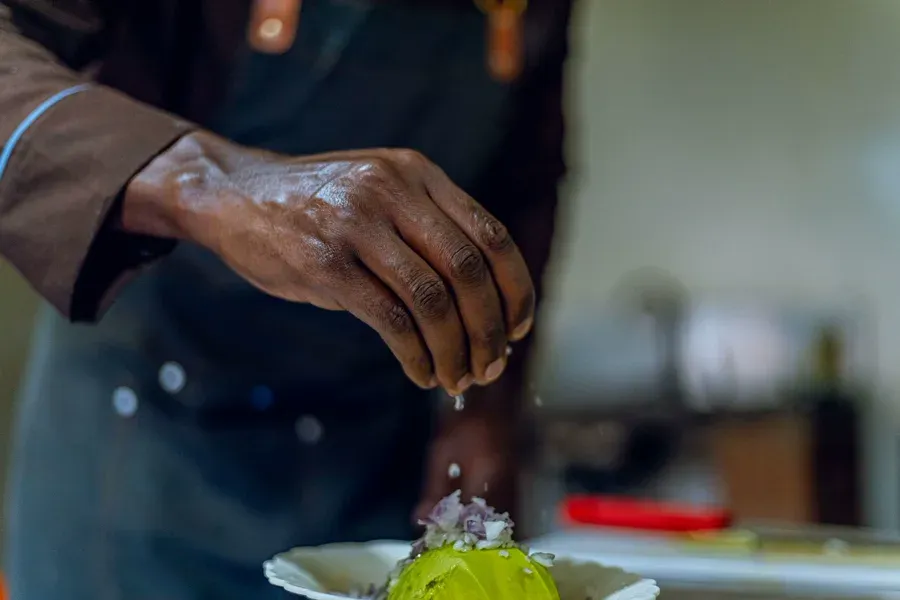
Out of that meeting comes the written week: breakfasts that start people properly, lunches for whoever is home, the children's suppers, and the family dinners that anchor the days.
Variety is planned, not hoped for — a serious weekly menu rotates its proteins, its cuisines, and its moods, the way one Portland service illustrates with themed weeks that move from winter comfort plates to high-protein menus, every dish adapted to the household's dietary requirements.
Keep a running house list alongside: the dishes that always land, the ones quietly retired, each child's current enthusiasms and firm refusals, and the standing rules — what is never served, what is always in the house, what a late-arriving principal can count on finding plated and waiting.
The written week also protects the chef. A professional cannot read minds, and the fastest way to sour a good kitchen is to judge it against expectations nobody stated.
Approve the menu and you have given your chef a fair brief; taste, then comment specifically — more acid, less salt, the children's portions up — and the next week improves on evidence instead of guesswork. Houses that do this keep their chefs for years. Houses that do not, churn them.
If you are still deciding between a resident chef and booking the best by the night, start with The Private Chef Decision; this piece assumes the choice is made and the apron is on.
Raising Children's Palates at a Proper Table
The staffed house has one advantage no restaurant can match: it can raise eaters. Children at a family table where real food arrives nightly, eaten by adults who plainly enjoy it, absorb a standard before they can argue with it. The research agrees with the grandmothers.
A Loughborough University study of family mealtimes, reported by ScienceDaily, found that eating together as a family may encourage children to be more open to trying new types of food, with friendly interaction — rather than pressure — doing the encouraging.
Most kids are more eager to take a bite if they picked the ingredients and stirred the sauce themselves.— Rachel Ehmke, Child Mind Institute, via Ann Arbor Family
So put the children inside the process. Let them choose one dish at the menu meeting. Let them stand on the stool and stir, carry the basket at the market, taste the sauce and pronounce on the salt.
And be patient in the specific way the evidence prescribes: feeding specialists note that a new food may need to be presented and tasted six to fifteen times before a child fully accepts it — most adults surrender at the third attempt and call the child picky.
The house rule that works is gentle and absolute: everything is tasted, nothing is forced, seconds of the beloved dishes are always available, and the new dish returns in a week wearing slightly different clothes.
A chef who knows the long game will build those bridges for you — the familiar sauce over the unfamiliar fish, the roasted vegetable beside the trusted one — until one day the child asks for the thing by name, and the whole table tries not to make a fuss about it.
Table manners grow in the same soil. A child who eats nightly at a set table, with courses arriving in order and conversation carrying the pauses, learns the grammar of dining without a single lecture: napkin, patience, gratitude to the cook by name. Send that child anywhere in the world later, and the room will know how he was raised.
Feeding the Staff, Properly
A house with standards feeds its people with the same care it feeds its guests — and says so in writing, in the household manual, from the first week. The practical questions are simple, and they should be answered before they become grievances: Do staff eat what the family eats, or is there a staff menu?
When do they eat, and where? What is stocked for them, and what may they cook for themselves? Household-management guidance for families employing help at home returns to the same principles: be clear from the beginning, respect religious restrictions and allergies as necessities rather than preferences, and hold regular check-ins about food and preferences.
The houses that do this best treat the staff meal as part of the menu meeting, not an afterthought.
The chef plans a staff sitting with the same ingredients discipline as the family's — a cook who has eaten well cooks well, and a housekeeper expected to serve a beautiful dinner on an empty stomach has been handed a contradiction, not a standard.
Some houses seat staff at the family table when the family is away; some keep a proper staff table in the kitchen, set, not scavenged. Either can be gracious. What cannot be gracious is ambiguity: leftovers by default, permission by mood, quality by accident.
Write it down, stock the staff shelf generously, and let your chef include the staff count in every shop. The cost is trivial. The loyalty it buys is not.
This is also where the house manager earns his keep. The feeding of a staffed house touches the nanny's hours, the housekeeper's breaks, the driver's late runs — and the manual should say who eats when, so nobody's meal depends on somebody else's memory.
Our guide to hiring the right nanny covers the interview side of those arrangements; the profiles in the Pastors collection and the Food Owners collection show, house after house, how the big-family table becomes the centre a whole community organises around.
Soul Food at the Fine-Dining Table, Without Apology
Now the heart of it. A house can afford any cuisine on earth, and some houses quietly conclude that the food of their own people belongs to a lesser table — apologised for, "elevated" past recognition, or served only when nobody important is watching. This magazine's position is the opposite: the Black table's classics are not a theme night.
They are the canon, and a serious chef cooks them seriously.
The tradition deserves the respect of accuracy. Britannica describes soul food as the cuisine of African Americans in the United States, originating in the home cooking of the rural South, characterised by dishes like cornbread, fried chicken, and collard greens, carried north in the Great Migration until it belonged to the whole country.
A University of Southern California study of the cuisine's origins adds the cooks' own genius to the record: given the least desirable cuts and rationed staples, enslaved cooks transformed them through slow cooking and spicing, growing collard, mustard, and turnip greens alongside — a retention of cultural identity through taste, texture, and method that scholars call culinary memory.
Culinary memory is exactly what a family table is for. So the weekly menu in this house carries the greens done properly — washed well, cooked low, seasoned by someone who knows what pot liquor is and why it matters.
The fried chicken is brined and rested, the macaroni and cheese is a baked dish with a crust and an opinion, the cornbread arrives in the skillet.
Modern cooks in the tradition make their own adjustments — Britannica notes leaner cuts and lighter oils in contemporary preparations — and a good chef will gladly cook the smoked-turkey version beside the classic. What he will not do, in a house with standards, is treat the dish as a costume.
Technique is the tribute: the same knife work, sourcing, and timing he would give a French classic, given to the food that raised the family.
And let the children see it at the centre of the table on ordinary Tuesdays, not only at holidays with an audience. A child who grows up watching greens and roast chicken share a menu with sole meunière and a proper soufflé learns the deepest lesson a house can teach about food: that excellence and inheritance are the same table.
That is feeding the house. The rest is catering.
The Standing Orders That Save the Week
Every well-fed house also runs on a small set of standing orders that nobody has to renegotiate.
Breakfast, for instance, should be a system and not a daily invention: the coffee and tea station stocked, the fruit washed and ready, eggs and grains in their places, a hot option that rotates by day of the week, so that a principal leaving early, a child leaving for school, and a guest surfacing late all meet the same quiet competence.
The same logic holds at the other end of the day — one soup or stew always in the refrigerator that reheats like it was made an hour ago, a green salad's components washed and waiting, good bread in the freezer that toasts back to life.
None of this is glamorous, and all of it is the difference between a house that eats well on its best days and a house that eats well on all of them.
Write the standing orders into the manual next to the weekly menu, review them at the same meeting, and the system holds even when the chef is away and a relief cook is standing in his place — because the house, and not one person's memory, is what knows how the house is fed.
The Private Chef Decision: Hire Your Own, or Book the Best by the Night
Hiring the Right Nanny
Related Profiles: The Pastors Collection
Related Profiles: The Food Owners Collection
Chefs For Families — "Personal Chef Services: How It Works"
EIN Presswire — "Weekly Cooking Service Places Meal Preparation Inside the Home"
LiveGreensPDX — "Sample Menus"
ScienceDaily — "Family meals help children to be less fussy about food"
Ann Arbor Family — "Turning Picky Into Adventurous Eaters"
Status Maids — "How to Handle Food and Dietary Preferences"
Encyclopaedia Britannica — "Soul food"
USC Dornsife — "The Origins and Cultural Significance of Soul Food"
Questions & Answers
Who starts the meal, and when do you put your napkin on your lap?
A staffed kitchen is a blessing that still needs a system. Private chef family meal planning — the weekly menu, the children's table manners and tastes, the staff's own meals, and soul food holding its honoured place — is how the house eats well every single day. It links to 3 stories and articles — open any card to read the full piece.
Who pays when one person invites another to dinner?
A staffed kitchen is a blessing that still needs a system. Private chef family meal planning — the weekly menu, the children's table manners and tastes, the staff's own meals, and soul food holding its honoured place — is how the house eats well every single day.
How do I read the full stories on Feeding the House: Private Chef Family Meal Planning, Children's Palates, Staff Meals,…?
Choose any card on this page. Each one opens a full page of its own — the complete story or article, with its sources linked.