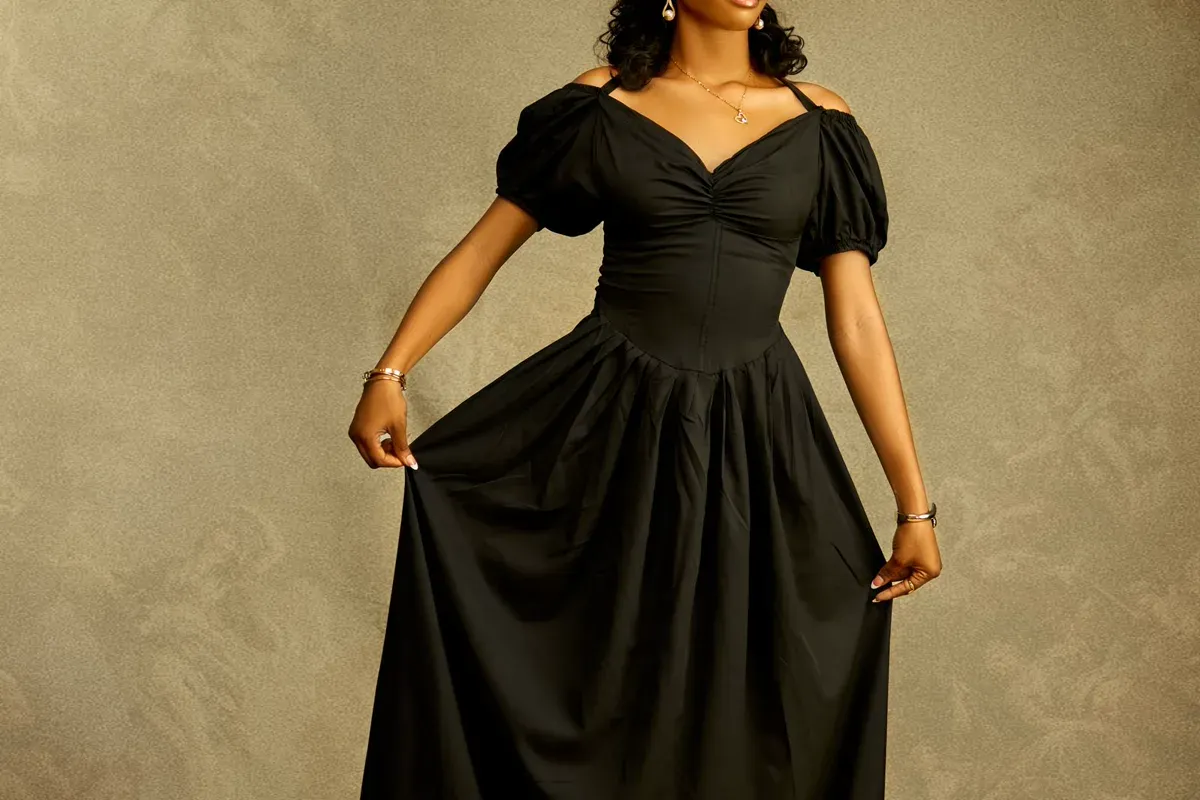
The Debutante Standard: Presentation as a Family Project
Debutante ball traditions in Black cotillion presentation are not a party with a dress code — they are a season of training, service, and fundraising that a whole family undertakes together.
Ask an outsider what debutante ball traditions involve and you will hear about a white dress. Ask a family that lives inside Black cotillion presentation — the mothers who were presented themselves, the fathers rehearsing their walk, the grandmothers who keep the programme from their own year in a drawer — and you will hear about a project.
Months of it. Applications, rehearsals, service hours, fittings, fundraising, dance lessons, and one night at the end when a young woman walks into a ballroom on her father’s arm and her community stands to receive her. The gown is the photograph.
The season is the story.
That is why families who could easily opt out keep opting in. The presentation asks something of everyone: the debutante’s poise, the escort’s discipline, the parents’ organisation, the sponsoring organisation’s standards.
It is one of the few remaining ceremonies in American life where a young person is formally handed from childhood to the community that helped raise her — and where that community, in return, puts its money and its name behind her future. This is the standard, piece by piece.
A Tradition We Built Ourselves
The form came from Europe — the word itself is French, from débuter, to make a debut — but the Black cotillion is an American creation, built by Black civic organisations in cities where our young women were never going to be presented by anybody else’s ballroom.
In Fort Worth, as Fort Worth Magazine’s account of the city’s Black cotillion tradition records, the tradition began in 1941 and is still carried by its two founding civic organisations, the Fort Worth Assembly and the Ambassadors of Fort Worth, whose events remain linked, with debutantes welcomed at both.
In Denver, the Owl Club’s cotillion began in 1951 as, its scholarship fund notes, the first event in the city solely dedicated to high-achieving young African American women — and the club has presented more than 1,600 debutantes since.
Notice what these organisations are: not party committees but institutions — civic clubs, sorority chapters, and bodies like The Links, Incorporated, whose chapters turned the cotillion into an engine.
The Los Angeles Links chapter’s record is typical of the serious ones: debutantes receive scholarships at the culminating ball for academic achievement, community service, entrepreneurship, and essay writing, and the chapter reports more than $1,000,000 given to community organisations across its history, with grants presented annually following the November debutante ball. The ball was never the point.
The ball was the funding mechanism and the finish line. The point was everything the season built on the way there.
The Season Is the Substance
A debutante is not made in a night; she is made across a season, and the season is deliberately demanding. The Alpha Kappa Alpha chapter foundation that runs the DeKalb County cotillion states its objectives plainly: scholarship provision, cultural and social training, etiquette, educational and financial resources, and community service — an annual fundraising initiative dressed, gloriously, as a ball.
Links chapter histories describe the same architecture: a competitive application, then a multimonth journey of community service projects, etiquette classes, career forums, seminars, and fundraising, with the spring formal as the capstone.
This is where the family-project truth lives. A season like that cannot be carried by a seventeen-year-old alone. Somebody drives to rehearsals.
Somebody sells the souvenir-book advertisements and the tables. Somebody’s auntie — herself a debutante of an earlier class — coaches the walk.
In Fort Worth, one recent debutante was presented on the thirty-fifth anniversary of her aunt’s own debut, with her mother and sisters woven through the organisation’s junior ranks: three generations inside one tradition, each with a job.
When people ask why the cotillion survives in an age that has discarded nearly every other formality, the answer is standing right there in the rehearsal hall. It survives because it gives a family something magnificent to do together, on purpose, for a daughter.

The pipeline starts earlier than most people realise. Before the debut there is cotillion proper — the training ground.
Southern Living’s explainer draws the line clearly: cotillions focus on teaching young people, typically ages 11 through 13, how to be respectful members of society, while the debutante ball marks the official joining of society for young women typically aged 16 to 21.
Families in the tradition therefore think in stages: the middle-school cotillion teaches the handshake, the dance floor, and the thank-you note; the junior years add service and polish; the debut gathers it all into one presentation. A girl does not stumble into the standard at seventeen.
She has been rehearsing for it, in one ballroom or another, since she was eleven — and her mother, who walked the same stages, knows precisely which rehearsal she is watching.
The White Gown and the Gloves
The dress code is the most regulated garment in American social life, and its rules are a language. As Southern Living’s comparison of cotillions and debutante balls explains, the distinction is visible at a glance: at a cotillion ball, the younger students of etiquette are typically instructed not to wear white or ivory — white is reserved.
At the debutante ball itself, debutantes wear pure-white, full-length ball gowns with long white gloves. The standard reference on the debutante dress describes the same uniform: a pure white ball gown, accompanied by long white gloves and pearls.
Every element is doing work. The white is uniformity — for one night, no debutante out-dresses another, because the gown is not self-expression but membership; the class presents itself as a class.
The gloves are discipline you can see: they must be managed through handshakes, photographs, the receiving line, and the dance, and managing them gracefully is part of the examination. The full skirt is engineering — it dictates how she walks, turns, descends stairs, and, above all, how she performs the gesture the whole season bends toward.
Which brings us to the bow.
The Texas Dip
Every debutante curtsies; Texas debutantes perform the most famous curtsy in America. The Texas Dip is a full court bow carried to its limit — the debutante sinks low, her gown billowing around her, until her forehead nearly reaches the floor, then rises on her escort’s offered hand.
It is, by every account, athletic: months of practice, real core strength, heels, a stage, an audience, and exactly one chance.
The Fort Worth debutante who called it the biggest challenge of her presentation had it precisely right — she had, as the magazine reports, just one chance to execute it perfectly, in heels, on stage, in front of an audience — and did, before taking her father’s hand to rise.
Do not mistake the difficulty for decoration. The Dip is the standard made visible: preparation, composure under observation, and recovery — because the bow is not finished when she reaches the floor, but when she rises from it, smiling, as though the floor had been easy. Every rehearsal hour in the season is compressed into those few seconds.
A young woman who can do that in front of five hundred people can walk into any boardroom, courtroom, or operating theatre the rest of her life requires. The cotillion directors know exactly what they are training. It was never really about the curtsy.
The Father, the Escort, and the Receiving Line
The choreography of the night assigns every role its meaning.
The debutante is announced, presented by her father — the family’s public act of pride and release — and joined by her escort, a young man chosen with a seriousness outsiders underestimate, who has himself been through weeks of rehearsal in how to bow, lead a waltz, and conduct himself as the evening’s other half of the presentation.
In the classic literature of Black society, mothers describe the escort search without embarrassment: the sons of college roommates, the young men of the family’s Jack and Jill chapter, cousins and nephews — young men with credentials a family can be proud of, because the escort reflects on the house that chose him.
Our own guide to those institutions, Jack and Jill and The Links, traces how the same networks that present debutantes also produce their escorts, year after year.
Then comes the receiving line, the presentation’s quiet examination: name after name, handshake after handshake, eye contact held, a gracious sentence for each guest, the gloves still immaculate.
It is the debutante’s first shift in the family business of society — and it is why the women presented decades ago still describe the night as work they were proud to do well.
For me, it represented an important connection to my family, to my community, and to the history of African American women.— Nivea Jerry, Fort Worth Assembly debutante, via Fort Worth Magazine
The Money Underneath
Follow the money and the tradition explains itself. The Owl Club’s scholarship fund, founded to help its debutantes with the cost of what comes next, reports more than $130,000 in scholarships awarded to help alleviate post-secondary educational expenses. The DeKalb cotillion was founded explicitly as a fundraising initiative whose proceeds became scholarships for participants and grants for the community.
The Los Angeles Links present their community grants in the ball’s immediate wake, tying the evening’s glamour directly to the year’s giving. Tables are bought, souvenir books are filled with advertisements from Black businesses, fathers and firms sponsor — and the surplus flows outward, to students and organisations most of the guests will never meet.
A debutante season is, among its other identities, one of the most elegant fundraising machines in Black civic life.
That is the answer to give the sceptic — usually an uncle, usually at the rehearsal dinner — who asks what all this costs and what it is for. It is for the scholarship announced at the end of the night. It is for the service hours banked all season.
It is for the network of women, presented across seventy years in some cities, who answer a debutante’s call for the rest of her life because they wore the same white in the same room.
And it is for the family itself: the choosing of the school, the raising of the child, the presenting of the young woman are chapters of one long project, which is why this article keeps company with Choosing the School and with the women who carry these institutions, honoured in our Society Profiles — Women collection.
The standard, then, is not the gown, the gloves, or even the Dip. The standard is a family and a community agreeing, in public and at some expense, that a young woman’s arrival matters enough to rehearse for. She will forget many details of the night.
She will never forget that they all showed up — mother with the skirt in her hands, father with his arm ready, a ballroom full of witnesses — to say: we present her, we stand behind her, she is one of ours. That is presentation as a family project, and it is why the tradition is in no danger whatsoever.
Choosing the School
Jack and Jill and The Links
Society Profiles — Women
Fort Worth Magazine — “Black Debutante Gown Stars in Montreal Exhibit”
Southern Living — “What’s the Difference Between a Cotillion and a Debutante Ball?”
Wikipedia — “Debutante Dress”
Forever Pink Foundation — “Cotillion” (DeKalb County Debutante Cotillion history and objectives)
Colorado Gives — “Owl Club Scholar Fund 75th Anniversary Cotillion”
The Links, Incorporated, Los Angeles Chapter — “Awards & Recognition” (Cotillionette Scholarships)
Questions & Answers
What is the first thing to do when you enter a room or sit down to a meal?
Debutante ball traditions in Black cotillion presentation are not a party with a dress code — they are a season of training, service, and fundraising that a whole family undertakes together. It links to 3 stories and articles — open any card to read the full piece.
How should a guest answer an invitation?
Debutante ball traditions in Black cotillion presentation are not a party with a dress code — they are a season of training, service, and fundraising that a whole family undertakes together.
How do I read the full stories on The Debutante Standard: Presentation as a Family Project?
Choose any card on this page. Each one opens a full page of its own — the complete story or article, with its sources linked.