The Wedding at Full Scale: Planning a Celebration People Talk About for a Decade
A true luxury wedding planning, budget and planner guide — the twelve-month runway, the planner hired first, the vendor team assembled like a cabinet, and the details guests will still be describing ten years from now.
There is a kind of wedding guests describe for a decade, and it is never the one with the biggest flower wall.
It is the one where everything flowed — where the cars were waiting, the ceremony started when the invitation said it would, dinner was hot, the band never let the floor cool, and at some late, happy hour, food appeared exactly when the dancing demanded it.
This luxury wedding planning, budget and planner guide is about building that wedding on purpose: the long runway, the planner chosen before anything else, the vendor team assembled like a cabinet, the budget built like architecture, and the guest experience designed down to the last place card. A wedding at full scale is not an expensive afternoon.
It is a produced event, with two honorees — and the production exists so that the honorees, and everyone they love, never have to think about it at all.
Start with the calendar, because the calendar is the first luxury. Planning guides for the top end are consistent on the runway: luxury wedding planning should begin twelve to eighteen months before the date, because premium venues and top-tier vendors often book twelve or more months in advance.
General timelines agree on the shape — most couples plan over twelve to fourteen months, and a popular venue or a peak-season Saturday argues for fourteen to eighteen months of options. Time is the one ingredient money cannot buy back in the final quarter.
Couples who begin early do not merely get better vendors; they get to make every later decision unhurried, which is the atmosphere the whole celebration eventually inherits.
First Hire: The Planner
Before the venue, before the dress, before a single tasting — hire the planner. Seasoned planning teams state the order without hedging: hiring your wedding planner first, before booking any venue or vendor, is the most important step in the timeline, because every decision after it becomes more efficient and more cost-effective in experienced hands.
A great full-service planner brings the venue shortlist that fits your guest count and your aesthetic rather than the internet's, the vendor relationships that get calls returned, the contract eye that catches the clause, and — worth more than all of it — a production mind that is already running your wedding day in load-in order while you are still choosing napkins.
Interview two or three. Ask to see full weddings, not styled shoots. Ask who will actually be in the room on the day, how many weddings the team carries in your month, and how they handle the moment — there is always a moment — when something fails.
Know what the profession costs, so you can hire it with open eyes. The Knot's Real Weddings Study puts the average cost of a wedding planner at $2,100 nationally, with full-service planners averaging about $3,800 — figures that average in day-of coordinators and modest weddings, and therefore sit far below the top end.
Planner-cost guides that break the tiers out report the structure you will actually meet at full scale: full-service fees climbing to $10,000 and beyond in expensive metros and into five figures for high-end destination work, with a percentage model of ten to twenty percent of the total budget more common at the luxury end.
Either structure can be honest; what matters is that the fee, the scope and the team are written down to the hour. At this level you are not buying decoration advice. You are buying the show.
Budget Architecture at the Top End
Build the budget before the dream hardens, and build it the way planners do: total first, then guest count, then categories — because the guest list is the multiplier under every line.
Luxury-budget guides place the territory plainly: a luxury wedding budget typically ranges from $50,000 to $150,000 and beyond, roughly two to three times the national average wedding cost, buying premium venues, high-end vendors, elaborate design and exceptional guest experience.
Inside that total, protect the load-bearing walls first: venue and catering, which together take the largest share of any serious budget; then photography and film, the only vendors whose work outlives the day; then music, which is the temperature of the room; then florals and lighting, the atmosphere; then paper, attire, transport and the thousand courtesies.
Hold a genuine contingency — at full scale, the surprise is not whether something will change, but when — and let your planner track every commitment against the architecture monthly, in writing. A budget reviewed is a budget kept. A budget remembered is a story couples tell with a shudder.
One discipline separates the legendary weddings from the merely expensive ones: spend where guests can feel it. They feel temperature, timing, food, drink, music, light and welcome. They do not feel the difference between two grades of linen nearly as keenly as they feel a forty-minute gap with nothing in hand.
When the architecture forces a choice, fund the experience first and the object second — and let the objects you do fund be few, beautiful and photographed forever.
The Vendor Team, Assembled Like a Cabinet
With planner and budget in place, the team assembles in order of scarcity. Venue first among vendors — the booking that determines the date, the guest count and many decisions after it, followed by photographer, caterer and officiant, the vendors whose calendars fill fastest.
Then the rest of the cabinet, each hired for a portfolio and a temperament: the florist who will build the room; the stationer, who is no longer a printer but a creative lead; the band or DJ, auditioned live if humanly possible; the cake house; lighting and rentals; hair, makeup and the bridal salon; transport; and the film team, if the day is to move as well as pose.
Vet every one of them the professional way — the luxury-planning checklists list the due diligence in order: verify licences and insurance, check references and recent work, confirm availability for your date, and put detailed service descriptions, timelines and quality expectations into the contract.
Chemistry matters — these people will be within arm's reach on the most photographed day of your life — but chemistry is verified by references, never substituted for them.
Give the stationer their full modern brief, because paper is the wedding's first act.
Full-service stationery houses describe the contemporary suite as a complete identity system: save-the-dates and invitation suites with folios, liners and addressing, carried through to day-of paper — programmes, menus, place cards, signage and boxed mailings — each piece part of one cohesive design in texture, colour and print method.
The practical calendar rides underneath the beauty: save-the-dates go out six to eight months ahead, invitations six to eight weeks ahead with a reply deadline three to four weeks out — longer for a destination, eight to twelve weeks for invitations when guests must travel. Guests experience your wedding first through an envelope.
Make the envelope worthy of the day it announces.
The Preparation Calendar, Month by Month
Here is the runway compressed into the order in which a full-scale wedding actually gets built. Twelve months and more out: planner hired; budget architecture set; guest list drafted in its honest first form; venue chosen and contracted; the scarce vendors — photographer, caterer, band — secured.
Nine to eleven months: the design conversation becomes a design: florist and stationer engaged, attire appointments begun, the wedding party asked, room blocks and transport thinking started for out-of-town guests.
Six to eight months: save-the-dates mailed; menu and cake tastings; the ceremony's music and the reception's arc sketched; attire ordered, because couture and fine bridal run on their own unbribable clocks.
Four to five months: invitations in production; rentals, lighting and florals specified to the table; the weekend around the day — welcome gathering, morning-after brunch — designed rather than improvised. Two to three months: invitations mailed; fittings; the seating philosophy argued and settled; vendor production meetings begin.
The final month: the master timeline, minute by minute, distributed to every vendor; final counts; place cards to the calligrapher; marriage licence; the planner's emergency architecture quietly completed. The final week: rehearsal, welcome, and two people who — because all of the above was done by a team — get to simply arrive at their own wedding.
The month-by-month checklists published for couples trace this same spine; your planner's version will have your names in it.
Guest Experience: The Details That Become Legend
Design the day from the guest's chair, and the legend writes itself.
Guest-experience writers make the opening point beautifully: the invitation is the first piece of choreography — a beautiful invitation sets the promise, and the weekend itself has to keep it — and the modern test of a wedding is what happens in its pauses: arrivals, transfers, the cocktail gap, the wait for dinner. Stage those pauses.
Transport that appears without being summoned. A drink in hand within minutes of arrival. Shade, seating and music where guests wait; information before they need to ask for it.
Feed people on the rhythm of the day, not the convenience of the kitchen — and plan the late hour deliberately, because the 1 a.m. detail is the one retold for a decade: the passed coffee, the sliders or the family recipe made miniature, the sweet thing that arrives just as the band takes its last break.
Luxury planners writing about the details guests never forget put the invisible one first:
“Perhaps the most important and often invisible luxury detail is flow.”— Shelley Ann Events, “Unexpected Luxury Details Guests Will Always Remember”
Flow is what a full-scale team is for. No queue at the bar because the bars were placed where people gather. No dead air between ceremony and dinner because the cocktail hour was produced, not left over.
No confusion about where to sit because the seating plan, the escort cards and the staff were briefed as one system. Guests will not name any of this.
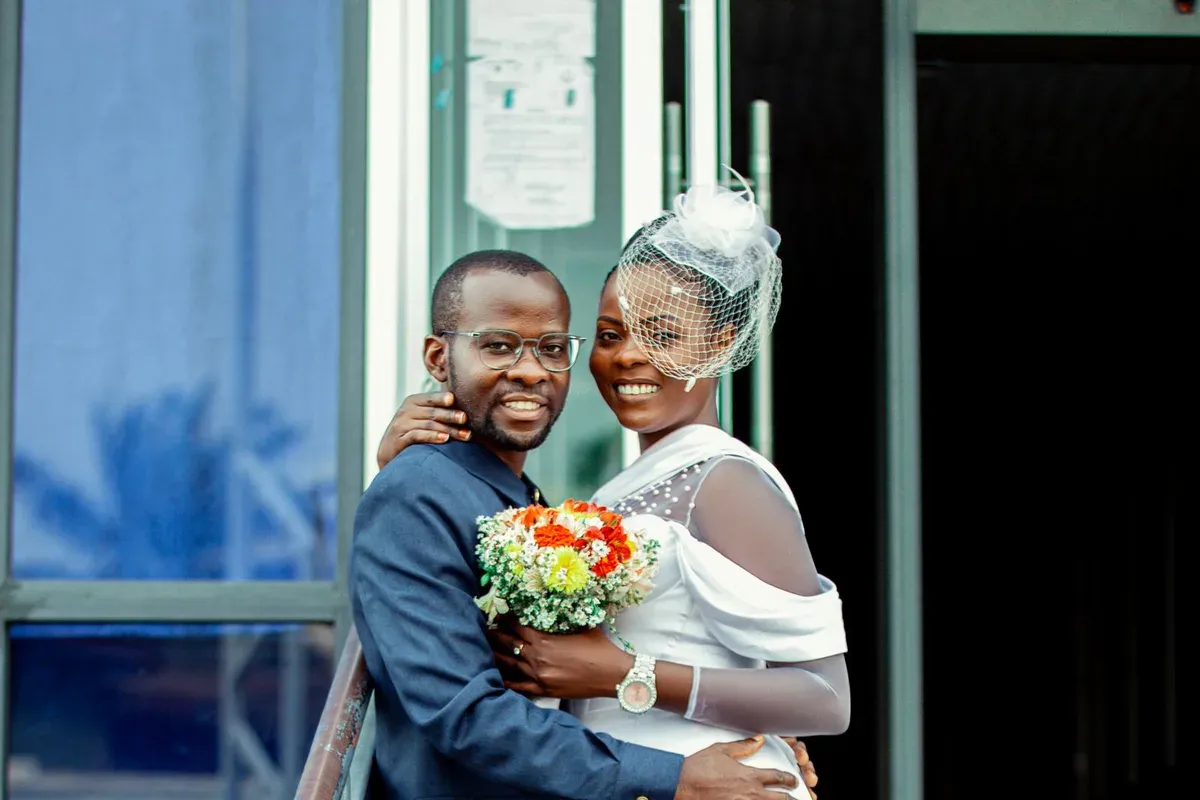
They will say the wedding was effortless, and they will say it for ten years — which is precisely the return on all this preparation, and the reason the couple in our opening photograph are laughing in a conservatory instead of managing a clipboard.
Plan at full scale, hire the cabinet, protect the budget's load-bearing walls, design every pause — and then, on the day, put the plan in your planner's hands and go and be married. That is the whole secret. The decade of talk is just the echo.
Preserve the day with the same seriousness, because at full scale the archive is part of the gift.
Brief your photographer and film team on the people who must not be missed — the grandparents, the godparents, the friends who flew across an ocean — and give them the family groupings in writing before the day, so the formal portraits take minutes instead of an hour of hunting.
Claim ten unscripted minutes alone with your new spouse somewhere inside the celebration, even if it is only a walk around the garden the conservatory keeps: couples remember that pause when the rest of the day becomes a beautiful blur.
Order the album while the choosing is easy, print the portraits for the parents, and write your thank-you notes within the season, by hand, naming the gift and the moment. A wedding at this scale becomes a family heirloom or a family anecdote depending on how carefully its evidence is kept.
The Catered Affair
The Gala Gown
Private Islands and Full Buyouts
Women of Distinction — Profile Collection
The Knot — “How Much Does a Wedding Planner Cost?”
Thots Life — “Wedding Planner Costs by Tier”
Wiki Mundi — “Luxury Wedding Planning Timeline & Budget Cost Breakdown Guide”
Joy — “Wedding Planning Checklist: A Month-by-Month Timeline”
ConnectX Events — “Wedding Planning Checklist: A Month-by-Month Timeline for Couples”
The Perfect Wedding — “12-Month Wedding Planning Checklist”
Every Little Something — “The Standard in Wedding Stationery”
The Fox Magazine — “Wedding Guest Experience: Downtime, Mobile Apps and Digital Rituals”
Shelley Ann Events — “Unexpected Luxury Details Guests Will Always Remember”
Questions & Answers
How do families pass down wealth and values?
A true luxury wedding planning, budget and planner guide — the twelve-month runway, the planner hired first, the vendor team assembled like a cabinet, and the details guests will still be describing ten years from now. It links to 4 stories and articles — open any card to read the full piece.
How do you involve children in family wealth planning?
A true luxury wedding planning, budget and planner guide — the twelve-month runway, the planner hired first, the vendor team assembled like a cabinet, and the details guests will still be describing ten years from now.
How do I read the full stories on The Wedding at Full Scale: Planning a Celebration People Talk About for a Decade?
Choose any card on this page. Each one opens a full page of its own — the complete story or article, with its sources linked.