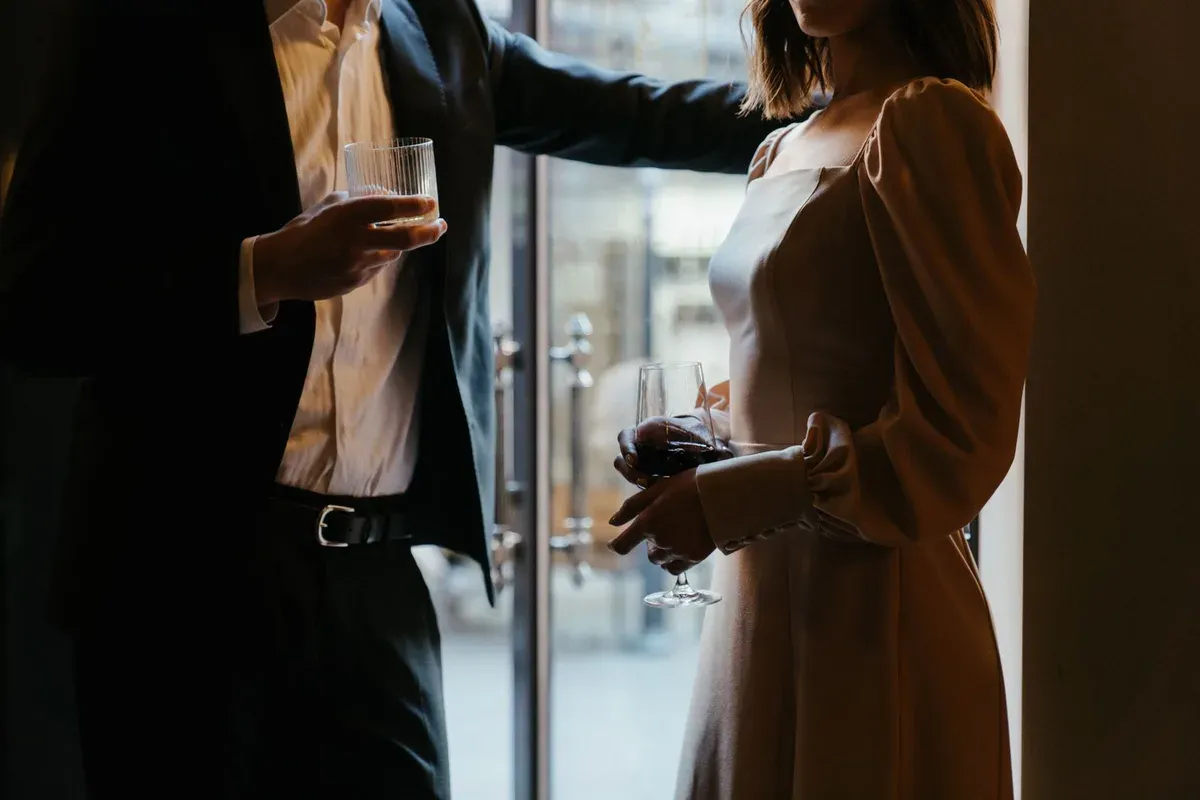
Hosting the Salon: Evenings of Music, Letters, and Talk
To host a salon evening — music, poetry, and guests chosen like the movements of a piece — is to revive the most useful social invention our culture ever made: the room where artists, patrons, and talk meet. Here is how to build one that becomes an institution.
Every few years, someone announces that the salon is back. The truth is kinder: it never entirely left us, because learning how to host a salon evening of music, poetry, and guests who genuinely have something to say answers a hunger that restaurants and galas cannot touch. A dinner party feeds people.
A salon introduces them — to a poem they had never heard, to a pianist between engagements, to the stranger across the room who turns out to be exactly the collaborator, client, or friend they had been missing. When you host one well, your living room joins a lineage.
This guide walks that lineage first, because the tradition is the instruction manual, and then gives you the modern craft: the list, the programme, the room, and the host's quiet work inside it.
The Inheritance: The Dark Tower and the Saturday Nighters
The American salon's grandest chapter was written in Harlem.
In the 1920s, everyone who mattered to the Renaissance clamoured for an invitation to A'Lelia Walker's townhouse on West 136th Street, where she converted a floor into the Dark Tower — a cultural salon where musicians, writers, artists, and actors mingled with patrons, named for Countee Cullen's poem "From the Dark Tower."
Langston Hughes called Walker "the joy goddess of Harlem's 1920s," and his memoir gives the scale of her hospitality:
A'Lelia Walker had an apartment that held perhaps a hundred people. She would usually issue several hundred invitations to each party.— Langston Hughes, The Big Sea, via the National Trust for Historic Preservation
Walker understood something every salon host since has had to learn: the room works when the generations and the callings are mixed — the young writer beside the established patron, the musician beside the editor — and when the host's generosity is structural, not decorative.
Her biographer A'Lelia Bundles recounts that Walker sat down with young writers including Hughes, Cullen, and Richard Nugent and asked them directly what they would like, and how she could help promote their work, before the Dark Tower ever opened its doors. The salon, in other words, was designed with its artists, not merely decorated with them.
Two hundred miles of tradition south, Georgia Douglas Johnson was proving the form could be intimate as well as grand.
At her home at 1461 S Street NW in Washington, she hosted Saturday-evening gatherings — the S Street Salon, whose guests became known as the Saturday Nighters — where Hughes, Countee Cullen, Jean Toomer, Alain Locke, Jessie Redmon Fauset, and Zora Neale Hurston, a regular, read new work and argued about it.
Johnson called the house the Half-Way House, in the spirit of shelter for those in need, and the gatherings ran, in one form or another, for forty years. Forty years. That is the standard: not a party, but an institution with a door that keeps opening.
The Guest List Is the Artwork
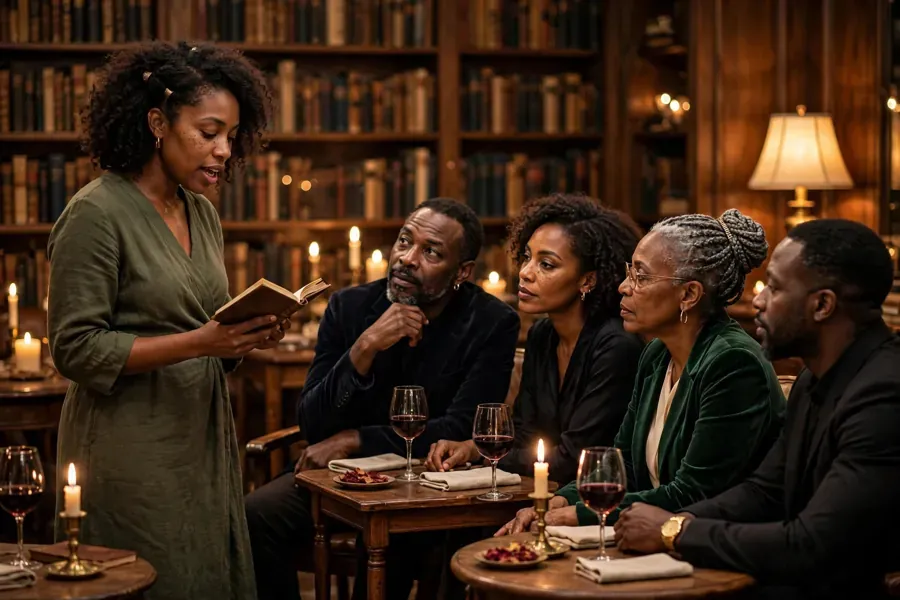
Modern salon hosts are unanimous on the first principle: curate the people before you curate anything else. The Salon Host's guide puts it plainly — mix generations, divergent viewpoints, and different careers and interests, because a room spanning college students through octogenarians makes for a truly lively evening, and good listeners are its unsung heroes.
Twenty guests is the classic salon size for a reason: large enough for surprise, small enough that everyone can hear a poem without a microphone and no one spends the night in a corner talking to the one person they arrived with.
Build the list in thirds. A third artists and performers — the pianist, the poet, the actor between productions, the young painter with one extraordinary canvas. A third patrons and professionals whose work touches culture from the other side: the collector, the foundation officer, the bookseller, the architect.
And a third wild cards — the brilliant teacher, the retired judge with the stories, the friend of a friend you met once and could not stop thinking about. Then apply the old rule that experienced hosts state without apology: guests do not bring uninvited guests. The list is the composition; a salon is not a public house.
Give the evening a theme with a spine. A single, specific subject — a poet's new collection, a question the room can genuinely divide over, a composer whose work the pianist will play — gives guests something to anticipate and prepare for, and rescues the night from drifting into the shallows of everybody's week.
The literary salon tradition suggests choosing topics broad yet concise enough to guide the night and let people bring work or thoughts to share. Your invitation should carry the theme, the hour the programme begins, and one graceful line about what guests might bring: a short poem they love, a song, a question.
People rise to the level of the invitation they received.
The Programme: An Evening With a Shape
A salon feels spontaneous to its guests precisely because it is not spontaneous for its host.
One experienced host's running order is worth adopting whole: doors at seven, an hour of mingling with food and drink in hand, then a gentle summons — a bell, a glass — and the seated programme: a guest interview kept short, audience questions, and a little live music, done by half past nine.
Adapt the elements to your room — twenty minutes of music, two short readings, one real conversation held in common — but keep the proportions. The programme should be the evening's spine, not its occupation; the talk it generates is the point, and the talk needs unstructured time on both sides of it.
Anchor the programme with two or three prepared voices and let the rest be response. Literary salon guides advise exactly this: plan a few presentations or speakers to start the conversation, and only two or three are needed to keep things moving.
Ask your performers early, tell them their minutes honestly, and protect those minutes on the night — nothing curdles a salon faster than one guest consuming the evening. If your pianist plays, seat the room so the music is an event, not wallpaper: lights a touch lower, glasses down, the host's own attention visibly given.
Attention is contagious; so is its absence.
Choose the music as carefully as the speakers, because in a salon the music is a speaker.
One instrument, played well, in a room built for listening, will always outclass a playlist reaching for atmosphere — a pianist who can move from a nocturne to a standard the room hums along with, a small string pairing, a vocalist with a guitarist.
Brief your musician the way you brief your readers: the arc you imagine, the moment the set should land, the pieces your theme calls for. And let one piece remain unannounced, chosen by the performer in the room's own weather.
The Dark Tower's evenings were remembered for exactly that aliveness — programming held firmly enough to have a shape, loosely enough to surprise the people who gave it.
Paying the Artists, and the Form's New Life
One piece of modern craft the Renaissance hosts would recognise instantly: look after the artists properly.
Walker used her fortune to build a room where young writers were asked what they needed; the contemporary equivalent is unglamorous and essential — agree the fee or the honourarium before the evening, pay it promptly, feed your performers as guests rather than as staff, and credit them by name when the evening is written up or photographed.
A salon that becomes known for treating its musicians and poets well will never want for talent; word travels in artistic communities at the speed of gratitude. The poet you host generously in February is the laureate who remembers your room in five years, and brings the next generation with her.
Nor is the form a nostalgia act. Writing on the new wave of Black cultural salons, the Atlanta Journal-Constitution observes that long after the Dark Tower, a new wave of cultural salons has emerged in Atlanta and other cities, answering a present hunger for civil exchange and community.
That is the deepest reason to host: the salon is not a theme party with better furniture.
It is civic infrastructure at the scale of a living room — a place where a community thinks aloud in good company, where introductions compound into institutions, and where culture is not consumed but made, one evening at a time, by the people in the chairs.
The Room, the Food, and the Host's Real Job
Set the room for listening: chairs in a rough circle or arcs rather than rows, side tables within reach of every seat, lamplight over overhead glare, and the bookshelves — if you are lucky enough to have them — doing the decorating.
Keep food abundant but structurally simple: things that can be eaten from a small plate, standing or seated, without a knife's negotiation. The salon is not a dinner party wearing a costume; the meal must never become so elaborate that the host spends the evening in the kitchen. If cooking is not your gift, order beautifully and without apology.
Your presence in the room is the one ingredient that cannot be catered.
Because your real job is the conversation. The host of a salon is its conductor: introducing the two people who should know each other and saying, in one sentence, why; rescuing the quiet guest with a question aimed at what they know; gently steering the monologuist back into the ensemble.
This is conversation practised as a craft — the same craft we treat at length in Conversation at Altitude — and it improves with every evening you give. Keep a notebook after each salon: who sparkled, which pairing caught fire, which theme ran long. Institutions are built out of exactly such marginal notes.
And then — the step that separates an evening from an institution — do it again. Fix a rhythm the city's calendar can learn: the first Friday, the last Sunday, the evening tied to each new exhibition or each season's turning. Invite the artists back as their work grows; let the room watch a poet become a name.
Walker filled her rooms by the hundred and Johnson kept her Saturdays for forty years, and both understood that the salon's true product is continuity: a place where a culture talks to itself, beautifully, on the record of its own evenings.
For the larger architecture of hosting at home, see Hosting at Home: Dinner for Twenty-Four — and for the patrons and arts leaders who fill rooms like these, browse the Empire Makers collection. Your living room is ready. Send the first invitations.
Hosting at Home: Dinner for Twenty-Four
Conversation at Altitude
Empire Makers — Related Profiles Collection
National Trust for Historic Preservation — "How A'Lelia Walker and the Dark Tower Shaped the Harlem Renaissance"
CANVAS Arts / PBS NewsHour — "New Book 'Joy Goddess' Reveals How A'Lelia Walker Helped Shape the Harlem Renaissance"
New Georgia Encyclopedia — "Georgia Douglas Johnson"
The Salon Host — "How to Host a Salon: The Ultimate Modern Guide"
Marni Jameson — "Not Just Another Dinner Party: Salons Offer Way to Open Homes and Minds"
Read Poetry — "How to Host Your Own Literary Salon"
Atlanta Journal-Constitution — "From Harlem to Atlanta, We Still Need Black Cultural Salons"
Questions & Answers
Who will you meet on this page?
To host a salon evening — music, poetry, and guests chosen like the movements of a piece — is to revive the most useful social invention our culture ever made: the room where artists, patrons, and talk meet. Here is how to build one that becomes an institution. It links to 3 stories and articles — open any card to read the full piece.
What makes these stories worth reading?
To host a salon evening — music, poetry, and guests chosen like the movements of a piece — is to revive the most useful social invention our culture ever made: the room where artists, patrons, and talk meet. Here is how to build one that becomes an institution.
How do I read the full stories on Hosting the Salon: Evenings of Music, Letters, and Talk?
Choose any card on this page. Each one opens a full page of its own — the complete story or article, with its sources linked.