
The Sanctuary at Home: Rest, Prayer, and the Room You Keep for Yourself
How to create a prayer room at home for rest is really a question about one kept corner, one calm bedroom, and a few minutes a day that belong to nobody but you.
Every house, however grand, has rooms that work for a living — kitchens that produce, studies that answer, sitting rooms that receive. This article is about the opposite kind of room: the one that asks nothing of you.
Learning how to create a prayer room at home for rest begins with admitting that the people who carry the most — for families, for businesses, for whole communities — are usually the last to be given a place to set it down. So we build one.
Not a showpiece, and not a project for a decorator's portfolio: a kept corner, a real chair, a calm bedroom behind it, and a small daily practice of stillness that different households will fill with different words — prayer, meditation, scripture, silence, breath — and the same unmistakable result. Rest, on purpose, at home.
Notice how little of this is about square footage. The guidance across every tradition and every design source agrees on the essentials, and none of them is a spare wing.
A quiet place apart from the traffic of the house, light you can soften, a seat that lets you linger, a few objects that mean something, and a door — real or agreed — that the household learns to respect. The sanctuary is not the room.
The sanctuary is the agreement the room makes visible: in this chair, at this hour, the world waits.
Choose the Corner, Then Defend It
Begin with geography, and be honest about your own house.
One diocesan guide to creating a prayerful space starts exactly there: find a quiet corner of your home where you can escape the noise — a nook in the bedroom, a cosy alcove, or a spot by a window that catches the morning light, removed from distractions but easy to reach, because a sanctuary you must expedition to is a sanctuary you will skip.
The window matters more than it seems. Morning light is the oldest appointment-keeper there is; a chair placed to receive it will call you at the same hour each day without an alarm, and the ritual will begin to keep itself.
Small homes are not excused, and need not be.
Design guidance for prayer rooms in compact spaces makes the same point repeatedly: identify a quiet corner that offers privacy and minimal distractions, keep the design minimalist, and let a simple arrangement of essential items create the focused atmosphere — a rug to mark the territory, a screen or a tall plant to draw the boundary, a cushion or a low bench instead of furniture that must be moved.
Another widely shared guide to sacred space is blunter still, and worth believing: your space doesn't have to be big — even a small tabletop altar or a single cushion can create a meaningful sanctuary. What makes it a room is not walls. It is that nothing else is allowed to happen there.
That last clause is the whole discipline, so state it to the household plainly and kindly, the way you would state any house rule that protects something precious. This chair is not for homework, bills, folding, or scrolling. The objects on its table are not décor to be borrowed, and the candle is not for birthday emergencies.
Households, including loving ones, test boundaries the way water tests a levee — quietly and constantly. A sanctuary kept for a month becomes a fact of the house. A sanctuary negotiated daily becomes a storage corner with a candle on it.
Defend it gently, defend it early, and let your consistency do the arguing.
Furnish It for Lingering
Once the corner exists, furnish it for one purpose only: staying. The seat comes first, and every source returns to it — whether you prefer a plush cushion, a meditation stool, or a cosy chair, make sure your seating invites relaxation, because you will want to linger in this space without feeling stiff or uneasy.
Choose the chair the way you would choose a pew you intended to sit in for decades: supportive, beautiful to your eye, and sized to your body, with a small table at elbow height for the things of the practice — a book, a journal, a cup of tea going quietly cool and entirely unimportant.
Light is the second furnishing, and it should be layered like kindness: daylight first, then a small lamp with a warm glow for early mornings and evenings, then, if your practice and your house allow it safely, a candle — the oldest signal in the world that the next few minutes are set apart. Colour follows light.
The design guidance converges on soft, neutral, calming tones — linen, cream, gentle greens and blues — not as a fashion rule but as an act of mercy toward a nervous system that spends its days among demands. Texture does the rest: a rug underfoot, a throw across the chair's arm, natural materials where your hands actually land.
Then, and only then, the objects — few, chosen, and yours. A sacred text if your tradition has one. Beads, a journal, a small image, a stone from a place that mattered, a photograph of someone you pray for or simply miss.
One guide to prayer corners lists the same instinct across households: include objects that inspire and uplift you — sacred texts, prayer beads, or a small altar — alongside, if reflection is your focus, a gratitude journal or cards that prompt it.
The test for every object is severe and simple: does it call you toward stillness, or is it merely pretty in a photograph? The sanctuary is the one room in the house where nothing earns its place by impressing a guest.
Many Traditions, One Kept Room
Walk into the kept corners of this readership's houses and you will find the same chair furnished a dozen faithful ways, each of them right. A grandmother's corner holds her Bible, worn soft at the Psalms, and the list of names she carries every morning.
A Muslim household keeps a clean, beautiful prayer rug in a quiet place, unrolled at its hours and treasured between them. A meditation practitioner keeps a cushion, a small bell, and nothing else at all — the emptiness is the furnishing.
A Catholic corner keeps a crucifix and a candle; a Jewish home makes its sanctuary as much in time as in space, in a weekly rhythm of rest that turns the whole house quiet at once; a friend who would name no tradition at all keeps the chair, the window, and ten minutes of breathing before the day begins.
This magazine does not referee among these, and the room does not ask it to. What they share is the architecture: a place, a time, a practice, and a person restored by all three.
If your household holds more than one tradition under its roof — as many of ours now gratefully do — the corner handles that with more grace than most dinner tables. Shared elements at the centre, personal elements at each seat, and one rule above all: nobody edits anybody else's objects.
The sanctuary is where a family practises, in miniature, the larger art of honouring what restores the people it loves.
The most important aspect of your sacred space is not how it looks but how regularly you use it.— Creating a Sacred Space for Prayer and Meditation
That sentence deserves its place on the wall, because it acquits every modest corner and indicts every beautiful, unused one. A chair, a book and a daily ten minutes will change a life. A dedicated room, furnished in a weekend and visited at Easter, will change nothing but the floor plan.
Build small, use daily, and let the practice — not the purchase — do the growing.
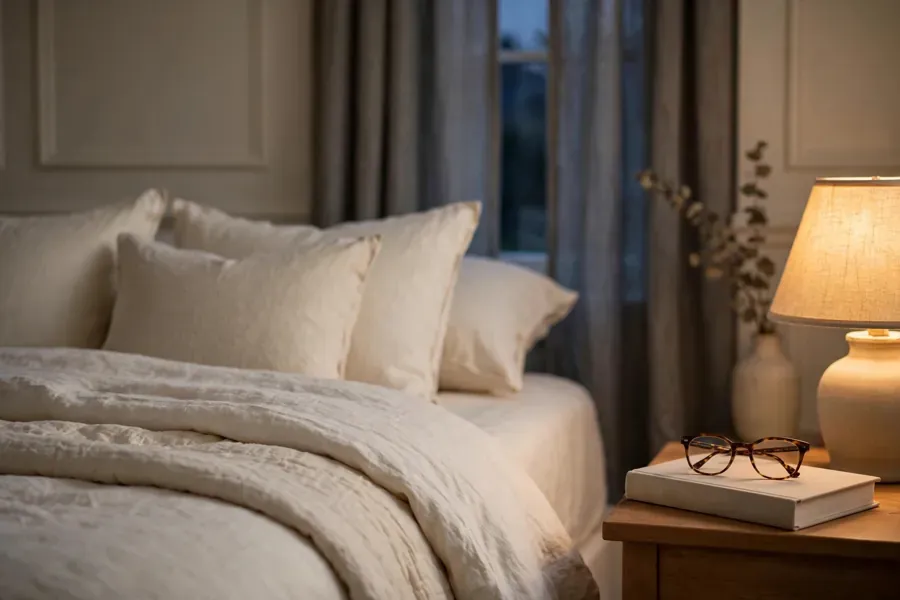
The Bedroom Behind It: Rest You Can Sleep In
The sanctuary's second room is the one you sleep in, and it deserves the same defence.
Sleep guidance summarised from the National Sleep Foundation describes the bedroom as a dedicated sanctuary for sleep: invest in a comfortable mattress and supportive pillows, minimise ambient noise, keep the room dark, and hold a clean, clutter-free space that promotes a psychological sense of relaxation — with a cooler room, around 65 degrees, helping the body's own temperature do its nightly work.
Translate that into house rules and it reads like the corner's discipline after dark: no bills on the bed, no work glowing from the nightstand, no television conducting the room's business at midnight. The bedroom is not the house's leftover space. It is the engine room of everything the house does by day.
Then give the night a ritual, the way the corner gives the morning one.
Sleep-sanctuary guidance describes the wind-down plainly: a consistent routine of thirty to sixty minutes before bed — dim the lights, turn off the screens, change, stretch or breathe gently, read a few pages of a physical book, and write down any lingering thoughts so they stop rehearsing themselves.
Wellness guidance adds the detail most households resist and most sleepers thank it for: a digital curfew, stopping phone and television use at least an hour before bed, in favour of a real book, a stretch, or soft music.
Note that none of this is medicine, and this article offers none — a reader whose sleep is broken by pain, breathing, or worry that will not lift should take that, promptly, to their own clinician.
What a kept bedroom offers the ordinarily tired is simpler and, for most of us, sufficient: a room that has been taught to mean rest, and a body that believes it.
Keep It Like You Mean It
A sanctuary, finally, is maintained the way a garden is — briefly, often, and with affection. Dust the small table when you dust nothing else. Replace the flowers, or the candle, before they become apologetic.
Keep the journal and pen where your hand expects them, the book's ribbon at tomorrow's page, the cushion plumped back into invitation. One prayer-corner guide calls this maintenance itself an act of devotion: keeping the space clean, organised and ready communicates to your own heart that this time and this place are precious.
Households with children will find the corner teaches its own lesson here. A child who watches a parent tend a quiet chair learns, without a single lecture, that adults are allowed to rest, that stillness is a strength, and that some minutes in a day are not for sale.
So begin where every source in this article begins: today, with one corner. Choose the chair, clear the surface, set down the few objects that are truly yours, and sit in it tomorrow morning before the house wakes — with a prayer, a page, a list of gratitudes, or nothing but breath and window light.
Keep the bedroom behind it just as honestly. A month from now the room will have started keeping you, which was the point all along. The sanctuary at home is not an escape from the life you have built.
It is the room that makes that life, rested and restored, possible.
The Therapist to the Stars: Elite Mental-Health Care, Total Discretion
The Dentist's Standard: The Smile, Kept Perfectly
The Hair Story: What Your Hair Says Before You Do
Pastors & Faith Leaders — Black Excellence Profiles
Diocese of Victoria — "Creating a Prayerful Space at Home"
Jodi Aman — "How to Create a Sacred Space at Home for Prayer & Meditation"
Coohom — "Small Home Prayer Room Ideas When Your House Feels Busy"
Faith, Scripture & Meditation — "Creating a Sacred Space for Prayer and Meditation"
The Bed Sheet Club — "How to Optimize Your Sleeping Environment for Better Rest" (National Sleep Foundation guidance)
Yogrun — "Creating a Sleep Sanctuary: Tips for a Restful Bedroom"
Spa & Wellness — "Sleep Better Naturally: Nine Wellness Rituals to Support Deep Rest"
Questions & Answers
Who will you meet on this page?
How to create a prayer room at home for rest is really a question about one kept corner, one calm bedroom, and a few minutes a day that belong to nobody but you. It links to 4 stories and articles — open any card to read the full piece.
What makes these stories worth reading?
How to create a prayer room at home for rest is really a question about one kept corner, one calm bedroom, and a few minutes a day that belong to nobody but you.
How do I read the full stories on The Sanctuary at Home: Rest, Prayer, and the Room You Keep for Yourself?
Choose any card on this page. Each one opens a full page of its own — the complete story or article, with its sources linked.