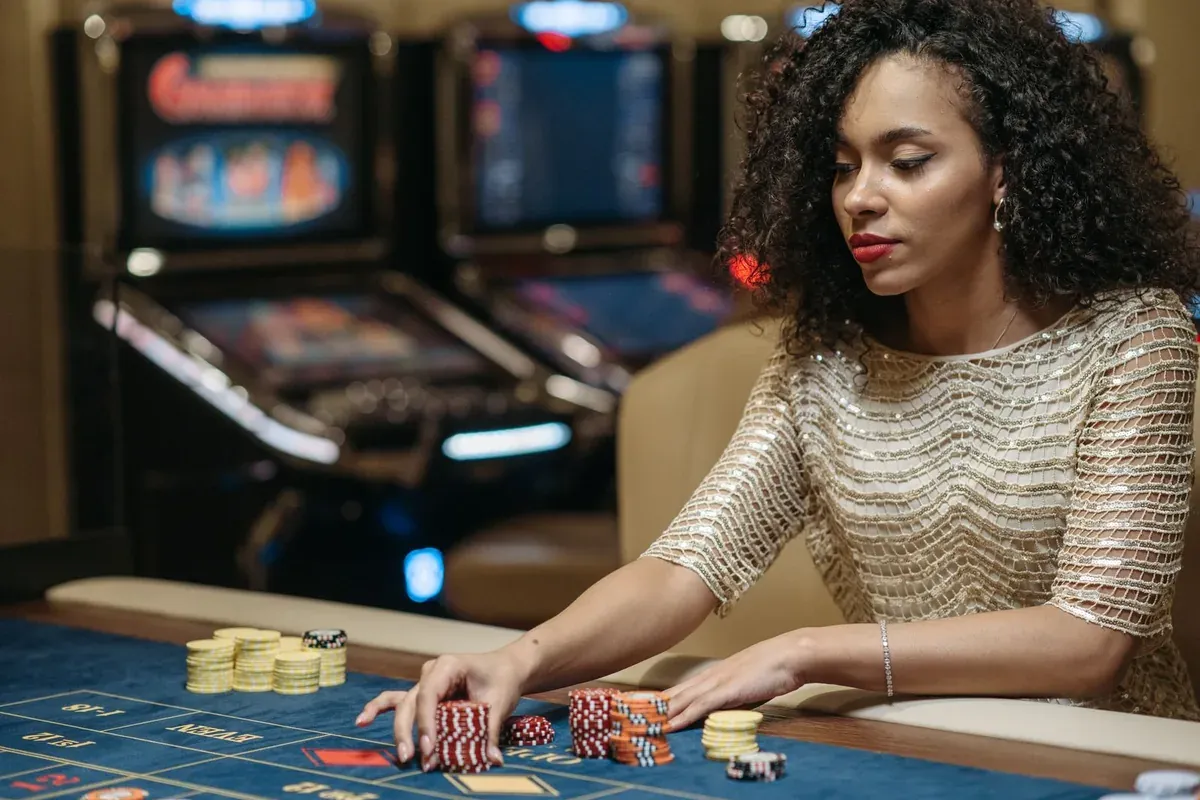
The Great Casinos: The Best Luxury Casinos in the World, Monte Carlo First
The finest high-end casinos on earth, Monaco first — Casino de Monte-Carlo and its private salons, London’s members’ clubs and Baden-Baden’s Kurhaus — judged on the rooms, the dress and the service culture. Best luxury casinos in the world, Monte Carlo dress code private salons included, with no odds and no instruction: just the theatre of the house.
The best luxury casinos in the world are not really about games. They are about rooms — gilded, hushed, beautifully mannered rooms — and about a service culture that treats an evening as theatre, with you correctly dressed in the middle of it.
Monte Carlo dress code private salons and all, the Casino de Monte-Carlo comes first in any honest telling, and this piece stays there longest: the Belle Époque salons, the private rooms behind the public ones, and what the house expects of the people it lets in.
Then London’s members’ clubs, Baden-Baden’s palace of a Kurhaus, and a clear-eyed word on Macau, Singapore and Las Vegas. No odds, no instruction, no encouragement — just the rooms, the dress, and the way the truly established behave inside them.
Understand first why Monaco is the measure. The Casino de Monte-Carlo, established in the nineteenth century, has welcomed European royalty, international dignitaries and the world’s most affluent travellers for over 160 years.
Prince Charles III opened the casino in 1863 to rescue the principality’s finances, and Charles Garnier — the architect of the Paris Opera — gave it a façade of ornate columns, a terrace over the Mediterranean, and interiors of gilded ceilings and crystal chandeliers of museum quality.
Within two decades the casino’s success had let Monaco abolish income tax. You are not entering a gaming hall. You are entering the building that built a country, and the house dresses its expectations accordingly.
Monte Carlo: The Rooms Within the Rooms
The casino is arranged like a set of Russian dolls, each layer quieter and more formal than the last. The Atrium and the free-access areas — boutique, café, the Renaissance slot rooms — ask only that you be presentable.
The gaming lounges open from 2 p.m., reserved for adults with valid identification, and the temperature of formality rises with the hour. Deepest in are the private lounges: the Salon Touzet, open to visitors in the morning and transformed into a private play area from 2 p.m., and the Salle Blanche, reserved for My Monte-Carlo Gold, Platinum and Privé cardholders.
A complete guide to the house divides it the same way — ordinary rooms, private rooms, and super-private salons that remain off limits to all but the most committed guests, with private-room access tied to Gold and Platinum membership.
Admission for the gaming rooms is modest by design — figures published for the house put entry around €19–€20, part of it returned as on-site credit — because the real filter was never the ticket. It is the door policy, the membership tiers, and the dress code, enforced without apology.
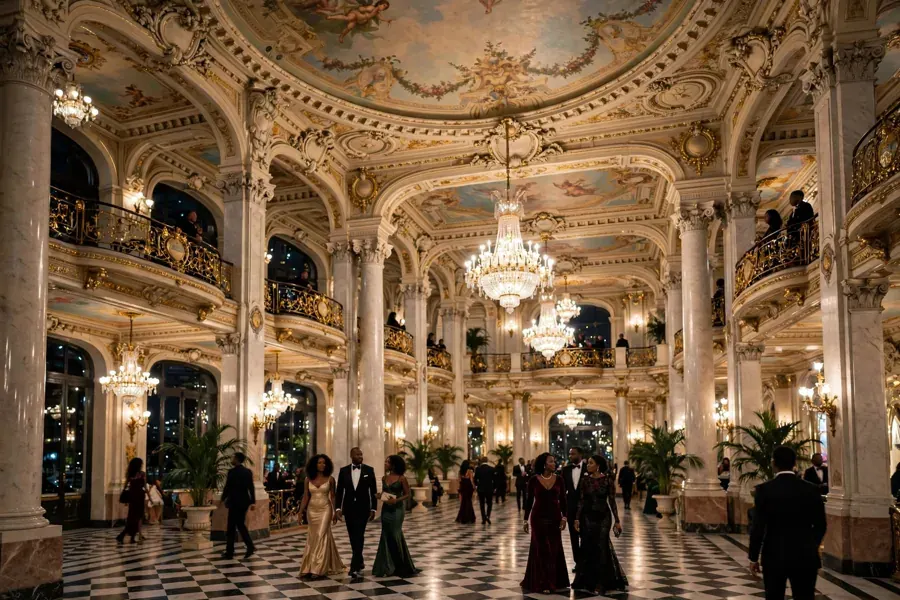
The Dress Code Is the Point
Let us give the code plainly, because arriving wrong is the only unforgivable error. The Casino de Monte-Carlo maintains a strict dress code, checked at the entrance; for the gaming lounges proper attire is required, and from 7 p.m. a jacket and tie are mandatory for men in the private lounges.
House guidance as reported across guides is consistent: shorts — Bermuda shorts expressly — ripped jeans, sportswear, trainers and beachwear are turned away; after 7 p.m., T-shirts are not permitted in the gaming rooms.
A detailed dress-code guide puts the evening rule for the private salons at its strictest: in the Salons Privés, men are required to wear a jacket, and T-shirts and short-sleeved shirts are refused at the entrance. Women are expected at the same register — evening or cocktail dress, or tailored trousers with a formal top.
Morning visits are the gentle exception: the monument opens for heritage tours, audioguide in hand, before play begins. Dress well and none of this is a hurdle; it is a compliment the house pays its own history, and the regulars understand it as such.
How the Established Behave Inside
The service culture of a great casino runs in both directions. The house provides croupiers trained to impeccable standards, hosts who remember names and preferences, private salons where a party can be entirely alone with its table, and dining at the level of the principality around it — the Monte Carlo complex holds Michelin-starred tables steps from the salons.
The guest’s side of the contract is quieter: arrive with identification, in dress, on time for the room you have been given; keep phones away from the tables; let the staff run the room; and treat the evening as an evening — dinner, the salons, perhaps the opera house adjoining — rather than a siege.
The regulars are recognisable by exactly this ease. They are known to the house, they are expected, and they leave the theatre intact for the next night. Discretion is the house style, and it is contagious.
London: The Members’ Clubs of Mayfair
London does the same idea behind a different door: not a palace on a square, but a private members’ club. Mayfair’s exclusive casinos operate as private members’ clubs, where prospective members often need sponsorship from existing patrons and must undergo vetting, with annual fees reported from £1,000 to £25,000 or more depending on the house.
Les Ambassadeurs, on Hamilton Place, is the name at the top of that world — a committee approves membership, gentlemen are expected in jacket and tie, ladies in elegant dress, and the club’s history runs through the first Bond film, whose casino scenes it hosted.
Crockfords, on Curzon Street, carries a name founded in 1828 and the same formal expectations. The pattern matches Monte Carlo’s exactly, translated into club English: the membership is the filter, the dress code is enforced, and private gaming rooms are available for parties who want the room to themselves.
Baden-Baden, and a Clear-Eyed Word on the Rest
Germany’s entry is the connoisseur’s favourite.
The casino inside Baden-Baden’s Kurhaus is some 190 years old, its rooms modelled on Versailles and Fontainebleau — rich red velvets, gilded stucco, ceiling frescoes and ornate chandeliers — and it keeps the old European contract: a small admission fee, passport identification, an age floor of 21 for the gaming rooms, and jacket and tie for men in the gaming rooms, with rentals available if your wardrobe is not up to it.
Dostoevsky played here and turned the fever of it into The Gambler; the house today is calmer than his novel and more beautiful than most palaces.
Beyond Europe, be clear-eyed: Macau’s VIP world and Singapore’s great integrated resorts run on scale, private elevators and host service of a very high order, and Las Vegas keeps its high-limit rooms behind velvet ropes inside enormous resorts — all impressive, all professional, and none of them pretending to be what Monte Carlo is.
The European houses sell theatre and continuity. The others sell magnitude. Knowing which evening you actually want is the whole of the connoisseurship.
One last piece of counsel, offered in the spirit of the houses themselves.
A great casino evening is planned like any other great evening in this magazine: stay nearby — the most exquisite hotels are, in Monte Carlo’s case, across the square — dress once, properly, for the whole night, and let dinner and the salons share the evening rather than compete for it.
Arrive by the means that suits a formal night, having settled the question of getting there the way you would for a gala. The rooms will do the rest. They have had a century and a half of practice.
Macau and Singapore, Described Honestly
The Asian houses deserve their own honest paragraph, because their model is different and, on its own terms, superb. Coverage of the world’s most opulent casinos groups Monte Carlo with Macau and Marina Bay Sands for a reason: these are palace-scale resorts where the gaming rooms sit inside entire cities of hotels, restaurants and spectacle.
Macau’s VIP world was built around privacy and host service — salons arranged for parties who never need to cross a public floor — and Singapore’s integrated resorts brought the same scale to a rigorously regulated, impeccably run setting.
What they do not attempt is Monte Carlo’s particular spell: the small, old, European room where the building itself is a monument and the evening feels like 1890 with better lighting. Neither model shames the other.
The traveller who wants magnitude, novelty and a resort that never sleeps will be happier in Macau or Singapore; the traveller who wants continuity and theatre should book the train to Monaco. Connoisseurship is knowing which appetite you are feeding.
Las Vegas, similarly, should be described as it is: the world capital of scale, where the high-limit rooms are genuine sanctuaries of service inside resorts of thousands of rooms, and where a valued guest’s host can arrange nearly anything in the city.
Its dress culture is its own — the Strip rewards dressing up richly at night and forgives almost everything by day — and its private salons run on relationships with hosts rather than club membership. It is a magnificent machine for entertainment.
It is simply not pretending to be a Belle Époque palace, and the comparison only ever flatters both when each is judged as itself.
The Evening, Planned Properly
Since these are evenings before they are anything else, plan them as evenings.
In Monte Carlo, the classic shape is dinner first — the principality’s starred tables are minutes from the salons — then the casino from mid-evening, when the dress code is in full force and the rooms are at their most beautiful, with the terrace and the square for air between chapters.
Bring the identification the house requires, in its original form; copies and photographs of documents are refused at serious doors.
Decide the shape of your night before you enter — which rooms, how long, when dinner ends and the evening does — the way you would decide the shape of a ball, and keep to your own plan with the same grace the house keeps to its rules. Travel in pairs or parties, as these rooms were designed for company.
And end the night the way the regulars do: unhurried, on the terrace or in the hotel bar, with the Mediterranean or the Mayfair street or the Kurhaus gardens doing the final act. The games are the excuse. The room, the dress and the company are the evening.
That is the whole philosophy of the great casinos, and it is worth stating once, plainly, before you go: these houses have survived wars, fashions and competitors with a thousand times their floor space by understanding that luxury is behaviour before it is décor. The chandeliers can be copied — and have been, on every continent.
The service culture cannot be photocopied: the doorman who enforces the code kindly, the host who remembers how you take your coffee, the salon prepared for a party before the party thinks to ask.
Dress for that standard, behave to it, and the rooms will treat you as they have treated their regulars for a century and a half — as part of the furniture of a beautiful evening, which is the highest compliment a great house knows how to pay.
The Most Exquisite Hotels: Grande Dames, Private Islands, and Hotels Within Hotels
Charter, Card, or Own: Picking the Right Private Jet Service
Empire Makers — Society Profiles
Tour Azur — “Monte Carlo Casino: An Iconic Landmark”
Luxury Lifestyle — “The World’s Most Opulent Casinos: Monte Carlo, Macau & Marina Bay Sands”
Petrini.mc — “Monte Carlo Casino: History, Visit & Games”
Iconic Riviera — “Casino de Monte-Carlo: The Complete Guide”
Mayfair London — “Exclusive Gaming at Mayfair’s Top Luxury Casinos”
Reid’s Guides — “Baden-Baden, Germany: The Kurhaus Casino”
The Casino Enquirer — “Casino de Monte-Carlo Dress Code”