Image: Napa Green
Philanthropists: The Givers Behind Yvon Chouinard, MacKenzie Scott, Priscilla Chan and Tom Monaghan
A climber who gave his whole company to the planet. A novelist returning a roommate's $1,000 loan at a scale nobody has ever seen. Six lives that measure a fortune by what it gives away.
Produced and Edited by The Bourgeois Society Staff
Our Philanthropists list: six founders, builders and givers — in outdoor apparel, literature, medicine, food, banking and telecommunications — who turned what they built into help for people they will never meet.
Selected on the obstacle climbed, the thing built, and the good given back — and fact-checked line by line, with sources linked under every profile.
Founder, Patagonia — Ventura, CA
Official links: Website
Image: Napa Green
Why We're Inspired
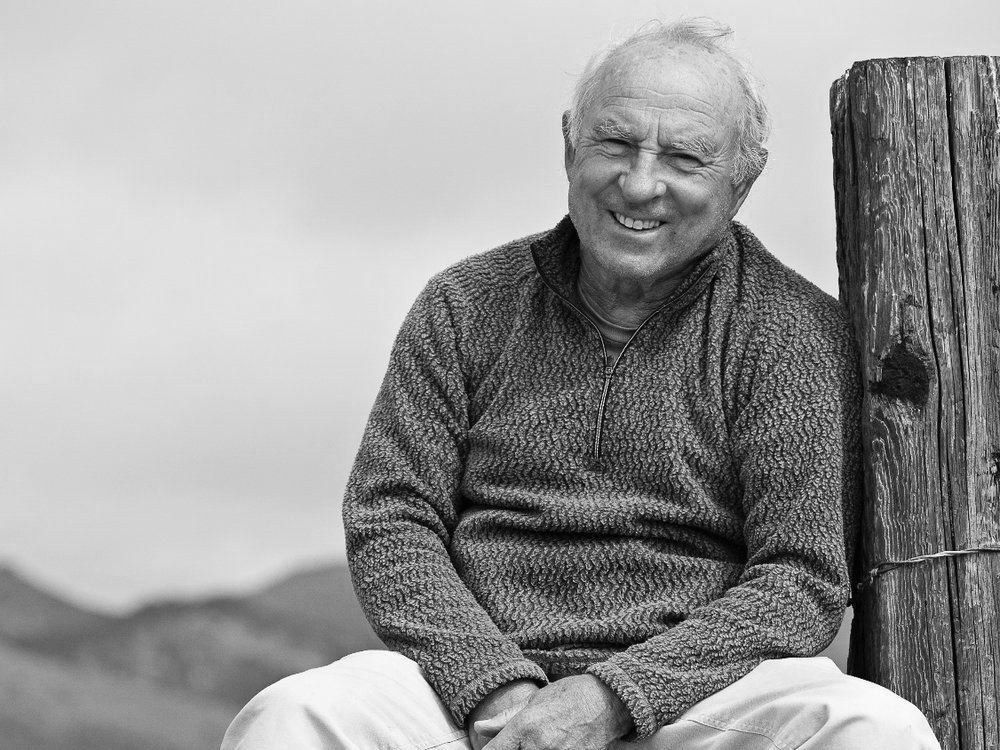
Yvon Chouinard never set out to build a company. He wanted to climb.
As a teenager in 1957, annoyed by the soft, single-use European pitons that scarred the rock, he bought a used coal-fired forge, taught himself blacksmithing, and set up shop in the chicken coop behind his parents' house in Burbank — hand-forging reusable pitons out of chrome steel and selling them for $1.50 apiece out of the back of his car.
The lean years that followed are the stuff of climbing legend: living on about a dollar a day, eating dented cans of cat food bought for a nickel apiece, sleeping in his car in Yosemite between routes.
The gear business that grew out of that chicken coop became Patagonia — and Chouinard spent the whole climb giving money away, pledging 1% of sales to grassroots environmental groups from 1985 onward, more than $140 million in cash and in-kind donations over the decades.
“Earth is now our only shareholder.”
The Story
Then came the move no business school teaches. In 2022, rather than sell Patagonia or take it public, Chouinard and his family gave the whole company away — a business valued at roughly $3 billion.
The voting stock went to the Patagonia Purpose Trust, created to protect the company's values, and the rest to the Holdfast Collective, a nonprofit dedicated to fighting the environmental crisis.
Every dollar of profit the company does not reinvest — roughly $100 million a year — now flows to that fight, to protecting nature and biodiversity and supporting thriving communities. The reluctant founder who hated landing on billionaires lists had found his exit: not a payout, but a planet.
As he put it the day he announced it, Earth is now the only shareholder — and the dividend is the future.
Sources
Lookout Santa Cruz — “Patagonia founder Yvon Chouinard: Activism has been a lifetime's work”
Faster Than Normal — “Yvon Chouinard — Biography, Career & Key Ideas” (chicken-coop forge, $1.50 pitons, 2022 transfer, “Earth is now our only shareholder”)
StudyCountry — “Did the owner of Patagonia give away the $3 billion company?” (1% of sales since 1985, $140M+ awarded)
More from The Bourgeois Society: The full list · Mo Ibrahim · MacKenzie Scott
Founder, Yield Giving — Seattle, WA
Official links: Website · X
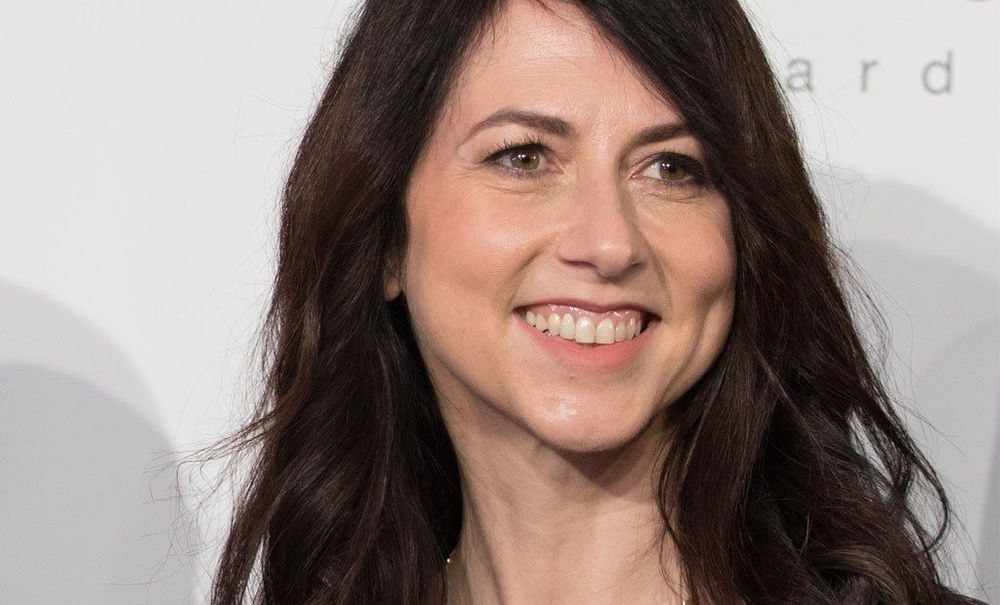
Image: Love Happens Magazine
Why We're Inspired
MacKenzie Scott knows exactly what it is to almost lose an education because the money ran out. Before she finished school, her father's investment firm collapsed amid an SEC investigation and the family filed for bankruptcy.
At Princeton, where she studied writing under Toni Morrison, she worked some 30 hours a week of jobs alongside her course load to stay enrolled.
She never forgot what saved her: a local dentist who fixed her broken tooth for free after seeing her hold it together with denture glue, and a roommate who found her crying and loaned her $1,000 so she would not have to drop out.
A novelist first — and an early Amazon contributor who worked on its name, its business plan and its first freight contracts — Scott has spent her fortune returning those two small kindnesses at a scale nobody has ever seen.
“It is these ripple effects that make imagining the power of any of our own acts of kindness impossible.”
The Story
Through Yield Giving, the organisation she founded, Scott has given more than $26 billion to over 2,700 nonprofits since 2019 — including more than $7 billion in a single recent year, and $387 million to eight historically Black colleges and universities in one round of gifts.
A Giving Pledge signatory, she gives the way her roommate and her dentist gave to her: no application, no naming rights, no strings. The gifts arrive unrestricted, with full trust in the people doing the work — food banks, community colleges, HBCUs and hundreds of small organisations serving the very communities the funding world usually overlooks.
It is, as she tells it, simply the ripple effect of kindness, compounded.
Sources
Princeton Alumni Weekly — “Philanthropy, to the Rescue” (family bankruptcy, Toni Morrison, Princeton years)
Lifestyles Magazine — “$387 million latest gift from MacKenzie Scott supports eight historically Black colleges” (dentist, roommate's $1,000 loan, $26B+ total)
Inc. — “MacKenzie Scott Has Now Given Over $1 Billion to One Area of Higher Education” (unrestricted giving, ripple-effects quote)
More from The Bourgeois Society: The full list · Yvon Chouinard · Priscilla Chan
Co-founder & Co-CEO, Chan Zuckerberg Initiative — Redwood City, CA
Official links: Website
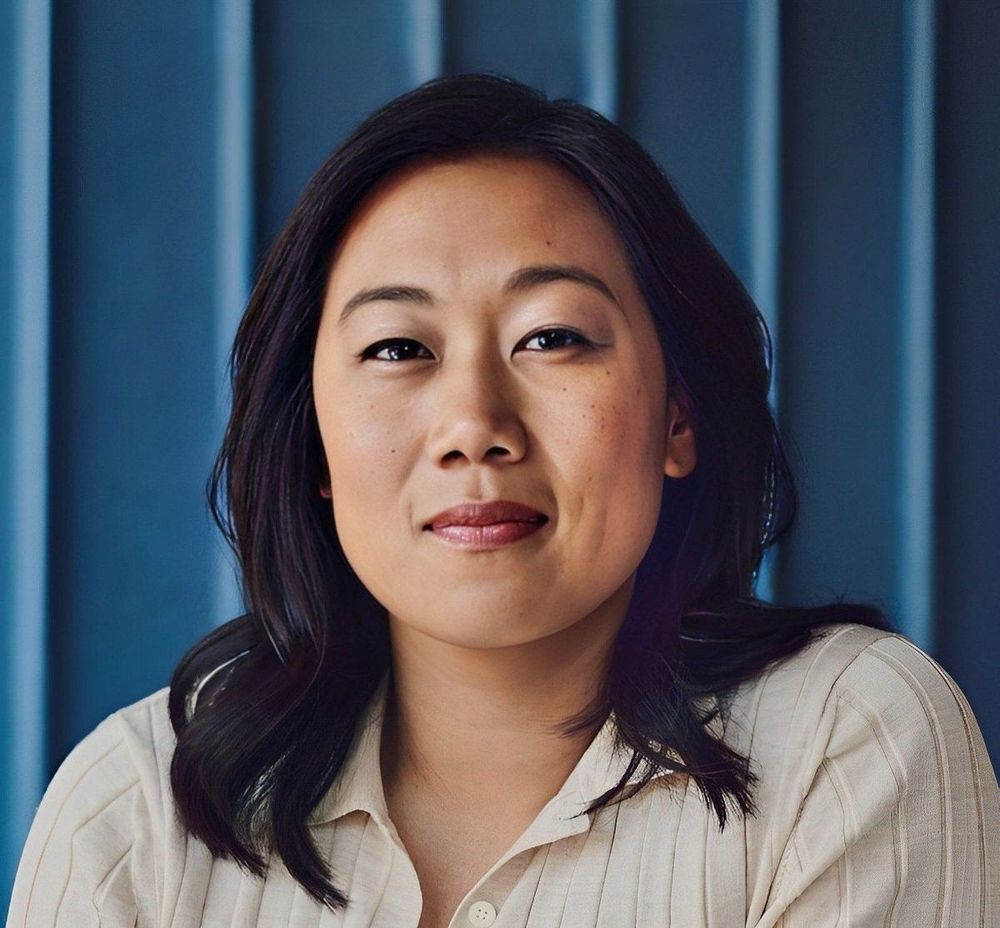
Image: OncoDaily
Why We're Inspired
Priscilla Chan's story begins on the water. Her ethnic-Chinese parents fled Vietnam by boat as teenagers — her grandparents put their children on separate boats at night, so that one sinking could not take every child.
She grew up in Quincy, Massachusetts, largely raised by grandparents who did not speak English, translating for them while her parents worked long hours.
She became the first person in her family to attend college, winning a full scholarship to Harvard, where she studied biology — and she credits her public school teachers, the ones who told her to apply, with seeing her potential before she could see it herself.
“Education is an incredibly personal issue for me. If you are the first generation to go to college, sometimes you do not realize your potential until others point it out.”
The Story
Chan trained as a teacher, then as a pediatrician at UCSF, working with children in low-income communities — the kind of doctor who had to tell families medicine did not yet have answers for their child.
With her husband, Mark Zuckerberg, she co-founded the Chan Zuckerberg Initiative, which the couple pledged to endow with 99% of their Facebook shares over their lifetimes, and which has directed billions toward curing disease, improving education and strengthening communities. She also founded The Primary School in East Palo Alto, joining health care and education under one roof for underserved families.
The refugee boats, the Quincy classroom, the hospital ward — every chapter of her family's story is in the work.
Sources
CEO Today — “Priscilla Chan: The Woman Behind the Chan Zuckerberg Initiative”
Skill Nation — “Priscilla Chan's Inspiring Journey: Transforming Education and Philanthropy” (education quote, first-generation story, CZI co-CEO role)
More from The Bourgeois Society: The full list · MacKenzie Scott · Tom Monaghan
Founder, Domino's Pizza; Founder, Ave Maria University — Ave Maria, FL
Official links: Website
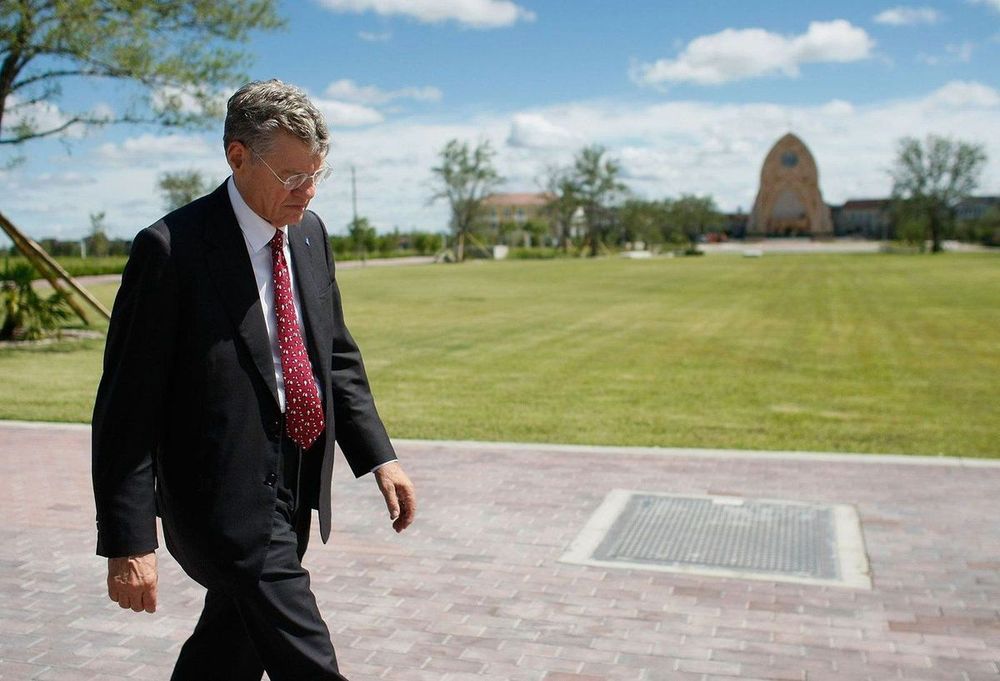
Image: Dwell
Why We're Inspired
Tom Monaghan's father died on Christmas Eve when Tom was four. His mother, unable to raise her boys alone, placed him in St. Joseph's Home for Boys, a Catholic orphanage in Jackson, Michigan, where Polish nuns raised him from six to twelve, before a series of foster homes.
He was expelled from seminary for unruly behaviour and graduated last in his high-school class. Then, in 1960, he and his brother put $500 down — with borrowed money — on a small, failing pizza shop in Ypsilanti called DomiNick's. It is hard to find a shorter distance between a beginning and an empire.
“It was a hole in the wall. It was 500 dollars down, but became the largest pizza chain in the world.”
The Story
That hole in the wall became Domino's Pizza, and in 1998 Monaghan sold his controlling interest for a reported $1 billion — then devoted his second act, and his fortune, to the faith that had raised him.
Through the Ave Maria Foundation he has poured his giving into Catholic education and causes, most visibly as the founder of Ave Maria University in Florida, built to form the kind of young people the nuns of St. Joseph's once formed in him.
The orphanage kid who finished last in his class built a pizza empire; the man the empire made rich enough to buy almost anything chose to build a university instead.
Sources
Fortune (first-person account, via Five Forks) — “Tom Monaghan, Founder of Domino's” (father's Christmas Eve death, orphanage, reported $1B cash-out to focus on philanthropic work)
Faith Magazine — “Building God's Kingdom” (St. Joseph Home years, $500 down in 1960, 1998 sale)
Catholic World Report — “Thomas Monaghan” (orphanage interview, “hole in the wall” quote, Catholic education mission)
More from The Bourgeois Society: The full list · Priscilla Chan · Tony Elumelu
Founder & Chairman, Heirs Holdings; Founder, Tony Elumelu Foundation — Lagos, Nigeria
Official links: Website · X
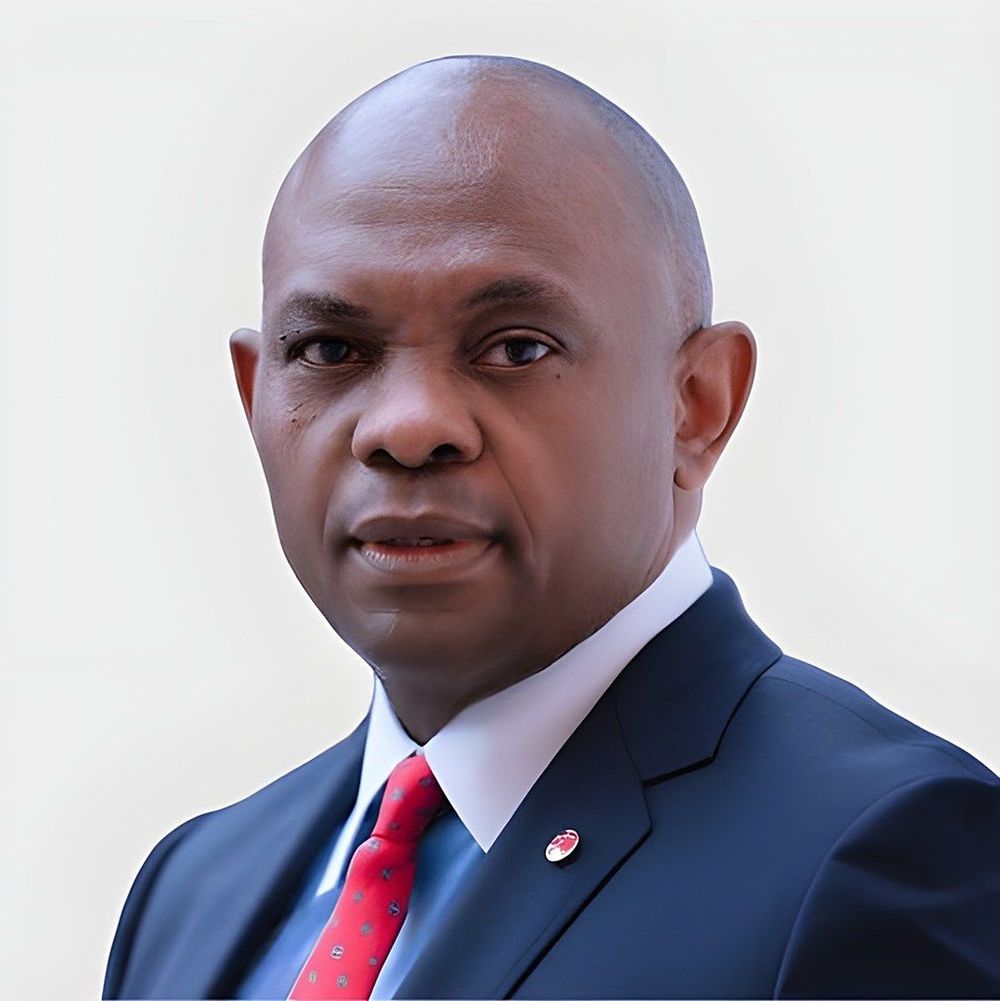
Image: Kristina Reports
Why We're Inspired
Tony Elumelu got his break by applying for a job he was not qualified for.
Fresh from a master's in economics at the University of Lagos — after starting work as a copier salesman — he answered a bank advertisement demanding a minimum 2:1 degree, though his own was a 2:2, and wrote that his degree did not demonstrate the full extent of his intelligence and ability.
The bank's chairman read the letter, took a chance, and hired him as an entry-level analyst; within about a year Elumelu was, at 27, the youngest branch manager in the bank.
In 1997 he led a small group of investors to take over the struggling Crystal Bank, renamed it Standard Trust Bank, and in 2005 led its merger with United Bank for Africa, building UBA into a pan-African bank with subsidiaries in 20 African countries plus France, the U.K. and the U.S. In 2010 he founded Heirs Holdings, his family investment company, in Lagos.
“I started my career as a salesman, a copier salesman to be specific, young, hungry, and hardworking, but the reality was that I was just one of the thousands of young Nigerian graduates, all eager to succeed.”
The Story
Elumelu's second act is Africapitalism — his philosophy that Africa's private sector must create social wealth alongside profit — put into money through the Tony Elumelu Foundation, founded in 2010.
In 2015 he and his wife committed $100 million to the TEF Entrepreneurship Programme; the foundation says it has since disbursed over $100 million in direct funding to more than 24,000 young African entrepreneurs, trained over 1.5 million young Africans on its TEFConnect platform, and helped create hundreds of thousands of jobs.
Time named him to the TIME100 in 2020 for that work. The man who was hired on raw material over paper credentials has spent $100 million making sure other young outsiders get the same look he once got.
Sources
Wikipedia — “Tony Elumelu” (sourced biography: copier-salesman start, Crystal Bank/STB, 2005 UBA merger, $100M TEF commitment)
TechMoran — “Tony Elumelu: The Billionaire Philanthropist Betting $100m on Africa's Start-ups” (24,000+ entrepreneurs funded)
Global CEO Magazine — “How a bank manager became the voice of a continent”
More from The Bourgeois Society: The full list · Tom Monaghan · Mo Ibrahim
Founder, Celtel International & the Mo Ibrahim Foundation — London, United Kingdom
Official links: Website · Instagram · Facebook
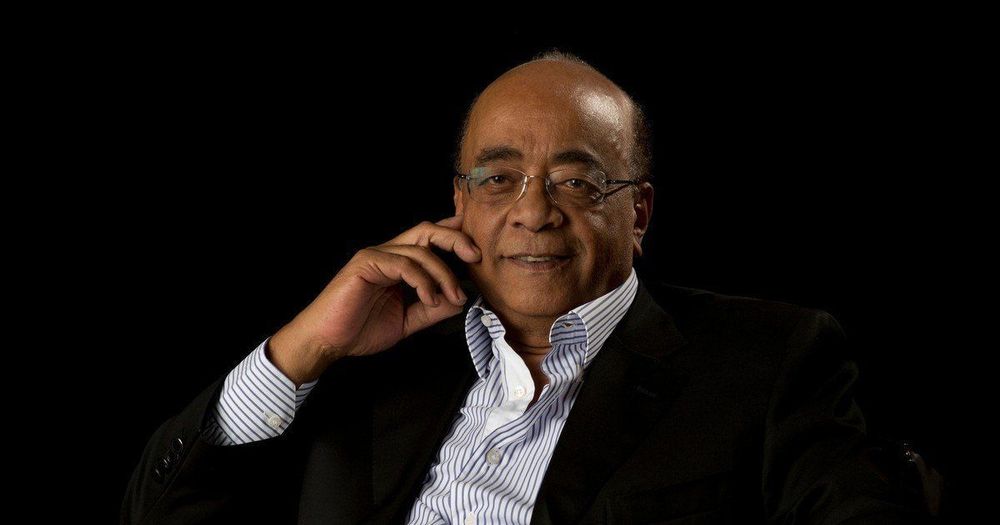
Image: Pulse
Why We're Inspired
Mohammed 'Mo' Ibrahim was born in Sudan in 1946, the son of a clerk in the cotton trade, and grew up in Alexandria, Egypt, in a family that put education above everything. Scholarships and study carried him from an electrical engineering degree at Alexandria University to a master's at Bradford and a PhD in mobile communications at Birmingham.
After Sudan Telecom and a stint teaching, he became technical director of Cellnet, helping launch the UK's first cellular network, then founded consultancy MSI in 1989. In 1998 he launched Celtel to bring mobile phones to an Africa the banks wouldn't touch — built, deliberately, on a rule that no bribes would be given or accepted.
Celtel grew to more than 24 million subscribers across 14 countries, and in 2005 Ibrahim sold it for $3.4 billion, having proved honest business could win on the world's poorest continent.
“I believe that us business people who have made money in Africa have a responsibility to help bring good governance there.”
The Story
Ibrahim then turned his fortune on the problem he cared about most: governance.
He founded the Mo Ibrahim Foundation in London in 2006, created the Ibrahim Index, which grades the governance of all 54 African nations, and launched the Ibrahim Prize — $5 million plus $200,000 a year for life for African heads of state who govern well and hand over power democratically.
He joined The Giving Pledge, committing at least half his wealth to charity, and was knighted (KCMG) in the 2023 New Year Honours for services to charity and philanthropy. His foundation also funds scholarships for African students. Integrity was his business model twice: once in the building, and once in the giving.
Sources
Encyclopaedia Britannica — “Mo Ibrahim” biography
Duke International Magazine — “Mo Ibrahim: The Telecoms Titan Championing Good Governance in Africa”
Encyclopedia.com — “Ibrahim, Mo”
More from The Bourgeois Society: The full list · Tony Elumelu · Yvon Chouinard