
The Blended House: Blended Family Step Parenting Rules That Work
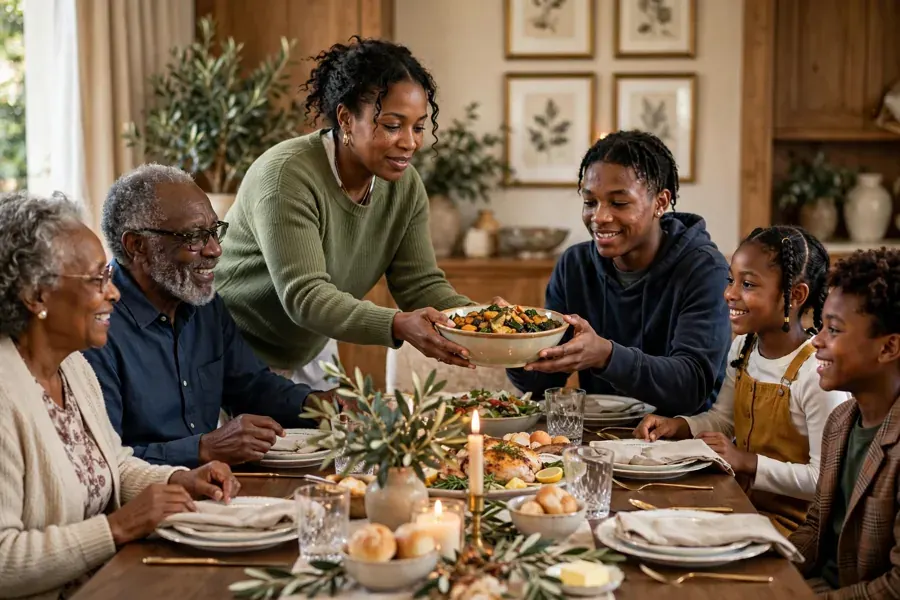
His children, her children, and perhaps children together — one address, one standard of love. The blended family step parenting rules that work are less about blood and more about patience, consistency and fairness, practised daily.
Every blended house begins with a love story between two adults and a negotiation among everybody else. The children did not choose the merger. They arrive with loyalties, memories, another home, another set of habits — and, if we are honest, a quiet fear that loving this new arrangement somehow betrays the parent who is not in the room.
The families who make it look easy will tell you it was never easy. It was deliberate. These are the blended family step parenting rules that work in houses like ours: tested by therapists, family lawyers and parents who have lived long enough in a stepfamily to know which battles matter.
The scale of the blended house is easy to underestimate. America's Blended Family Association, a national membership body for stepfamilies, puts the population it serves at 29 million stepfamily and single-parent households, and its founder speaks for many when he describes what is at stake:
“The unique dynamics of blended family life impact millions, affecting everything from finances to mental health.”— Dan Snell, founder of America's Blended Family Association, via PR.com
That is the honest starting point. A blended family is not a first family with extra chairs. It is its own kind of household, with its own physics — and it rewards the adults who learn those physics instead of pretending they do not exist.
First, Give the House Time
The single most liberating fact in stepfamily life is the timeline. Counsellors who work with blended households are blunt about it: becoming one family is measured in years; nobody honest promises it by the holidays. A wedding is a day.
A family is a thousand ordinary Tuesdays. When parents absorb that truth early, the pressure comes off everyone — off the stepfather waiting to be called something warmer, off the teenager who is polite but not ready, off the marriage itself.
University of Minnesota Extension guidance for blended families makes the same point from the child's side of the table. Children had little say in the transition, so a range of feelings is not defiance — it is information.
The guidance advises each child to have a spot within the home that is theirs to claim, a small sovereignty that restores a sense of control while everything else changes. In a house with resources, that is a bedroom door that locks, a shelf no one rearranges, a corner that stays exactly as the child left it between visits.
Small sovereignties, fiercely respected, are how trust gets built.
Expect ambivalence, too, and refuse to punish it. A child can adore a stepmother on Saturday and freeze her out on Sunday because warmth felt like disloyalty overnight. The experienced houses treat that weather as weather.
They keep showing up — same breakfast, same ride to practice, same goodnight at the door — until the child learns that this love does not fluctuate with theirs.
One Set of Rules, Kept Simple
Children can live with almost any reasonable rule. What they cannot live with is a rule that changes depending on which adult is watching, or which child broke it. The Minnesota guidance is practical here: keep the rules simple and few, and let the child's own parent lead on discipline.
Family lawyers who watch blended households succeed and fail say the same thing in legal language — the adults in the house should present a united front on bedtime, chores and discipline, because inconsistency invites children to shop between adults.
In practice, the blended house keeps a short constitution. A handful of house rules — about respect, safety, schoolwork, screens and shared spaces — written down, applied to every child under the roof regardless of whose surname they carry. Everything else is parenting style, and styles may differ without the house falling down.
Where the two homes can align on the big things — homework expectations, bedtimes, the broad shape of consequences — a child moving between houses finds predictability, and predictability, for a child shuttling between two homes, is security. The houses do not need to be identical. They need to rhyme.
Discipline: Connection Before Correction
Here is the rule new stepparents resist most and veterans swear by: in the early years, the biological parent holds the discipline while the stepparent builds the relationship. It is not a demotion. It is sequencing.
Authority in a child's life is earned through attachment, and attachment cannot be hurried by a title. Therapists describe the progression plainly — the stepparent's disciplinary role grows naturally as the relationship deepens, and a child who has come to trust the adult rarely contests the adult's say.
What the stepparent does instead, at first, is collect small deposits: the ride, the snack remembered correctly, the game attended in the rain, the joke that lands.
Guidance for different parenting styles in blended homes adds a refinement worth keeping — correction, when it must happen, lands better in private than in front of stepsiblings, where an audience turns a small matter into a question of standing.
And behind closed doors, the couple does its real work: disagreements about each other's children are adult business, conducted adult to adult, never litigated through the children and never — this one is absolute — by speaking ill of the child's other parent. The McKinney guidance is unequivocal that derogatory remarks about an ex create loyalty conflicts for the child.
A child should never have to defend a parent they love in a house where they also hope to be loved.
The Name Belongs to the Child
What should the children call him? What should they call her? Few questions carry more hidden weight, and the settled wisdom is almost disappointingly gentle: there is no single rule governs what children call a step-parent.
A first name, a nickname, a family name that invents itself over time — all of these are correct answers when the child arrives at them freely.
The incorrect answer is the one imposed on day one, because a forced title asks a child to perform a closeness they have not yet had the chance to feel, and children experience that performance as a loyalty test.
The houses that handle this gracefully say the quiet part out loud, early: call me whatever feels comfortable; we are not in a hurry. Sometimes a name evolves — a first name acquires a prefix, a joke hardens into an endearment, a teenager who used a surname at twelve uses something warmer at seventeen and pretends it was always so.
Nobody corrects the record. The name is a trailing indicator of the relationship, never a leading one, and the adults who understand that get called the good names in the end.
Money, Fairness and the Two-Household Problem
Love may be the blended house's foundation, but money is its plumbing — invisible when it works, miserable when it does not. The structure many blended couples adopt is disarmingly simple: a “yours, mine and ours” system of three accounts — a joint account for the shared household, funded in proportion to income, and an individual account for each partner.
Inside the joint account, one standard applies to every child: the same allowance logic by age, the same budgets for activities and celebrations, the same generosity at birthdays. Children keep a forensic account of fairness. They may never mention the discrepancy you allowed between households, but they have recorded it.
The harder conversation is the long one: what happens eventually. Financial planners who specialise in blended families urge couples to use tools such as life insurance, lifetime giving and trusts to equalise what children receive, rather than leaving a will to improvise fairness after the fact.
Equal is not always identical — one child may have been carried further by the other household, another may have needs the others do not — but the principle must be explainable, in plain language, to every child it touches.
In houses of real means this conversation belongs with the same advisers who handle the rest of the estate; our companion piece on the long marriage playbook makes the related point that money spoken aloud, early and often, is what long unions have in common.
Holidays Across Two Homes
If ordinary weeks test a blended family, December audits it. The workable systems share a trait: they are decided in advance, in writing, when everyone is calm.
Co-parenting guidance lays out the standard patterns — alternating major holidays year by year, splitting a day when the homes are close, and keeping Mother's Day and Father's Day with the parent they honour — all of it placed on a shared calendar the children can see.
A child who knows where Christmas morning happens this year, and next, stops spending November negotiating.
Then the blended house does something quietly radical: it invents holidays of its own. A celebration that belongs to this configuration of people — the anniversary of the house itself, a summer ritual, a dish that only exists when all the children are under one roof — gives the family a tradition that is nobody's hand-me-down.
The old traditions are honoured in both homes; the new one is proof that this family is not an arrangement but a creation.
When the whole clan gathers at full scale, the same spirit animates our guide to family reunions — and when the children of the blended house grow up and bring partners home, love across the line becomes the next chapter of the same story.
The Marriage at the Centre, Help When You Need It
Underneath every rule in this article sits one load-bearing wall: the couple. Blended families ask a marriage to be a harbour and a headquarters at once, while ex-spouses, schedules and loyalties tug at the dock lines.
The couples who last protect a small, non-negotiable territory — a walk, a dinner table for two, a weekly half-hour where the only agenda is each other — and they treat that territory as maintenance, not indulgence. A blended house with a neglected marriage at its centre will eventually present the bill to the children.
And when the same conflict keeps circling — when the weekly conversation is no longer enough — the strong houses do not call that failure. They call a professional. Stepfamily work is a specialism; a therapist fluent in it, or a structured family programme, can move a household further in a season than goodwill alone manages in years.
Asking for that help early is not an admission about your family. It is the same instinct that hires the right advisers for everything else you value. The blended house, built properly, is not a compromise formation.
It is a family with more doors into it — and every door, opened patiently, lets more love in. For the elders who anchor houses like these, see also elders at home.
Raising the Whole Child
The Long Marriage Playbook
Love Across the Line
Elders at Home: The Suite, the Schedule, and Care With Dignity
Family Reunions
University of Minnesota Extension — “Guidelines for blended families”
Concord Family Counseling — “Stepping Into a Blended Family: A Step-Parent's Guide”
The McKinney Law Group — “Navigating Blended Families: Stepparent Roles, Visitation, and Adoption”
ModernMom — “What Should Kids Call a Step-Parent?”
2houses — “Your Practical Guide to Shared Custody in a Blended Family”
I Will Teach You To Be Rich — “How to Navigate Blended Family Finances”
Allworth Financial — “7 Special Considerations for Blended Families”
PR.com — “America's Blended Family Association (USABFA) Launches”
Questions & Answers
How do families pass down wealth and values?
His children, her children, and perhaps children together — one address, one standard of love. The blended family step parenting rules that work are less about blood and more about patience, consistency and fairness, practised daily. It links to 6 stories and articles — open any card to read the full piece.
How do you involve children in family wealth planning?
His children, her children, and perhaps children together — one address, one standard of love. The blended family step parenting rules that work are less about blood and more about patience, consistency and fairness, practised daily.
How do I read the full stories on The Blended House: Blended Family Step Parenting Rules That Work?
Choose any card on this page. Each one opens a full page of its own — the complete story or article, with its sources linked.