
The First Gate: Getting Into the Right Preschool
How to get into a competitive private preschool starts earlier, and calmer, than most families expect — here are the admissions tips that matter: what schools actually watch at two, three and four, and how to run the circuit with your dignity, and your child's childhood, intact.
Let us say the quiet part first, because every family deserves to hear it from a friend: if you are wondering how to get into a competitive private preschool, the admissions tips that actually work have very little to do with performing.
The sought-after nursery and preschool circuit — in New York most famously, and in every city where a handful of schools feed a handful of kindergartens — runs on a shared calendar, a small set of observable moments, and one question underneath all of them: will this child be happy and kind in our classroom, and will this family be a good citizen of our community?
Everything else is paperwork. This is the earliest admissions game your family will ever play, and it is played at full seriousness by people who love their children — which is precisely why the winning move is to understand it completely, prepare for it honestly, and then refuse to let it steal a single afternoon of your toddler's actual childhood.
The scale of the thing surprises first-time families.
Manhattan reporting has long noted parents spending $20,000 or $30,000 a year sending their children to preschool, and current published tuition schedules sit comfortably in that territory and beyond: one Manhattan independent school lists full-year tuition of $45,600 for Nursery (3s) and $51,000 for Pre-K, while a beloved downtown nursery school publishes $26,500 for its 3s classroom and $33,500 for its 4s.
Fees that rival college are not a rumour; they are a line item. Which is all the more reason to choose the school for the right reasons — because at these prices, what you are buying is not a brand. It is the room where your child learns what school feels like.
The Calendar Runs the Whole Game
Competitive preschool admissions are, before anything else, a calendar discipline.
The classic New York checklist, published for families navigating the process, lays the year out plainly: research preschools in the spring of the year prior to enrollment, identify eight to ten schools to apply to over the spring and summer, request applications the day after Labor Day, visit schools and submit applications from October through December, sit for child and parent interviews in that same window, and expect notification from mid-February through March — with a deposit due, typically, about two weeks after the letter arrives.
Schools that belong to ISAAGNY, the Independent Schools Admissions Association of Greater New York, coordinate those notification and reply dates across the city, which is why the whole circuit seems to exhale on the same day. One school's published ISAAGNY table, for example, puts Preschool notification in late February with a parent reply deadline in early March.
Read that calendar the way an admissions office reads it: the work is front-loaded and the margins are unforgiving. Tours fill. Application portals open and close.
A family that begins in the spring has choices; a family that begins in November has leftovers.
So build the master calendar early — every school's tour dates, application deadline, playdate window and notification date on one page — and treat it the way you would treat any other important family project: visible, shared between both parents, and finished before it is urgent.
And hold the number in mind that the checklists repeat: eight to ten applications is a normal, sane list in a competitive market. It is not excess. It is arithmetic, in a system where a single classroom may hold fewer than twenty children.
What Schools Actually Assess at Two, Three and Four
Here is the secret that calms every parent who hears it. The child visit is not an examination. Consultant Amanda Uhry, who guides Manhattan families through this process, puts it in the sentence every parent should tape to the refrigerator:
“The child interview isn't an interview, it's a play date.”— Amanda Uhry, private-school admissions consultant, via NPR / North Country Public Radio
She is right, and the published accounts of what observers watch for confirm it.
Admissions teams running group playdates are looking at developmental, human things: whether a child can sit patiently and listen to a teacher read or sing for ten to fifteen minutes during circle time, whether they can play alongside and with other children, whether they show curiosity and creativity when shown something new, and — the one that matters most at this age — whether they can separate from a parent or caregiver and join the group.
Group-playdate guides describe the same exercise from the school's side of the rug: for most private schools in the New York area, the group playdate remains the primary method for evaluating these skills. Notice what is absent from that list: letters, numbers, reading, tricks. No reputable nursery school is admitting a three-year-old on academics.
They are admitting a classmate — a child who can be in a room with other children, take gentle direction, recover from a disappointment, and find joy in the materials in front of them.
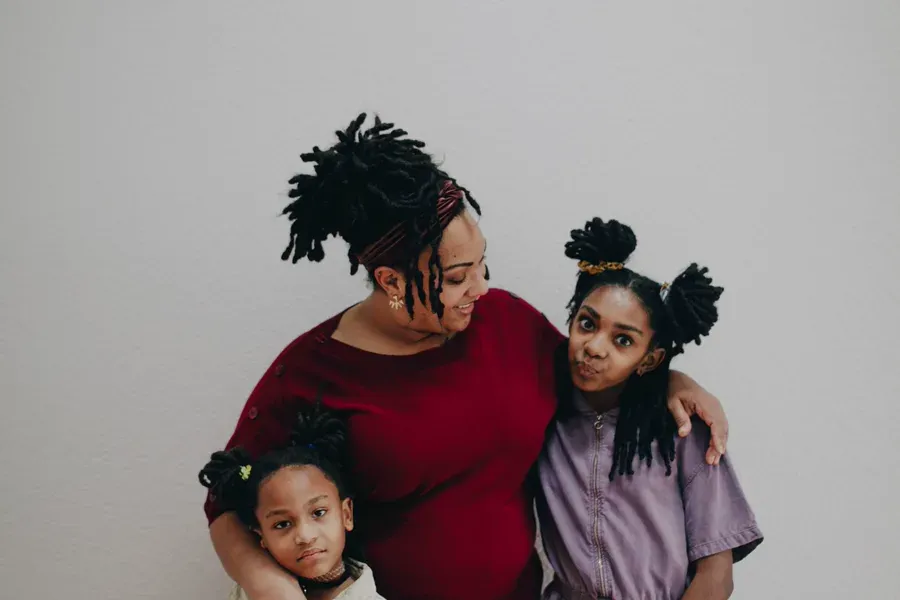
That tells you exactly how to prepare, and it is mercifully ordinary. Read together, every day, so circle time feels like home. Go to story times and playgrounds, so other children are familiar territory rather than an event.
Practise separations in small, kind doses — a drop-off class, a playdate at a friend's house — so goodbye-and-return becomes a muscle your child trusts. The playdate-preparation guides make the same point in practical language: do not call it an “interview” or a “test”; call it a visit to a new school, a playdate with new friends.
And rehearse the social moments, not with drills but with play: what do we do when another child is using the blocks we wanted? What happens when the teacher asks everyone to sit on the rug before the drawing is finished?
A child who has wondered about those moments at home meets them at school as a story they already know.
One more piece of preparation belongs to the grown-ups, and experienced advisers state it without embarrassment: schools are watching the parents too. Accounts of the playdate process note plainly that admissions officers are not only observing the kids, but they are also observing the parents. Not your wardrobe and not your résumé — your manner.
Are you warm? Are you easy? Do you speak about your child with affection and proportion, or with a project plan?
A school is a community that will see you at drop-off for years. It is choosing colleagues as much as students.
The Parent Interview: A Conversation About Fit
The parent interview frightens families out of all proportion to its actual content, because its content is a conversation — about why this school, why your child, and what kind of family you intend to be inside a community.
The guidance collected from admissions directors is consistent: in the parent interview, you want to share why the preschool and the community are right for you, how you can contribute to the community and school, and good parenting skills — which is to say, judgement, warmth and a life that has room in it for other people's children too.
Do your homework before you sit down: know the school's philosophy in its own words, because the circuit contains genuinely different animals — play-based rooms, Montessori and Reggio-inspired programmes, traditional and structured classrooms — and “we love everything about every school” convinces no one.
The honest sentence is the persuasive one: this is how our daughter learns, this is what we saw on the tour that matched her, this is the community we hope to join and to serve.
Then mind the small courtesies, because in a process this personal they are not small. The classic checklist includes, without irony, thank-you notes, immediately after each interview. Write them by hand, send them the same day, mention one specific thing your child loved or one remark of the director's that stayed with you, and stop.
Gratitude with detail reads as character. Gratitude with campaigning reads as anxiety, and anxiety is the one note you are trying not to play.
Legacy, Siblings and the Honest Arithmetic
Every circuit has its quiet priority lanes, and it is better to know them than to discover them in March.
Sibling and legacy families are commonly served first: one ISAAGNY-member school states simply that siblings are given priority in admissions, with early decision available to sibling families ready to commit, and another publishes a strong sibling and legacy policy, with early notification for families who have attended before.
City guides describe the same shape: some schools offer early notification for sibling and legacy families or other priority applicants, ahead of the regular round. None of this is corruption; it is continuity — schools protecting the families already inside their walls.
But it does mean the open seats in a famous 3s classroom are fewer than the classroom itself, and your list should be built with that arithmetic in view: reach schools you adore, real schools you would happily choose, and a back-up you have genuinely visited and could genuinely love.
The veteran advice on this point is disarmingly practical — families do best when they have a balanced list — safety schools, schools you know you'd be happy with, and stretch schools — and when they hold a good public or community option in reserve, so that they can apply to the competitive schools relaxed, and like themselves.
That same advice file carries one more instrument, to be used with absolute integrity: the first-choice letter. If one school is truly, singly right for your child, you may write to its director and say so — in the adviser's formulation, declaring that if the school accepts your child, you will accept the place.
Send that letter to exactly one school, mean every word, and be ready to honour it the day the offer lands. In a small world built on trust, a kept word is a family's first legacy — worth more, in the end, than any surname on a list.
Consultants, Costs and Keeping Your Head
Yes, there is a professional layer, and you should walk into it with your eyes open.
The Manhattan reporting that made this circuit famous recorded a leading consultant's fee at a level that startled the country — parents paying $18,500 for her services — alongside humbler, genuinely useful help: parents' league advisory sessions, school guides, and consultants who will build your list, sanity-check your essays and rehearse your interview for a fraction of the headline figures.
What a good consultant actually sells is not access; no honest one claims it. It is knowledge of fit — which head likes which kind of family, which famous name is wrong for a shy child, which unheralded school across the park is the best room in the city for yours — and it is calm.
Buy it if calm is what your household needs. Do not buy it believing a door can be purchased, because the families who believe that are the ones this process eats alive.
And budget the whole campaign, not just the tuition.
Application fees at individual schools run from modest sums to, at one published example, a $125 application fee with deposits and a new-student fee due on enrollment; tours, testing where a school still asks for it, and the deposits that hold a place all belong in the family ledger from the start.
Set the number your family can carry without resentment before the first tour, because a school that strains the household will strain everything taught inside it. There is no prestige in a tuition that makes a home tense. The right gate is the one you can walk through at peace.
The Point of the First Gate
Step back, finally, and look at what this process is actually for. A preschool is not a verdict on your child and it is not a trophy for you; it is the first room outside home where your son or daughter will be known, day after day, by adults who chose this work.
Choose the room where the teachers' faces light up at the playdate. Choose the philosophy you can repeat at your own kitchen table without acting. Choose the community whose other parents you would be glad to know at 8 a.m. in the rain.
Run the calendar like a professional, prepare your child with nothing more exotic than stories, songs, playgrounds and practice goodbyes, speak about your family with warmth and truth in the interview, write the thank-you notes, honour your word — and then go back to the serious business of these years, which is blocks on the rug and a small hand in yours on the walk home.
The first gate opens for prepared, pleasant, honest families far more often than the mythology admits. Walk through it like one.
Choosing the School: Private, Boarding, and the Education That Fits Your Child
Raising Heirs, Not Dependents
Women of Distinction — Profile Collection
EduProfiler — “Private Preschool Admissions Process” checklist
NPR via North Country Public Radio — “In Manhattan, Preschool Interviews Induce Anxiety”
Financial Samurai — “How To Get Into A Great Preschool Or Private Grade School”
Bright Kids — “Private School Group Playdate for Kindergarten Admissions Guide”
British International School of New York — “Tuition & Fees”
British International School of New York — “Application Process & Key Dates”
The Brownstone School — “FAQ”
TestingMom.com — “Preschool Admissions: Tips for Getting Into a Competitive Preschool”
West Village Nursery School — “Tuition”
Questions & Answers
How do families pass down wealth and values?
How to get into a competitive private preschool starts earlier, and calmer, than most families expect — here are the admissions tips that matter: what schools actually watch at two, three and four, and how to run the circuit with your dignity, and your child's childhood, intact. It links to 3 stories and articles — open any card to read the full piece.
How do you involve children in family wealth planning?
How to get into a competitive private preschool starts earlier, and calmer, than most families expect — here are the admissions tips that matter: what schools actually watch at two, three and four, and how to run the circuit with your dignity, and your child's childhood, intact.
How do I read the full stories on The First Gate: Getting Into the Right Preschool?
Choose any card on this page. Each one opens a full page of its own — the complete story or article, with its sources linked.