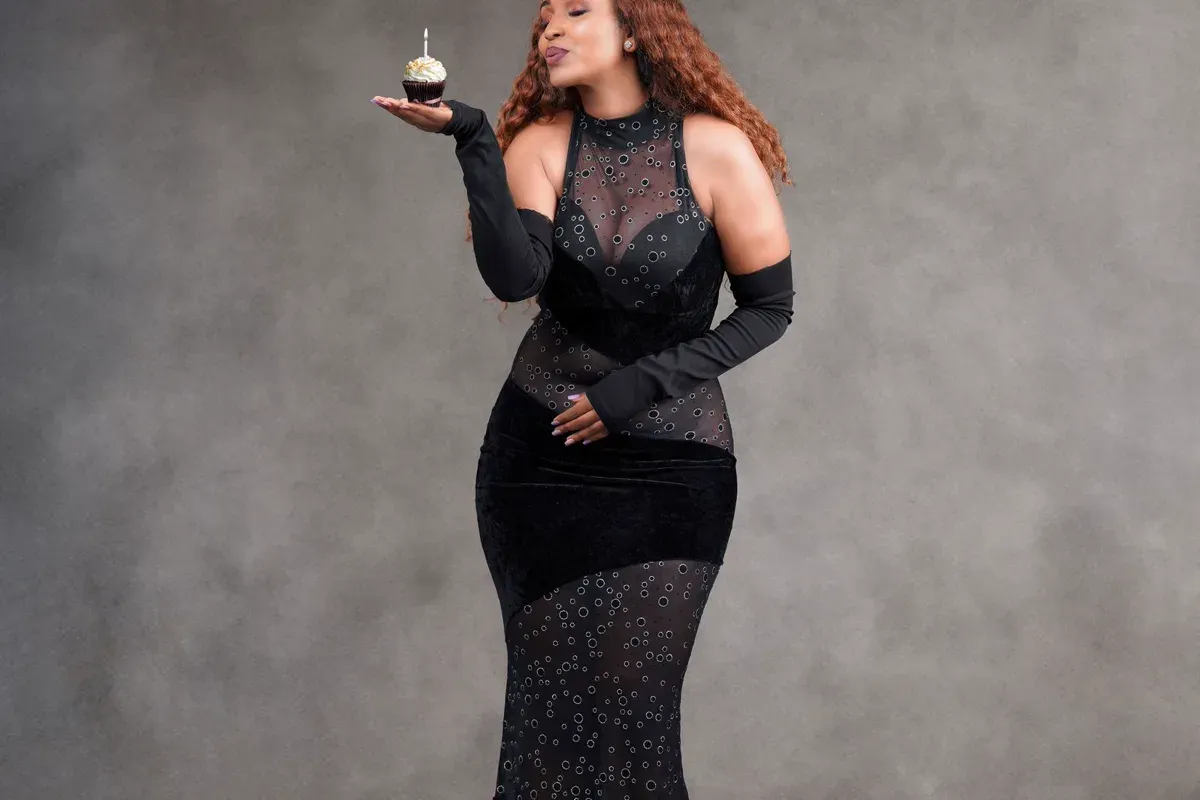
Couture for Her: The World of Women's Made-to-Order
How does a haute couture commission work — the fittings, the toile, the cost? Step inside the salon where a garment begins as a conversation, is sculpted in plain cotton, and is finished by hand for one woman, exactly once, in the world.
Every woman who has ever stood in a fitting room and thought, "If only this were made for me," has brushed against the idea of couture. The real thing — haute couture, women's made-to-order at its highest and most protected level — is more specific, more human, and more wonderful than the phrase on a perfume bottle suggests.
A haute couture commission is a journey with a known itinerary: the house, the sketch, the toile, the fittings, the handwork, the delivery of a garment that exists exactly once.
This piece walks that road in full — beyond the gala-gown decision we explored in the gala gown — through couture daywear and suiting as well as eveningwear, with honest lead times, honest price architecture, and the Black couturiers whose clients have championed them for generations.
First, What the Words Actually Mean
Begin with the law, because in France couture is law. Haute couture means unique pieces, handmade to a client's exact measurements, and the term itself is a legally protected designation: only houses approved by a commission of the Fédération de la Haute Couture et de la Mode may claim it. The standards behind the label are concrete.
As Sotheby's complete guide sets them out, an haute couture atelier must design made-to-order for private clients with at least one fitting, keep a Paris workshop employing at least fifteen full-time staff and at least twenty full-time technical professionals, and present a collection of at least fifty original designs every season — in January and July — spanning day and evening garments.
Houses that meet the bar include Chanel, Christian Dior, Givenchy, and Schiaparelli, alongside correspondent names such as Elie Saab and Zuhair Murad. Everything else — however beautiful, however expensive — is ready-to-wear, demi-couture, or bespoke by another tradition. Knowing which world you are buying in is the client's first protection.
The scale explains the reverence.
Each haute couture piece is constructed almost entirely by hand by one of just some 2,200 qualified seamstresses worldwide; a simple couture dress takes an average of 150 hours to create, the most elaborate garments can take many months, and the worldwide client base is around 4,000 people — the women Chanel's president of fashion, Bruno Pavlovsky, calls the happy few.
You are not buying a dress from a rack of thousands. You are joining a very small room, and the room runs on appointments, patience, and trust.
Choosing the House, Hearing the Sketch
A commission begins with fit of a different kind: the fit between a woman and a house. Each salon has a handwriting — one drapes like sculpture, one tailors like a Savile Row cutter who wandered into silk, one embroiders until the fabric sings.
Study the collections, certainly, but study the daywear as hard as the gowns: the house that can make a suit you will wear for twenty years understands your body as an architecture, not an occasion. The first appointment is a conversation, not a transaction.
You bring the occasion, the hour, the room the garment must command; the couturier brings sketches — plural — and the dialogue between your life and their line is where the design is actually born.
The silhouette wardrobe you already own, the one we mapped in the silhouette wardrobe, is your briefing document: a house that knows what already serves you will design toward your truth, not toward its runway.
Expect candour, and return it. A great première will tell you the neckline you imagined fights your shoulders, and will show you the one that crowns them. She will ask how you sit, how you enter a room, whether the evening ends in dancing or in a receiving line.
Measurements are taken with a thoroughness ready-to-wear never attempts, and some clients keep a personal mannequin at the atelier, built to their exact measurements, so construction can proceed between their visits. This is the unglamorous secret of the glamour: couture fits because it is engineered, fitting by fitting, around one specific woman's posture, stride, and habits.
The Toile: The Most Important Dress You Will Never Wear Out
Then comes the stage first-time clients never expect and veterans would never skip: the toile.
The atelier builds your garment first in plain cotton, and the first fitting happens on that humble prototype, allowing the house to adjust proportions, test volumes, and perfect the cut before a single cut is made into the precious final fabric — every stage, from the toile to the finishing touches, carried out by the atelier's petites mains.
In cotton, everything is still negotiable: the waist can travel, the sleeve can lengthen, the drama of a train can be argued up or down at no cost but honesty.
Guides to the process note that simple pieces need at least two fittings over six to eight weeks, while a heavily embroidered, one-of-a-kind gown needs more — the fittings are a collaboration, with the première watching every detail from fabric placement to final embellishment.
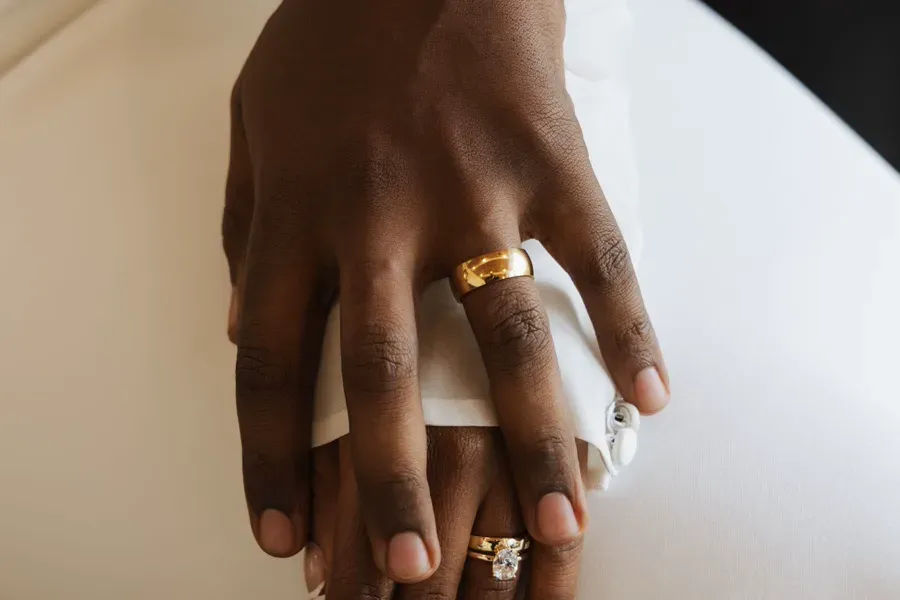
Once the toile is approved, the real fabric is cut — silks, chiffons, brocades, laces, jacquard, illusion tulle, with ornaments of beads, crystals, feathers, and gold or silver thread, each chosen with the client for its texture and its light.
The hours then accumulate in a way no machine line can imitate: the same guides record roughly 240 hours in a single Giambattista Valli couture gown, and 750 hours in one feathered Chanel dress.
Wear the shoes and undergarments the garment was planned around to every fitting, speak early and plainly — "a little lower, a little less" is free at the toile and expensive after the cut — and let the final fitting be a full rehearsal: sit, climb stairs, raise a glass.
The garment is being finished around your life, and the atelier can only fit the life you show them.
The Honest Numbers: Time and Money
Couture keeps its own calendar, and the client who respects it is rewarded.
Two fittings over six to eight weeks is the floor for a simple piece; embroidered eveningwear runs months, and the wise client commissions against a season, not a date — the gown for a landmark evening should be ordered when the evening is announced, not when the invitation arrives. Price follows the same logic of hours and materials.
Across the houses, published guides place the full span anywhere from the high four figures for the simplest pieces to six and seven figures for the most elaborate — which is another way of saying there is no price list, only an estimate, a deposit, and a relationship.
Get the estimate itemised — fabric, construction, trims, handwork — and the fitting, shipping, and change terms in writing. The houses expect it; professionalism is part of the luxury.
And remember that couture is not only gowns. The same ateliers build daywear and suiting to the same standard — the suit engineered like the dress, fitted in toile, finished by hand — and for many clients the tailored commission, worn weekly for a decade, is where couture quietly outperforms every other purchase in the closet.
Pair it with the palette discipline of colour, print, and presence and the result is a wardrobe with an author. That is the deeper purchase: not a garment, but coherence.
Ann Lowe: The American Couturier
No account of couture for her is honest without the woman who practised it at the highest American level while the credit went elsewhere.
Ann Lowe, trained by her mother and grandmother in Alabama and finished in New York, became the designer society called its best-kept secret: her clients included the Rockefellers, the DuPonts, and the Vanderbilts, and her most famous commission came in 1953 — the ivory silk taffeta wedding gown, with its tiny wax flowers and wide portrait neckline, worn by Jacqueline Bouvier for her marriage to Senator John F. Kennedy, along with the entire bridal party's attire.
She received no public credit at the time. Her answer, when asked about the omission, remains the most elegant sentence ever spoken about couture:
I'm not an angry woman, even when they don't give me credit for doing the gown for Mrs. Kennedy. I'm not mad at anybody.— Ann Lowe, via the linked source
The record has since been set right — museums exhibit her, history names her — and her salon story carries one more lesson every client should keep.
Light touch, as promised: one sentence in a long career of masterpieces.
But it belongs in this piece, because couture has always been made by hands the room did not always honour — and the clients who champion Black couturiers today, from atelier bridal houses to the designers dressing the great galas, are continuing a patronage with a distinguished American lineage.
When you choose a house, you are choosing whose artistry your landmark evenings will carry. Choose with memory, and with pride.
The Wider World of Made-to-Order
Haute couture is the protected summit, but it is not the whole mountain — and a wise client knows the terrain.
Below the Paris designation sits a flourishing world of made-to-order and bespoke ateliers, many of them independent houses where the client works directly with the designer from first inquiry to final delivery: houses such as Nephtali Couture, an African-inspired bespoke house working from Scotland, whose commission journey runs inquiry, consultation, atelier production, fittings, and delivery — the same five-beat rhythm as Paris, at an independent scale, with cultural identity carried openly in the cloth.
Bridal and evening ateliers led by Black designers offer the same made-to-order intimacy for the landmark dress.
The distinction to hold is honesty, not hierarchy: a bespoke house says bespoke, a couture house has earned couture, and the client who understands both words buys each for what it truly is — and gets, either way, a garment made for her alone.
Wearing the Only One
Delivery day is quieter than people imagine: a final fitting, a garment bag, care instructions, and a dress that fits like a fact. Wear it the way it was built to be worn — completely, without apology, and more than once.
A couture garment is an archive piece from its first evening; have it cleaned by specialists, store it breathable and dark, keep the atelier's record with it, and let it be reworn, restyled, and in time handed down.
The profile collections of the women who built this world — makers, patrons, and the clients who insisted on the front door — live in our Women collection, and they are the right company for this piece.
Because that is what a commission finally is: a woman deciding that one garment in her life will be made the slow way, by named hands, to her measure alone — and discovering that in a world of infinite copies, the rarest luxury is a thing that exists exactly once, and it is hers.
The Gala Gown: Commission, Couture, or the Perfect Rental
Colour, Print, and Presence
The Silhouette Wardrobe
Women — Society Profiles Collection
Julien Fournié — "How a Haute Couture Dress Is Made"
Sotheby's — "The Complete Guide to Haute Couture"
Harper's Bazaar Arabia — "What Is Haute Couture? Inside Fashion's Most Exclusive Club"
Ali Texto — "The True Meaning of Haute Couture"
Fashion Sizzle — "Ann Lowe: The Pioneering African American Designer Who Shaped American Fashion"
RH Stories — "Meet Ann Lowe, the African American Couturier Who Made Jackie Kennedy's Wedding Gown"
Nephtali Couture — "African-Inspired Bespoke Couture in Scotland"
Questions & Answers
How should a lady carry herself in public?
How does a haute couture commission work — the fittings, the toile, the cost? Step inside the salon where a garment begins as a conversation, is sculpted in plain cotton, and is finished by hand for one woman, exactly once, in the world. It links to 4 stories and articles — open any card to read the full piece.
What should a lady wear on the street?
How does a haute couture commission work — the fittings, the toile, the cost? Step inside the salon where a garment begins as a conversation, is sculpted in plain cotton, and is finished by hand for one woman, exactly once, in the world.
How do I read the full stories on Couture for Her: The World of Women's Made-to-Order?
Choose any card on this page. Each one opens a full page of its own — the complete story or article, with its sources linked.