
The Black Gala Circuit: A Field Guide to the Season
Your black gala season charity balls guide — Atlanta, New York and the great Black social cities in between: the balls, museum galas and foundation nights that structure the year, what each one supports, and what each one quietly expects of you.
Every social year has a skeleton, and in Black America it is built of galas. If you are looking for a black gala season charity balls guide that Atlanta and New York families actually live by, start here: the season is not a string of parties.
It is a calendar of obligations and joys — scholarship balls that send other people's children to college, museum nights that keep Black art on the wall, foundation dinners that fund the institutions our grandparents built when no one else would build them for us.
The gowns are real, the orchestras are real, and so is the money, raised one table at a time by people who understand that elegance and responsibility were never separate things.
This field guide maps the circuit city by city and night by night, so you can walk into any ballroom in the country knowing what the evening is for, what it costs, and how a guest of standing behaves once the doors close behind them.
Atlanta: The Masked Ball and the Capital of the Season
Atlanta makes its claim to be the capital of the Black gala season on the strength of one evening above all: the UNCF Atlanta Mayor's Masked Ball.
UNCF describes it on its own event page as a premier fundraising gala and major social event, focused on raising awareness of the need for a college education, the students UNCF serves, and the contributions of historically Black colleges and universities.
The evening is hosted by a diverse group of corporate sponsors, local businesses and professional organisations, and attended — again in UNCF's own description — by national celebrities, civic leaders, alumni, dignitaries, volunteers and friends of UNCF, in an evening the organisation cheerfully calls full of fun, fashion, glitz and glamour.
The scale is not decorative. GlobeNewswire's report of the 42nd annual ball, carried across financial news services, records that the black-tie gala hosted by Atlanta's mayor raised $4 million to support historically Black colleges and universities and the students they serve — in a single night, in a single ballroom.
The guest list that evening ran from the ball's co-founders to senators, members of Congress, former mayors and the president emeritus of Morehouse College, who received the evening's MASKED Award.
That is the Atlanta pattern at its best: the city's political, corporate, faith and university leadership in one room, dressed to the standard, writing the cheques that keep a scholarship pipeline alive. Dr. Michael L. Lomax, UNCF's president and CEO, has put the city's role plainly:
“The Atlanta Mayor's Masked Ball stands as one of UNCF's premier national fundraising events, reflecting this city's unwavering commitment to educational equity, opportunity and achievement.”— Dr. Michael L. Lomax, President and CEO of UNCF, via The Windy City Word
What does it cost to stand in that room properly? UNCF's own sponsorship page for the ball lists its top tier openly: a Title Sponsor level at $250,000, carrying the sponsor's name across television, radio and print promotion, the event webpage and the private VIP red carpet reception.
Below that summit, as at every serious gala, the ladder descends through table sponsorships and individual seats — the economics of which we take apart in full in our companion piece on buying the table.
The point for the field guide is simpler: in Atlanta, the season's anchor night is an education night, and the city's best families plan their December around it the way other families plan around a homecoming.
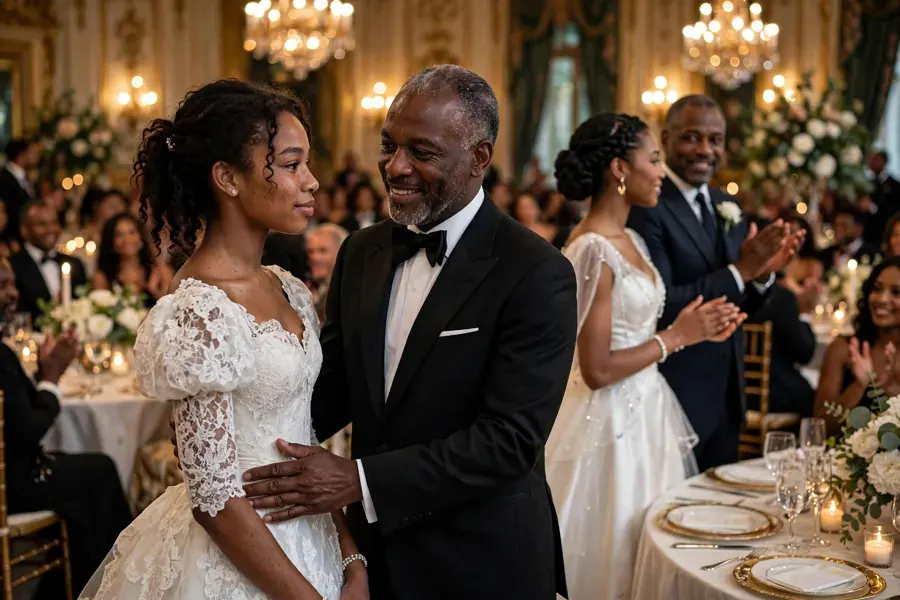
New York: Harlem's Stages and the Museum Nights
New York's circuit runs on culture. Its anchor institution is Harlem's Apollo Theater, whose spring gala is the season's great music night — and a serious fundraiser in its own right.
EURweb's report of the Apollo's 2025 spring gala records a record-breaking $3.2 million raised in one evening, supporting year-round programming in artistic excellence, youth education and community engagement, alongside a major renovation of the historic theatre.
Honourees that night spanned the generations the Apollo itself created — a legacy award for a titan of the recording industry, an inaugural innovator award for a Harlem-born artist who first stepped onto that stage as a child.
A gala that can hold both ends of a century of Black music in one room is not merely entertaining its guests; it is asking them to underwrite the next century, and New York's best families answer accordingly.
Around the Apollo, the Harlem calendar layers the Schomburg Center for Research in Black Culture — the research library that anchors Black letters — whose centennial celebrations the Apollo itself has hosted on its stages, in evenings of readings and performance drawn from the writers the Schomburg preserves; the Apollo's own listing for its Schomburg centennial celebration shows the two institutions honouring a Harlem theatre artist together, benefit chairs and all.
That interlocking is the New York signature: the theatre, the library, the museums uptown and down all drawing on the same circle of patrons, so that a family serious about the season finds its name moving from committee to committee, season after season.
Add the great museum benefit nights — where a family's patronage is measured in decades, not evenings — and the New York circuit reveals its character: less a party calendar than a permanent exhibition of who shows up for Black culture, in black tie, every single year.
Washington and the Museum the Whole Country Built
Washington's place on the circuit is guaranteed by one building: the National Museum of African American History and Culture on the National Mall. The museum's gala culture rests on a founding story every gala guest should know, because it explains what all this dressing up is ultimately for.
A published case study of the museum's campaign describes how it built a donor structure around Founding Donors who committed $1 million or more, with early support from Black philanthropists and the foundations and companies that followed their lead — credibility, as the study puts it, that carried the whole campaign.
A museum that exists because a community decided to fund its own memory is the gala circuit's thesis in architecture: given the chance, Black generosity builds permanent things. When you take a seat at a museum night in Washington, you are sitting inside the proof.
The Cotillion Thread: Where the Season Begins
Underneath the foundation galas runs an older, more intimate thread: the debutante ball.
The California African American Museum's exhibition scholarship, reported by the University Times, traces the record back to an African American social organisation holding a ball in 1895 in New Orleans, and describes how Black women's volunteer and social organisations — The Links, Incorporated among them, alongside Jack and Jill of America — held cotillions and debutante balls to educate young women and promote the culture of the community presenting them.
The modern form keeps the philanthropy inside the pageantry: a Jack and Jill chapter's own programme page describes its Beautillion for young men as the culmination of an eight-month college readiness programme, with money raised covering the event, scholarship awards for participants, and a portion of proceeds donated to local charities the young men themselves select.
Read that again and you have the whole circuit in miniature: months of preparation, a formal presentation, scholarships funded, charities chosen by the honourees. The debutante and the beau are not being displayed; they are being inducted into the generosity economy the galas run on.
What Each Night Expects of You
Across every city, the expectations rhyme. Dress to the code on the invitation — black tie means black tie, and our guide to dress codes, decoded and the gala gown standard will keep you right.
Arrive for the reception, not the dinner: the reception is where the committee thanks its sponsors, where the photographs happen, and where arriving families are actually seen. Understand your seat: a purchased ticket is attendance, a bought table is patronage, and a sponsored table is leadership — three different statements, each honourable, none interchangeable.
Bid in the auction with your paddle up and your limit set before the first glass, applaud the honourees like family, and write the thank-you note the next morning. And when the foundation's development officer calls in the spring about next season's committee, understand what is really being asked: not for your evening, but for your name.
The families whose names anchor these nights — many of them profiled in our Women of Distinction and Pastors & Faith Leaders collections, where gala chairs sit alongside the clergy who open these evenings in prayer — will tell you the same thing: the season rewards the reliable.
Show up beautifully, give at your level without being chased, and the circuit opens like a ballroom door.
Reading the Season Like a Regular
Regulars plan the season the way editors plan a magazine: a year ahead, and by anchor nights first.
The pattern in every great social city is the same — the education balls cluster in the gala months, the museum and theatre nights hold their own beloved dates, the debutante presentations belong to their chapters' calendars, and the foundation dinners fill the spaces between.
A family new to the circuit does well to choose two or three anchor nights in its home city, attend them beautifully for a season as guests, and let the committees learn their faces before a single committee invitation is ever discussed. That apprenticeship is not passivity; it is how the circuit has always vetted its own.
The guest who buys seats early, arrives for the reception, bids once with conviction, thanks the chair in writing and appears again the following year has introduced himself more eloquently than any résumé could.
The second generation lesson is worth stating plainly, because the circuit's elders state it constantly: bring your children into the season early and on purpose. The debutante and beautillion programmes exist precisely so that a young person's first ballroom is a place of rehearsed confidence rather than intimidation — months of preparation, a presentation, a scholarship attached.
Beyond the cotillion years, the young-patron circles attached to museums and theatres give professionals in their twenties and thirties a priced-for-them doorway into the same rooms their parents anchor, and the families who thrive across generations are the ones who treat that doorway as part of an inheritance, no different from the house or the portfolio.
A name that appears on a committee list at twenty-five, earned rather than inherited, is a name the season will still be printing at seventy-five.
And a word on the photograph pages, since every regular learns it eventually: the season's pictures flatter the people who were actually working. The honouree's table, the committee in its receiving line, the sponsor family greeting the scholarship students their table funded — those are the frames that endure, in the programmes and in the community's memory alike.
Arrive dressed for them, by all means; the circuit is a celebration and celebrates beauty without apology. But let the camera find you doing the evening's real business — listening to a student's story, applauding a founder, writing the pledge card with a steady hand — and the season will have told the truth about you, beautifully.
That is the field guide's whole secret. The Black gala circuit was built by people who were once excluded from every ballroom in America and responded by building better ones — warmer, more purposeful, and open to anyone willing to dress well and give well. The season is waiting.
Choose your cities, choose your causes, and take your seat like you belong there — because at these tables, belong is exactly what generosity earns.
Buying the Table: Sponsorship, Seats, and the Generosity Ledger
Dress Codes, Decoded
The Gala Gown
Women of Distinction — Profile Collection
Pastors & Faith Leaders — Profile Collection
UNCF — "43rd Annual UNCF Atlanta Mayor's Masked Ball"
FinancialContent / GlobeNewswire — "UNCF's 42nd Atlanta Mayor's Masked Ball Raises $4 Million to Support HBCUs and Students"
The Windy City Word — "42nd Annual UNCF Mayor's Masked Ball To Raise Funds & Awareness For HBCU Students"
EURweb — "Apollo Gala Raises $3.2M for Harlem Icon's Future"
The Apollo Theater — "Living Legacy: Gwendolen Hardwick" (Schomburg Center centennial celebration)
Greater Public — "Black Philanthropy and a Common Agenda: A Case Study From the National Museum of African American History and Culture"
University Times (CSULA) — "Black Debutante Culture Takes Center Stage at California African American Museum"
Jack and Jill of America, Arlington Chapter — "Programming" (Beautillion)
Questions & Answers
Who will you meet on this page?
Your black gala season charity balls guide — Atlanta, New York and the great Black social cities in between: the balls, museum galas and foundation nights that structure the year, what each one supports, and what each one quietly expects of you. It links to 4 stories and articles — open any card to read the full piece.
What makes these stories worth reading?
Your black gala season charity balls guide — Atlanta, New York and the great Black social cities in between: the balls, museum galas and foundation nights that structure the year, what each one supports, and what each one quietly expects of you.
How do I read the full stories on The Black Gala Circuit: A Field Guide to the Season?
Choose any card on this page. Each one opens a full page of its own — the complete story or article, with its sources linked.