
The Church Anniversary and the Pastor's Ball: A Pastor Appreciation Banquet and Church Anniversary Etiquette Guide
A pastor appreciation banquet and church anniversary etiquette guide to faith's own social season — honouring clergy properly, dressing beautifully for it, and giving in a way that sustains the house.
Every social season has a heart, and in our world the heart keeps time in a sanctuary.
Long before there were gala circuits and club registers, there was the church anniversary: the week the congregation dressed in its finest, welcomed back its former pastors, fed everybody who came through the door, and remembered, out loud and in order, how the house was built and who built it.
That is why a pastor appreciation banquet and church anniversary etiquette guide belongs in this magazine's social season, and belongs near its front.
We cover the occasion here the way we cover it best — as a great social institution and a joyful celebration: the planning that honours people properly, the dressing that suits the room, the programme that runs on time and on love, and the generosity that quietly keeps the whole thing standing.
Respectfully, warmly, and with no preaching — that work belongs, rightly, to the pastor.
The calendar, first, because a season is a calendar before it is anything else. Churches mark two kinds of anniversary, and the well-mannered guest learns to tell them apart. The church anniversary celebrates the congregation itself — its founding, its survival, its generations.
The pastor's anniversary celebrates a shepherd's years of service in that house.
Around both gathers the appreciation season more broadly: Subsplash's guide to Pastor Appreciation Month notes that many churches host a fellowship meal or formal banquet serving the pastor's favourite dishes, with members sharing short stories of how the pastor has affected their lives, and that the honour properly extends to the pastor's spouse and family, who serve behind the scenes.
A service-ideas guide adds the traditional anchor: October is set aside as Clergy Appreciation Month, with an appreciation service often arranged so the pastor can sit, for once, and be ministered to. Whether your house celebrates in that month or on its own founding date, the guest's duties are the same, and they begin long before the banquet doors open.
The Banquet: How the Evening Is Built
A great anniversary banquet feels effortless because a committee made it so, months in advance.
The classic order of the evening, as a sample anniversary programme lays it out, runs welcome and seating, an opening prayer, dinner service, a brief church history, guest greetings, a testimony or musical presentation, the anniversary address, recognition of special servants, and a closing prayer — with each dignitary given a defined time limit so greetings never displace the programme.
Read that order once and you understand the whole etiquette of the night. Everything has its place, the honoured guests are recognised in their turn, the meal is never rushed, and the evening ends when it should — with people leaving full, photographed, and glad they came.
Behind that order sits a body of quiet preparation that anniversary guides describe with affectionate thoroughness.
A planning guide from Religious Product News advises churches to compile the church history early, prepare a printed brochure or booklet with photographs of historical interest, put up historical exhibits in the weeks before, and invite former pastors — or their children, to represent the family — with a recognised place in the programme.
A detailed anniversary checklist adds the guest's-eye details: volunteers arrive hours early to inspect seating, sound, and hospitality areas; greeters welcome every guest warmly from the door; photographers document the day, because the pictures become the church's historical record. When you are a guest at such an evening, you are walking into somebody's careful labour.
Honour it the guest's way: arrive on time, take the seat you are given with gratitude, and be fully present for the programme you were invited to witness.
The goal isn't to impress your pastor. The goal is to encourage your pastor.— ChurchLetters.org, "How to Start Pastor Appreciation Day"
That sentence, from ChurchLetters.org's guide to starting an appreciation day, is the moral centre of the whole occasion, and the committee that keeps it in view cannot go far wrong.
The same guide offers the practical shape of a first celebration: a card signed by the congregation, a special appreciation love offering, gift cards, a meal after the service, or a weekend getaway for the pastor and spouse — chosen to fit the church and its budget, and announced to the congregation two or three weeks beforehand through the bulletin, newsletter, and announcements.
Notice what is absent from that list: extravagance for its own sake.
A love offering gathered from many hands, a basket of handwritten notes, a video of thank-you messages that a pastor can return to in a hard week — Subsplash's guide specifically praises compiling members' short video messages and notes into a single keepsake presentation — these are the gifts that land, because they carry the congregation's actual voices.
Honouring the Pastor — and the Spouse Beside Them
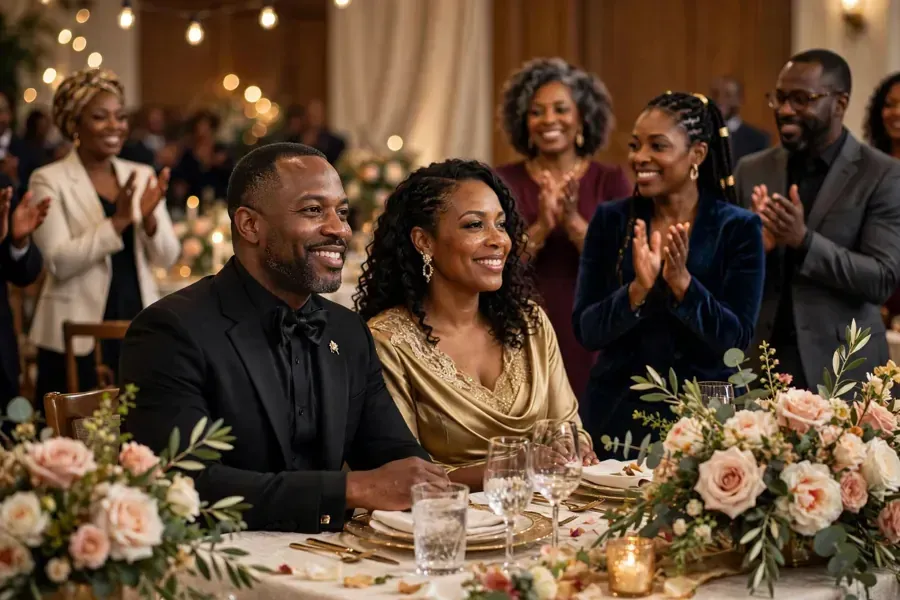
Protocol at the Pastor's Ball is a form of affection, and it has a clear order. The pastor and spouse are the guests of honour, received together, seated together at the place of honour, and served first.
Their family is honoured with them; their predecessors, where they are present, are recognised with genuine warmth and never as an afterthought; and the visiting clergy and community dignitaries whom the church has invited are greeted by name.
A banquet guide for appreciation services describes the honoured pattern: invite community dignitaries and the pastor's family, and let church leaders and members share messages and personal stories honouring the pastor's leadership and commitment. If you are asked to be one of those speakers, accept the discipline of the programme: prepare, be brief, be specific, and be kind.
One true story, told well in three minutes, honours a pastor more than twenty minutes of general praise — and it respects the ninety-year-old in the third row and the kitchen team holding dinner.
On titles, meanwhile, this house follows the standing rule of our own pages: use the titles people carry, exactly as they carry them — a discipline our guide to Titles and Names sets out in full.
The spouse deserves a paragraph of her or his own, because the season's oldest mistake is to honour the pulpit and overlook the person beside it.
Subsplash puts the correction plainly: ministry is often a family commitment, and spouses frequently serve behind the scenes without formal recognition, so appreciation should include specific gifts for the pastor's spouse — from flowers and favourite treats to the simple luxury of an arranged evening out.
At the ball itself, the courtesies are small and they matter: greet the spouse by name and not as an appendage, include her in the photograph and in the receiving line's conversation, and when you write your thank-you note afterward — and you should write one — address the household, not the office.
Dressing for the Ball, Giving for the House
What does one wear to honour a pastor? The invitation, as always, is the authority: a formal banquet in a hotel ballroom asks for formal dress; a fellowship-hall celebration asks for your Sunday finest, beautifully kept.
The register that never misses is this: festive, elegant, and respectful of the house — the gown or suit you would wear to a milestone family celebration, in rich colour, with jewellery that catches the warm light of the room.
This is not the night for the daring neckline or the nightclub silhouette, not out of prudery but out of aim: the room's attention belongs to the honoured couple and to the generations being celebrated, and the best-dressed guest at a Pastor's Ball is the one whose elegance helps the photographs — which, remember, become the church's archive — look timeless.
Arrive a few minutes early. The receiving line at an anniversary is not a queue to endure; it is the first act of the celebration, and the elders standing in it have dressed for you, too.
A word, too, for the music, because no account of this season is honest without it.
The anniversary programme gives music a formal place — the sample order sets a musical presentation among the evening's honours, between the greetings and the address — and in practice the choir, the soloist, and the musicians who have served the house for decades are part of the honoured company themselves.
Applaud them as you would at a benefit concert, because that is, in effect, where you are.
If your own family is asked to sing, to play, or to present, treat the rehearsal as seriously as the evening: this congregation has a long memory for both excellence and care, and a song offered well at an anniversary is talked about, with gratitude, for years.
The children, too, have their traditional part — a recitation, a dance, a presentation of flowers to the honoured couple — arranged by the committee and rehearsed to shine. As a guest, your part in all of it is the simplest and the most sustaining: be an audience that gives its whole attention.
Put the phone away unless you are the designated photographer. Anniversary programmes, like pastors, flourish in front of a room that is truly listening.
And then there is the giving, which is where this social season becomes a legacy.
The love offering is the banquet's beating heart: a gift gathered openly, presented with ceremony, and received with grace. Give to it at the level your life honestly allows, without announcement and without apology — the envelope has never needed a press release. Beyond the evening, the generosity that sustains a church is the quiet, year-round kind: the anniversary project funded, the scholarship endowed, the building maintained by people who understand that a house of worship, like any great institution, stands because its members keep standing under it. The pastors whose lives fill our own Pastors collection built congregations on exactly that covenant, and the ball, at its best, is the night the covenant dresses up and dances a little.The Anniversary as Family Reunion
Spend one anniversary weekend in a great old congregation and you will notice, by the second event, that you have stopped attending a programme and started attending a family. That is by design.
The celebration, as the planning guides describe it, is built to gather the whole story into one room: former pastors are invited back and recognised, members who were raised in the church and have gone on to serve elsewhere are welcomed home, historical exhibits go up in the weeks before so that children can find their grandparents in the photographs, and the printed booklet carries the history forward into hands that will keep it.
The anniversary checklist makes the intention unmistakable when it urges churches to highlight important moments through testimonies, photographs, videos, and spoken tributes, so younger generations understand the church's legacy and honour those who helped build the ministry. For the guest, this changes the etiquette in one lovely way: you are not an audience.
You are a relative, for the weekend at least. Look at the exhibits. Ask the elder beside you which building in the photograph she was baptised in.
Let the homecoming members tell you where life took them. The ball is the weekend's formal crown, but the reunion is its soul, and the guest who honours both has understood the institution entire.
It is also why the anniversary endures as a social institution in a way few other occasions can match. Clubs have memberships and galas have committees, but a congregation has generations — the same family name in the choir, at the usher board, in the kitchen, and in the third pew, across sixty years of Sundays.
The Pastor's Ball dresses that continuity in velvet and gold for one evening and lets it look at itself, delighted. To be received warmly at such a table is to be written, however briefly, into a story much older and longer than any one season. Treat the invitation accordingly: as an honour, not an engagement.
Leave the way a good guest always leaves:
thank the committee by name if you can find them — someone chose those flowers, typed that programme, and arranged for the pastor's favourite dish to appear as if by magic — congratulate the honoured couple once more in the receiving line's echo at the door, and take a photograph with the people you love in front of the anniversary display before the night is packed away. Then, in the week that follows, send the note. A church anniversary is, in the end, a family reunion with better music and a longer memory, and the Pastor's Ball is its most beautiful hour: a community in formal dress, applauding the people who buried their grandparents, married their parents, and blessed their children, all the way down the red-carpeted aisle. Dress well for it. Give gladly to it. Honour the spouse beside the pastor, thank the committee behind the programme, arrive on time for the history and stay to the final prayer. It has been dressing well, and giving gladly, for you, for generations — and an anniversary kept in this spirit does more than celebrate a church. It teaches the youngest guests in the room, watching everything, exactly how a community takes care of its own.One last courtesy belongs in every guest's pocket before the season opens: the anniversary invitation is not transferable, and the seat at the banquet table was counted, costed, and prayed over by somebody's committee.
Reply to it promptly, by the date it asks, and if life intervenes after you have accepted, tell the church office at once, so your place can be given to the member who was hoping for one. Bring only the guests the invitation names.
If you are bringing children, bring them dressed for the honour of the room and briefed, lovingly, on its joys: sit tall, applaud warmly, taste everything the kitchen offers, and save the running for the fellowship afterward. Families who teach that brief lesson at home are thanked, quietly, by every anniversary committee in Christendom.
Titles and Names: How People Are Addressed
Pastors — Profile Collection
Subsplash — "The Ultimate Guide to Pastor Appreciation Month"
Synonym Classroom — "Service Ideas for Pastor Appreciation"
ChurchLetters.org — "How to Start Pastor Appreciation Day"
The Way With Christ — "Sample Programs for a Church Anniversary Celebration"
Religious Product News — "How to Plan a Church Anniversary Celebration"
The Way With Christ — "Church Anniversary Planning Checklist"
Questions & Answers
Who will you meet on this page?
A pastor appreciation banquet and church anniversary etiquette guide to faith's own social season — honouring clergy properly, dressing beautifully for it, and giving in a way that sustains the house.
What should you know about dressing for the Ball, Giving for the House?
What does one wear to honour a pastor? The invitation, as always, is the authority: a formal banquet in a hotel ballroom asks for formal dress; a fellowship-hall celebration asks for your Sunday finest, beautifully kept.
What does this article say about the Anniversary as Family Reunion?
Spend one anniversary weekend in a great old congregation and you will notice, by the second event, that you have stopped attending a programme and started attending a family. That is by design.