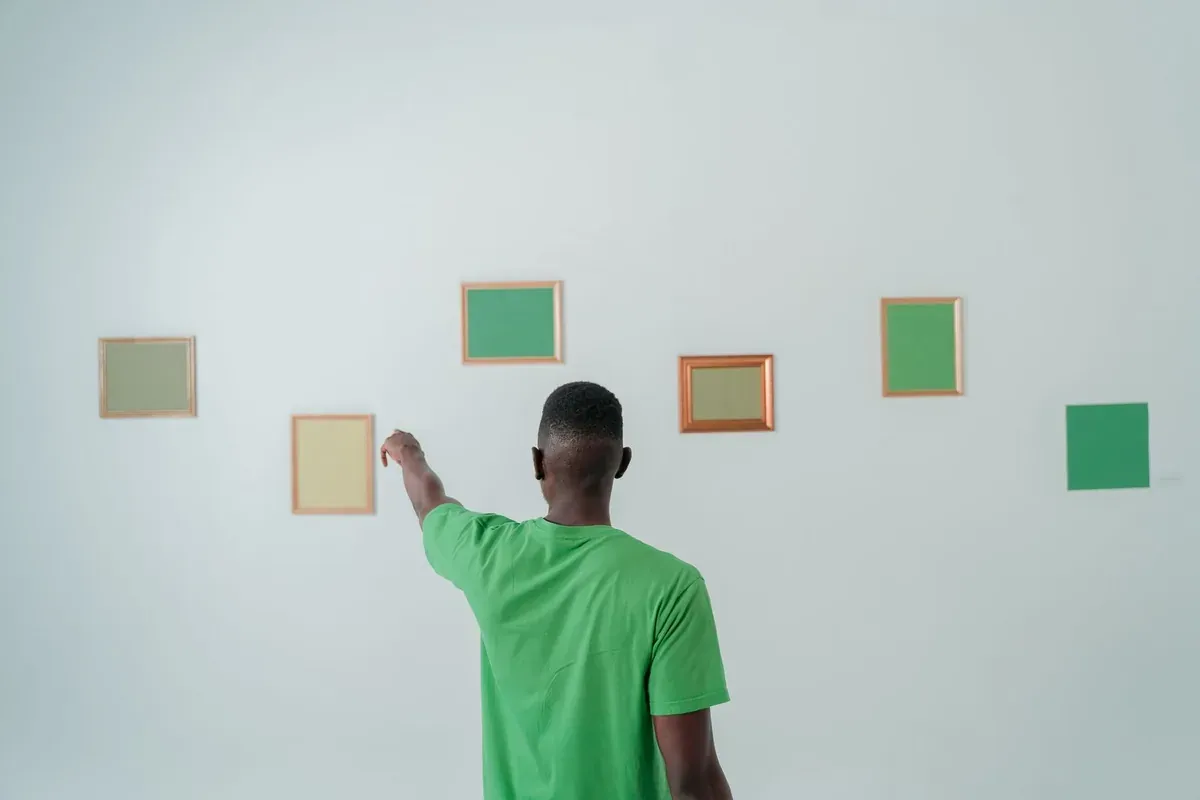
The Great Museums: Where to Stand, What to See, and How the Patrons Do It
The best art museums in the world are must-visit addresses — but the patrons do not visit them the way the crowds do. Here is the connoisseur's route: the wings that matter, the hours that matter more, and the Black masters on the walls.
Ask a room of travellers to name the best art museums in the world and the must-visit list assembles itself: the Met, the Louvre, Tate, the National Gallery of Art, the Uffizi, the Prado.
Ask a patron — someone whose name is on a museum's donor wall and whose Tuesdays are quietly structured by members' hours — and you get a different answer. Not a list of buildings. A method.
The great museums are not sights to be consumed in an afternoon; they are houses to be kept, the way you keep a friendship: in visits short and frequent, in loyalties to particular wings, in the discipline of seeing one great thing properly instead of fifty things in a blur.
This guide takes the essential museums one by one — where to stand, what to see — and then shows you the patrons' machinery itself: the circles, the previews, the quiet hours before the doors open to the world.
The Met: Five Thousand Years, One Wing at a Time
The Metropolitan Museum of Art is the anchor of the American route, and its own institutional overview sets the scale honestly: a collection that spans 5,000 years of world culture, from prehistory to the present and from every part of the globe, in a two-million-square-foot building on Fifth Avenue, founded in 1870.
Reference accounts describe it as the largest art museum in the Americas, with a permanent collection counted in the millions of objects across seventeen curatorial departments. No one sees the Met. You see a Met — yours.
The patrons' rule is to adopt a territory: the American Wing in one season of your life, Egyptian art in another, the European paintings always. Stand where the light is doing the work — the Temple of Dendur's great glass wall, the American Wing's courtyard — and let one room per visit be enough.
A museum this size rewards the member who comes twelve times a year for an hour far more than the tourist who comes once for a day and leaves with sore feet and no memories that have settled.
The Louvre: The Palace That Became the People's
Paris holds the world's benchmark. Museum histories record that the Louvre holds more than 380,000 objects and displays some 35,000 works, opened as a public museum in 1793, and remains the most visited museum on earth.
The building itself is the first exhibit: a fortress turned palace turned museum, eight departments deep, with Egyptian antiquities alone numbering in the tens of thousands of pieces. The patrons' method in the Louvre is triage with pride. Choose your century before you enter.
Give the Denon wing its morning if painting is your errand; give the antiquities a separate visit entirely. And stand, once, in front of the Mona Lisa not to see her — the crowd makes sure of the seeing — but to understand what a single portrait can do to a civilisation's imagination.
Then go find the quieter rooms, where the Louvre keeps its secrets for the people who stay past the highlights: the sculpture courts, the objects of art, the long calm galleries of French painting where Paris itself seems to slow down.
London: Tate and the Free National Collections
London's gift to the museum-goer is a principle: the national collections belong to everyone, every day.
Tate Modern, which opened in 2000 in the converted Bankside Power Station on the Thames, houses the national collection of international modern and contemporary art — and, as with Britain's other national museums, there is no admission charge for the collection displays; you pay only for the major temporary exhibitions.
The Turbine Hall alone justifies the crossing: a cathedral of industrial space given over, season after season, to installations at a scale no ordinary gallery could hold.
Pair it with Tate Britain across the river for the national story in British art, and with London's National Gallery for the Old Masters, and you have the patrons' London triangle — modern, national, classical — all walkable, all free at the door, all deepened immeasurably by membership in the institutions you use most.

Washington: The National Gallery of Art, a Gift to the Nation
The National Gallery of Art on the National Mall is the great American argument that a museum can be both grand and free.
It was privately established in 1937 for the American people, with Andrew W. Mellon donating a substantial art collection and the funds for construction — a single patron's gift turned into a nation's inheritance, and still open to the public free of charge.
The West Building holds the European story from the Middle Ages forward, including the only painting by Leonardo da Vinci in the Americas; I. M. Pei's East Building takes the modern century; the Sculpture Garden gives the whole Mall a drawing room.
For our readers, the NGA is also a lesson in the form patronage takes at its highest level: not a name purchased for a season, but an institution given outright, forever, to strangers.
When we write elsewhere about collecting the Black masters as an asset and an inheritance, this is the horizon we mean — the private collection that ends, one day, as public wealth.
Harlem: The Studio Museum and the Black Masters
And then there is the museum that is ours in the most literal sense. The Studio Museum in Harlem was founded in 1968 by a diverse group of artists, community activists, and philanthropists who came together — in the Jerome Foundation's account — to address the exclusion of artists of African descent from mainstream museums, galleries and scholarship.
It describes itself, in words the Teachers College history repeats, as the nexus for artists of African descent locally, nationally, and internationally, with a permanent collection of nearly 9,000 works spanning 200 years and a renowned Artist-in-Residence programme that has launched generations of Black artists.
Its new purpose-built home on West 125th Street gives Harlem what the founders demanded in 1968: a museum of the first rank, in the neighbourhood, for the art of the diaspora. Every route through the great museums should end here at least once a year — not as an afterthought, but as the point.
The Met and the Louvre teach you what the canon holds. The Studio Museum teaches you who built outside it, and better.
Beyond the Big Five: The Second Altars
The route does not end with the famous five, and the patron who stops there has seen the cathedrals but missed the parish churches where some of the deepest looking happens.
Survey guides of the world's essential museums consistently widen the circle: the Rijksmuseum in Amsterdam as the definitive Dutch Golden Age museum, with Rembrandt's The Night Watch at its heart; the Vatican Museums, where the Sistine Chapel waits at the end of miles of accumulated glory; the Uffizi in Florence, rooted in the Medici collection that taught Europe what collecting was; the Prado in Madrid for Velázquez and Goya; the Art Institute of Chicago, noted for its Impressionist holdings and for American icons like Grant Wood's American Gothic.
A world survey for painting lovers puts the same houses in one breath — the Louvre, the Met, the Uffizi, the Rijksmuseum, the National Gallery, the Prado, the Vatican Museums, the Art Institute of Chicago — and the patron reads such lists the way a sommelier reads a wine map: not as homework, but as a life's itinerary.
One great museum a year, done properly, compounds. In a decade you hold a private canon no tour bus will ever hand you.
Where to Stand: The Craft of Looking
A word, finally, on the physical craft, because the patrons all practise it and nobody teaches it. Arrive at opening or in the last two hours; the middle of a museum day belongs to the crowds, and great rooms are best met at their edges. Choose the bench.
Every masterpiece in this article has a bench placed before it by someone who understood that looking is a duration, not a glance — sit for ten minutes and the painting reorganises itself around you: the figures you missed stand forward, the crowd noises fade, and the work begins to do to you what it was painted to do.
Stand back first, farther than feels natural, because the large canvases of the great halls were composed for distance; then come close once, at the end, to see the hand — the loaded brush, the repaired crack, the signature like a whisper. Take one work home in your head per visit, described to yourself in a single sentence at dinner.
That sentence, repeated across years of visits, is the real collection. The museums hold the objects. The patrons hold the sentences.
How the Patrons Do It: Circles, Previews, Quiet Hours
Now the machinery. A museum membership is not a discount card; it is a calendar of access. Museums structure it in circles, and the published programmes show the pattern plainly.
At the Parrish Art Museum, the Patron level — listed at $1,000 — carries invitations to select VIP exhibition previews with cocktail receptions, curator-led tours, and Weekend Member Mornings, plus reciprocal privileges at more than 1,300 museums through the North American Reciprocal Museum Association.
New York's Museum of Arts and Design lists its Patron membership at $1,500, with invitations to Patron exhibition previews and openings, artist studio visits, and curator- and artist-led tours. At SFMOMA, the patron level runs $10,000–$24,999 and adds a private curator-led tour of an exhibition, upon request.
Prices vary by house and city, and every figure here is the museum's own published listing — but the shape is constant: as the circle rises, the museum opens earlier, quieter, and closer. The preview the night before the public opening. The members' morning with the galleries nearly empty.
The curator walking your small group through the show she built. That is what patronage actually buys — not status, but time alone with the art.
Use it the way the seasoned patrons do. Join deeply at one or two museums rather than thinly at ten; your home museum's circle is the one whose previews will actually fill your calendar. Take the members' hours even when — especially when — you only have forty minutes.
Bring the children at the quiet times, so their first museum memories are of space and hush rather than queues. Read our guide to the art season — fairs, auctions and opening nights alongside this one, and plan the year's viewings with the exhibition calendar: which shows are worth the flight, which previews are worth the membership.
And when a museum has given you a decade of great mornings, let the relationship mature the way the NGA's founders let theirs mature — from member, to patron, to the kind of supporter whose generosity the next generation will stand inside, looking up.
The Exhibition Calendar: Reading a Season and Catching the Shows Worth Flying For
The Art Season: Fairs, Auctions, and Opening Nights
The Vault: Art and the Black Masters
Empire Makers — Profile Collection
The Metropolitan Museum of Art — “An Overview of the Museum”
Wikipedia — “Metropolitan Museum of Art”
Tatinta — “Louvre Museum (Musée du Louvre)”
Wikipedia — “Tate Modern”
Wikipedia — “National Gallery of Art”
Jerome Foundation — “Studio Museum in Harlem”
Teachers College, Columbia University — “Encounter TC History at the Studio Museum in Harlem”
Parrish Art Museum — “Membership”
Museum of Arts and Design — “Membership”
SFMOMA — “Curators' Circle”
PaintingRecognition — “15 Best Art Museums in the World”
Heart & Soul Whisperer — “List of Must-See Art Galleries and Museums Around the World”
Questions & Answers
Who will you meet on this page?
The best art museums in the world are must-visit addresses — but the patrons do not visit them the way the crowds do. Here is the connoisseur's route: the wings that matter, the hours that matter more, and the Black masters on the walls. It links to 4 stories and articles — open any card to read the full piece.
What makes these stories worth reading?
The best art museums in the world are must-visit addresses — but the patrons do not visit them the way the crowds do. Here is the connoisseur's route: the wings that matter, the hours that matter more, and the Black masters on the walls.
How do I read the full stories on The Great Museums: Where to Stand, What to See, and How the Patrons Do It?
Choose any card on this page. Each one opens a full page of its own — the complete story or article, with its sources linked.