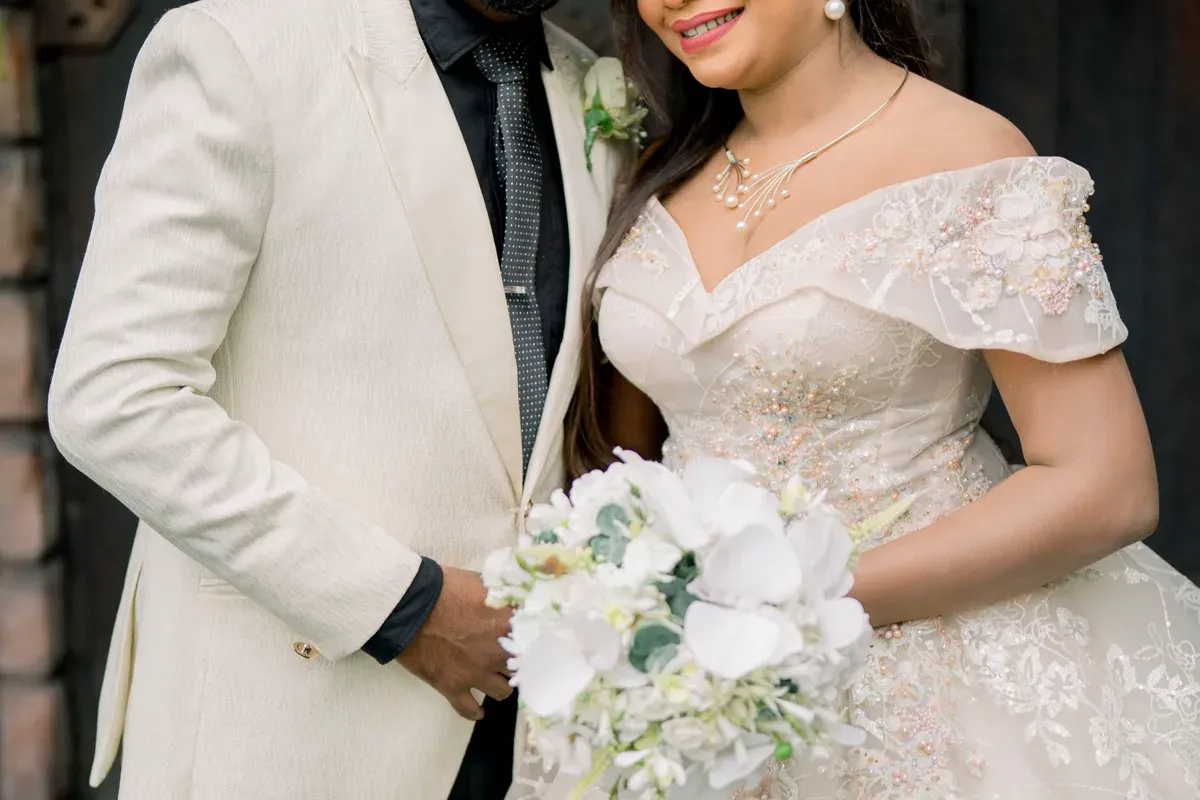
The Proposal, Produced: Asking at the Level You Live
Proposal planning with etiquette at its heart: the ring timeline, the family permission conversation handled as a blessing, and a setting that photographs forever.
Somewhere right now, a proposal is being watched by millions of people who were never in the room. The produced ask — candlelight, strings, a camera that happened to be exactly where it needed to be — travels because it is beautiful, and because everybody watching can feel the care inside it.
But the proposals that hold up at your level are rarely the loudest ones. They are the ones where the proposal planning, the etiquette, the ring and the family permission conversation were all settled long before the knee touched the ground, so that the only thing left to happen in the moment was the moment itself.
This is the produced proposal, done the established way: private first, family honoured, and every detail built to last as long as the marriage.
The First Conversation Is Between the Two of You
Here is the secret the viral videos never show: the surprise is in the when and the how, almost never in the whether. The Knot's reporting on engagement trends found that most couples had discussed their engagement well over a year before the proposal, and that the overwhelming majority of proposers prepared the moment in advance rather than improvising it.
In The Knot's more recent study read-out, the pattern has only strengthened: most proposals are now deliberately planned events, and about half of couples talk through their preferences — the setting, who should be there, what kind of moment they want — before anyone buys anything.
That conversation is not unromantic. It is the foundation that lets the romance land. You learn whether she dreams of a room full of people or a garden with two chairs.
You learn whether a public moment would thrill her or quietly horrify her.
You learn, often, exactly what she hopes will be on her hand — in a study by The Knot and De Beers Group of women in serious relationships, nearly every respondent — 96% — wanted some involvement in choosing the engagement ring, and two-thirds described their ideal proposal as one person asking another, planned ahead, in a private place.
Listen to numbers like those and the produced proposal stops being a performance. It becomes a promise you have already half-made, staged beautifully.
The Family Conversation: A Blessing, Not a Permission Slip
At this level, you are not marrying a person in isolation. You are joining a family with a history, a table you will sit at for decades, elders whose regard you intend to keep. That is why the family conversation still matters — and why the modern form of it matters more than the old one.
Nobody is handing anybody over. What you are asking for is support, spoken out loud, before the celebration begins.
It is usually a short, sincere exchange that tells their parents what is coming and asks for their support, not their permission.— Twogle, on asking for a family's blessing
The guidance on how that conversation is best handled is refreshingly plain: agree between yourselves first that the conversation fits your family, keep it short and sincere, and frame it as respect rather than a vote. Ask in person where you can.
Speak to both parents, or to the people who actually raised her — the grandmother whose house ran the family, the aunt who stood in. Say what is true: that you love their daughter, that you intend to ask her, and that their blessing would mean the world to you both.
Then keep the secret like it is money in the vault. The blessing conversation also has a practical gift hidden inside it: families who feel honoured early become allies in the planning — the sister who knows her ring size, the mother who can get her to the garden room without a flicker of suspicion.
And if the family is yours to merge rather than join — two established households, grown children, a second chapter — the same courtesy runs in both directions. Tell your own people first, too. A proposal at this level lands inside a whole architecture of love and loyalty, and the produced version respects every beam of it.
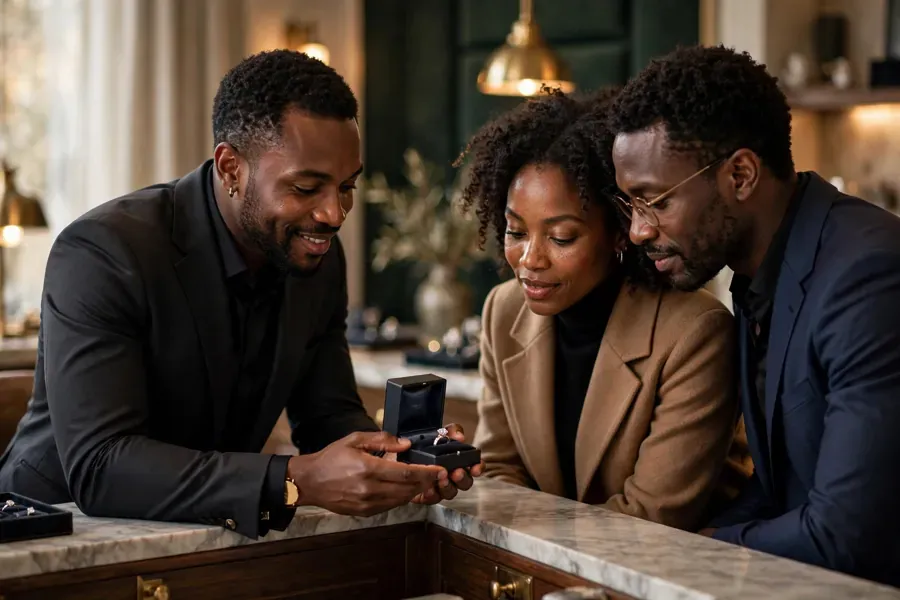
The Ring: Start Three Months Out, Spend Like an Adult
The ring is the one element of the production with a hard deadline and a supply chain, so it goes first on the calendar. Jewellery guidance is consistent on the window: starting at least three months before the proposal leaves room for research, a custom setting, and resizing without a single rushed decision.
The Knot's jewellery study reporting lands in the same place — most proposers buy two to four months out, and private jeweller Hannah Florman notes that a custom design typically runs three to eight weeks depending on complexity and how rare a stone must be sourced.
Build the ring three months out and the proposal date becomes a pleasure instead of a countdown you are afraid of.
As for the money: retire the old salary rules, which were advertising copy long before they were advice. What couples actually spend, per The Knot's latest study as reported by Rapaport, averaged $4,600 for couples married most recently — with natural-diamond rings averaging about $7,000 and lab-grown stones now the centre stone in 61% of rings.
Those are national averages across every level of life; your number is your number, set by the stone, the house that made it, and what the ring needs to say in the rooms you live in.
What the averages do teach is allocation: a widely used framework puts roughly seventy per cent of the budget into the centre stone, twenty into the setting, and ten into the finishing details — the structure that keeps the money where the eye actually goes.
Work with one jeweller who knows your family or comes recommended by it, insist on certified stones from reputable sources, and if she has given you her preferences — and after that first conversation, she has — honour them exactly.
Our own guide to jewellery chosen with intent and the vault standard for fine pieces will sharpen your eye before the appointment.
The Setting: Private First, Then Public
The strongest argument in the research is also the most romantic one: intimacy wins. In The Knot's recent read-out, over half of couples prioritised a private setting for the proposal, and the De Beers expectations study found the same two-thirds preference for a private place. A private moment is not a smaller moment.
It is a moment with the volume set correctly — her real reaction, not her public one; tears if they come; the words said at speaking volume instead of performed. The produced proposal therefore runs in two acts.
Act one is the two of you, in a place that means something: the garden room of the house where you first talked about forever, the suite where you spent your first weekend, the chapel-adjacent quiet of a place your family has history with.
Act two — an hour later, or the following evening — is the reveal: family waiting with champagne at the house, the people who blessed it first seeing the ring first.
Public spectacle has its place, and if she has told you plainly that a grand gesture in front of the world is her dream, produce exactly that, at full scale, and spare nothing.
But for established people — people with names, companies, children, reputations — the private-then-public order protects the moment from becoming content before it has finished being a memory. The photograph still gets taken. It simply gets taken by someone you hired, at the moment you chose, and released when the two of you decide it is time.
The Production Itself: Who to Hire and What It Costs
Producing a proposal is a small event with a full crew list: the venue or room, florals and candles, music, the photographer hidden where the light is best, and one trusted person running the clock.
More than a quarter of proposers now hire professionals for exactly this, according to The Knot's study figures — photographers, florists and planners who make the moment extra special without making it feel staged.
At the top of the market, dedicated firms will build the entire evening: in New York, Enchanting Engagements lists its elite proposal packages from $6,000, including a professional photographer and videographer, live music, florals and a planning team.
At the capture end of the budget, published package pricing shows how attainable the record of the moment is: one Houston proposal team lists combined photo and video coverage from $850 to $1,150 depending on coverage length, with edited photographs and a short film set to music included.
Whichever level you produce at, three rules hold. First, the photographer is briefed like a sniper: one moment, one angle, no second take exists. Second, the music is live if the room allows it — a string duo does something to a person's nervous system that a speaker never will.
Third, somebody who is not you owns the logistics. The person proposing should have exactly one job from the moment she enters the room, and it is not checking whether the candles were lit in the right order.
The Moment, and the Morning After
When the planning is done, the etiquette of the moment itself is almost embarrassingly simple, and traditional proposal etiquette still states it best: be certain the future has been discussed, have the ring in hand, and put it on the correct finger — the ring finger, beside the pinkie, on the hand your tradition uses. Say her name.
Say why her, specifically — not a speech, a paragraph, the truest one you own. Then ask the question plainly and wait for the answer with your knee down and your heart quiet. Speeches are for toasts.
This is a question, and its power is in its plainness.
After the Yes: Insure It, Size It, and Plan the Band
The produced proposal has a final act nobody photographs.
Within the first week, the ring gets appraised and insured — a certified stone from a reputable source, which the buying guidance insists on, makes both steps straightforward, and a ring at this level should never spend a single night uninsured on a hand that cooks, travels and gestures through the world.
The same appointment settles the resizing question honestly: most rings need a small adjustment once they are worn in real weather, and jewellery timeline guidance treats the engagement ring as only the first of three purchases, with wedding bands shopped three to four months before the wedding — earlier when custom engraving, special metals or a matched set will add weeks.
Bring the engagement ring to that appointment, always; a band is chosen against the ring it will live beside, not against a photograph of it.
And one more piece of quiet production: decide together, in that first week, how the news travels beyond the family calls — which photograph, whose account, what words. The couple who produced their proposal with this much care should produce its announcement with the same hand.
It takes ten minutes at the kitchen table, and it is the difference between an engagement that arrives as a statement and one that leaks as a rumour.
After the yes, resist the broadcast for one evening. Call the parents who blessed it. Call yours.
Let the inner circle hear it from your voices before the world sees it in a photograph — the same order of honour you kept all the way through the planning.
Then celebrate properly: the engagement becomes the first production of your married life, and when you are ready to scale it up, our guide to the wedding at full scale is waiting.
The proposal, produced well, is simply the wedding in miniature — private where it should be, generous where it counts, and built entirely around the two people at the centre of it.
The Wedding at Full Scale
Jewellery With Intent
The Vault: Jewellery
Profiles: The Women of Black Excellence
The Knot — "How Couples Are Getting Engaged: New Engagement & Proposal Trends"
Rapaport — "Lab-Grown 'Taking Over' Engagement-Ring Spending – The Knot"
SuperJeweler — "Engagement Ring Shopping Timeline: Your 2026 Guide"
The Knot — "The Best Time to Buy an Engagement Ring, According to Experts"
Twogle — "How to Ask Her Parents for Their Blessing to Propose"
MiscW — "The Knot and De Beers Group Engagement Expectations Study"
Enchanting Engagements — "Luxury Proposal Planner NYC: Elite Packages"
La La Events — "How Much Does a Proposal Setup Cost in Houston?"
The Proposal Boutique — "Marriage Proposal Etiquette"
Steve Pronko Jewelers — "Wedding Planning Timeline: When to Shop for Rings and Jewelry"
Questions & Answers
Who will you meet on this page?
Proposal planning with etiquette at its heart: the ring timeline, the family permission conversation handled as a blessing, and a setting that photographs forever. It links to 4 stories and articles — open any card to read the full piece.
What makes these stories worth reading?
Proposal planning with etiquette at its heart: the ring timeline, the family permission conversation handled as a blessing, and a setting that photographs forever.
How do I read the full stories on The Proposal, Produced: Asking at the Level You Live?
Choose any card on this page. Each one opens a full page of its own — the complete story or article, with its sources linked.