
Photograph: Splitshire
Immigrants: The Builders Behind Noubar Afeyan, Josie Natori, Jyoti Bansal and Mariam Naficy
The memory-chip partners who shared $100 million with their staff. The pianist who beat Wall Street, then out-dressed it. Twelve more arrivals who became institutions.
Produced and Edited by The Bourgeois Society Staff
Part two of our three-part Immigrants list: twelve more founders — in memory chips, fashion, software, biotech and waste — whose American stories began at a border, a boat dock or an airport gate.
Selected on the obstacle climbed, the thing built, and the good given back — and fact-checked line by line, with sources linked under every profile.
The full list: Part 1 · Part 2 · Part 3
Founder & CEO, Flagship Pioneering; Co-founder & Chairman, Moderna — Lexington, MA
Official links: Website · X
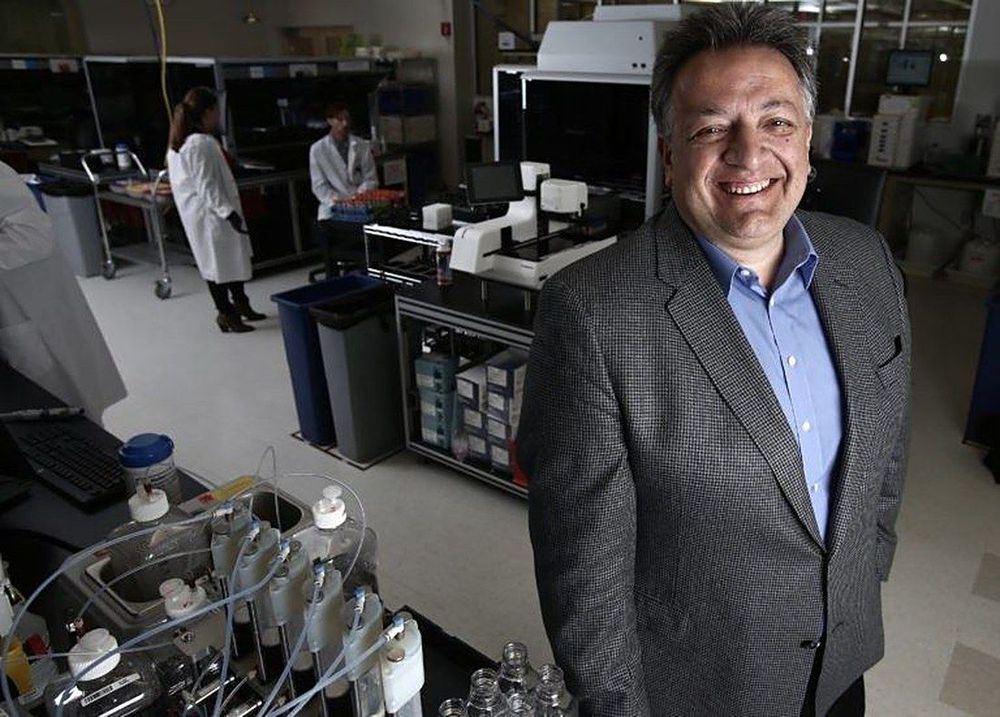
Image: STAT News
Why We're Inspired
Noubar Afeyan was born in Beirut in 1962 to Armenian parents; his grandfather had survived the Armenian genocide. When Lebanon's civil war erupted in 1975, the thirteen-year-old fled with his family to Montreal — the second displacement in two generations.
He studied chemical engineering at McGill, then earned a PhD in biochemical engineering from MIT in 1987 — the first doctorate granted by MIT's Center for Bioprocess Engineering.
Where others saw a scientist, Afeyan built a system: Flagship Pioneering, the venture firm he founded in Cambridge, doesn't just invest in companies — it invents them, hypothesizing new biotechnologies and building the firms to prove them. By Flagship's count it has launched more than one hundred scientific ventures.
The most famous is Moderna, which Afeyan co-founded and chairs — the company whose mRNA platform produced one of the first COVID-19 vaccines and changed medicine's sense of the possible. He became a U.S. citizen in 2008, and in 2025 he received the National Medal of Technology and Innovation, the nation's highest honor for technological achievement.
"What keeps you from innovating is being comfortable. If you're an immigrant, then you're used to being out of your comfort zone."
The Story
Afeyan also co-founded the Aurora Prize for Awakening Humanity, honoring people who risk themselves to save others — a direct line from his grandfather's survival to his philanthropy. The refugee from Beirut now manufactures medical revolutions in Massachusetts, and teaches the country that discomfort, properly used, is an inventor's raw material.
Sources
Forbes — “Noubar Afeyan” (profile)
Alma — “Noubar Afeyan and Immigration: The Refugee Founder Behind Moderna”
AGBU — “Diaspora Imprints: Noubar Afeyan”
More from The Bourgeois Society: The full list · Neha Narkhede · Pasquale "Pat" Mascaro
Founder & CEO, The Natori Company — New York, NY
Official links: Website
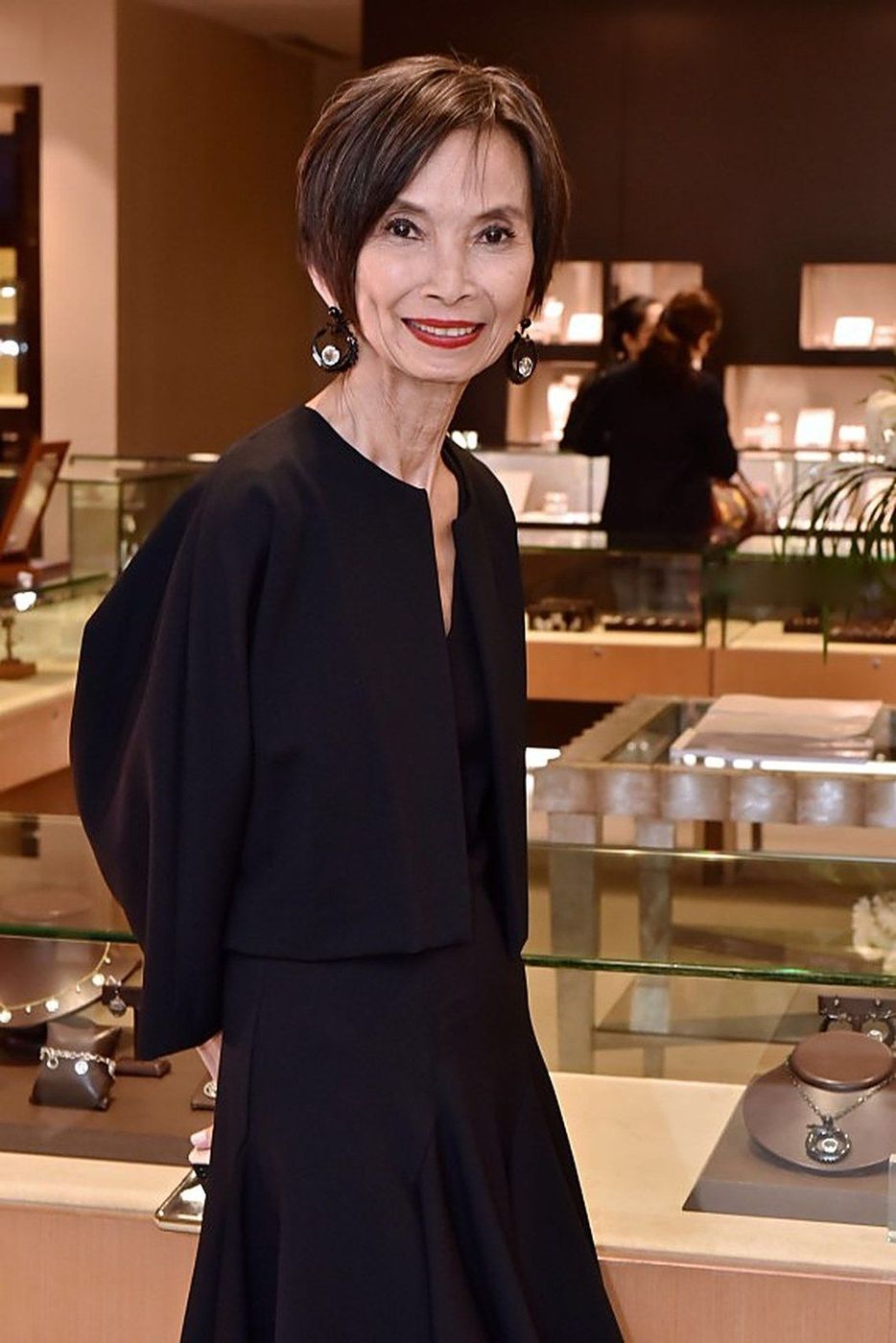
Image: Heart 2 Heart Online
Why We're Inspired
Josie Natori — born Josefina Almeda Cruz in Manila — performed a solo with the Manila Philharmonic at the age of nine. At seventeen, in 1964, she moved alone to New York to study economics at Manhattanville College, and then she did something almost no Filipina of her generation did: she conquered Wall Street.
At Bache & Co. she opened the firm's Manila branch and was an assistant manager at twenty-one. At Merrill Lynch she became the first female vice president in corporate finance — and discovered she was bored. She became a U.S. citizen in 1974, married, and in 1977 left finance to build something of her own.
The spark was almost comically small: a Bloomingdale's buyer looked at the embroidered peasant blouses Natori was importing from the Philippines and suggested lengthening them into sleepwear. Natori listened. The Natori Company was born — luxurious lingerie and loungewear cut with an East-meets-West elegance that department stores had never seen, made largely in her own factory in the Philippines.
"After six years at Merrill I had become the first woman V.P. in corporate finance, but I was really bored. I wanted to be like my grandmother and have my own company."
The Story
Natori sells in more than fifteen countries, carried by the great upscale department stores, with roughly 70 percent of its products made in the Philippines — elegance exported from home. She has said there is no better place in the world for an immigrant to succeed than the United States.
Her career is the evidence: piano prodigy, Wall Street pioneer, and founder of a fashion house that has outlasted nearly all of its contemporaries.
Sources
Wikipedia — “Josie Natori” (quoting The New York Times)
AAPI Heritage Profile — “Josie Cruz Natori”
More from The Bourgeois Society: The full list · John Tu · Jyoti Bansal
Founder, AppDynamics; Founder & CEO, Harness — San Francisco, CA
Official links: Website · LinkedIn · X
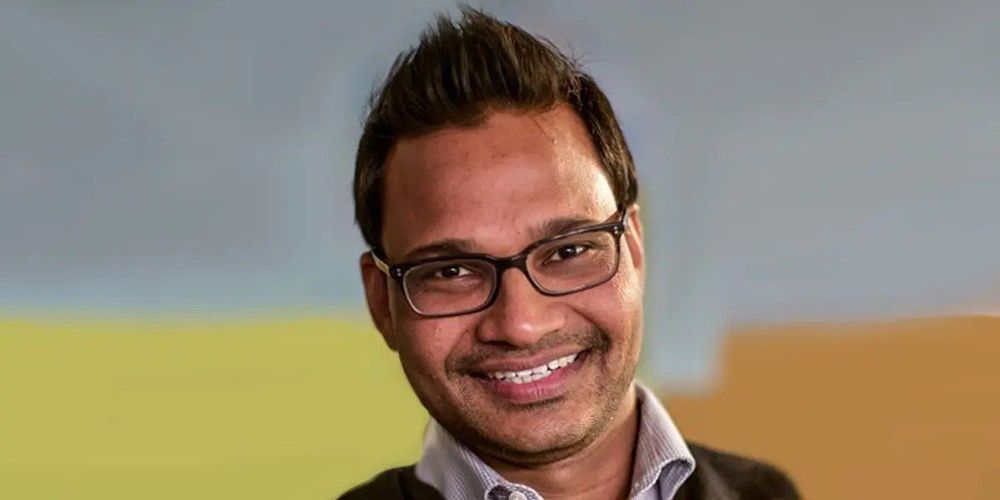
Image: YourStory
Why We're Inspired
Jyoti Bansal grew up in a small town in Rajasthan, India, helping with his father's farming-machinery business, and studied at IIT Delhi before arriving in the United States in 2000, at twenty-one, to work as a software engineer. He wanted to start a company almost immediately.
American immigration law said no: on an H-1B visa, founding a company was effectively closed to him, so he worked at other people's startups and waited — seven years — for his green card. The month the constraint lifted, the dam broke.
In April 2008 he founded AppDynamics, which helps the world's biggest companies monitor the software their businesses run on. Bansal built it for nine years, and in January 2017 — literally days before AppDynamics was scheduled to go public — Cisco bought it for $3.7 billion, one of the great last-minute acquisitions in software history.
Most founders cash out and coast. Bansal founded Harness, a software-delivery platform, and built it into a company valued in the billions — $5.5 billion at its most recent funding round.
"I waited 7 years for my employment-based green card and I wanted to leave my job and start a new company but couldn't,"
The Story
Bansal's waiting years became his cause: he is one of the most quoted founder-voices in the immigration-policy debate, Exhibit A for what the system gains when it finally lets a builder build. Two companies, billions in value, thousands of jobs — all of it locked behind a seven-year wait that he now works to shorten for the founders behind him.
Sources
National Foundation for American Policy — “Billion-Dollar Startups” (policy brief)
The Hindu BusinessLine — “Cisco Buys Jyoti Bansal's AppDynamics for $3.7 Billion”
More from The Bourgeois Society: The full list · Josie Natori · Mariam Naficy
Founder, Eve.com and Minted — San Francisco, CA
Official links: Website · LinkedIn · Instagram

Image: Inc.
Why We're Inspired
In 1979, as revolution consumed Iran, Mariam Naficy's mother took her two daughters to Maryland with one suitcase each. Mariam was nine. Her father stayed behind, hoping the crisis would pass; the family's finances collapsed, and at her new school she met daily hatred and discrimination from classmates.
The little girl from Tehran made herself a promise that became a life's operating system: she would remake herself, on purpose, forever.
She grew up to be a Goldman Sachs analyst and a Stanford MBA, and in 1998 — straight out of business school, when investors insisted women would never buy makeup online — she co-founded Eve.com, one of the first online cosmetics stores. It did $10 million in sales its first year and sold in 2000 for $110 million to Idealab.
Then, in 2007, she did it again from a standing start: Minted, built on a genuinely new idea — design competitions that let independent artists anywhere on earth reach consumers directly, with the crowd choosing what gets sold.
"I told myself this story: 'I am going to remake myself,'"
The Story
Minted's crowdsourced marketplace now brings independent artists' work into tens of millions of households, and Naficy — who has since founded a venture studio and new AI ventures — remains the rare founder who built two category-defining consumer companies in two different internet eras. The suitcase she carried at nine held almost nothing.
She has been refilling it, deliberately, ever since.
Sources
Northeastern News — “Mariam Naficy Tells Graduates to Define Success for Themselves”
Williams Today — “Minted”
Iran Times — “Fortune Picks Woman for Business Acumen”
More from The Bourgeois Society: The full list · Jyoti Bansal · Shahid Khan
Founder & Owner, Flex-N-Gate — Naples, FL
Official links: Website
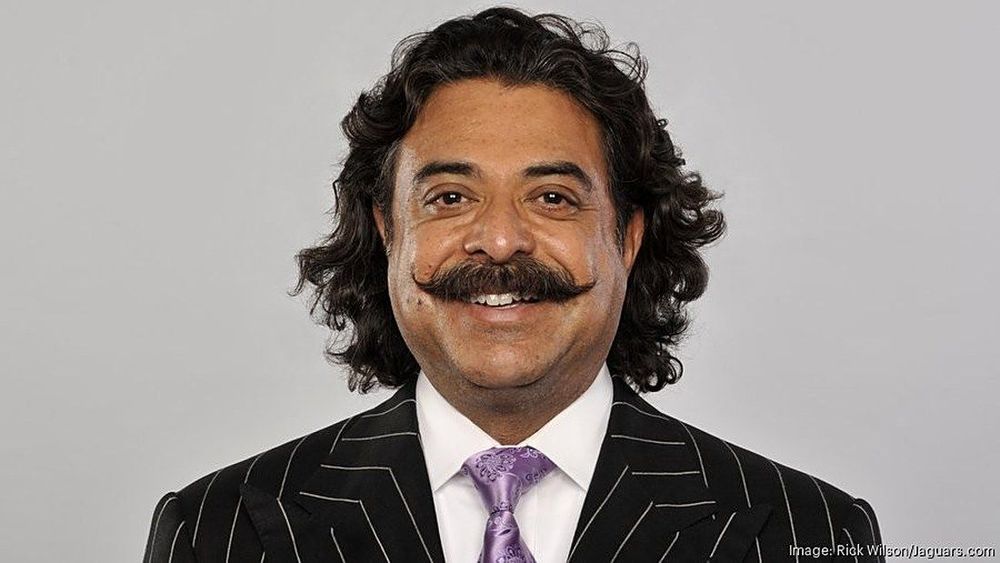
Image: Rick Wilson / Jacksonville Jaguars
Why We’re Inspired
We’re inspired because Shahid Khan’s first night in America cost $2 at a YMCA and his first job paid $1.20 an hour washing dishes — and none of it read as a ceiling to him. He studied engineering by day, worked at an auto parts plant, designed a better bumper, and bought the whole company.
“You have to take your lumps and face reality... There’s always some good in something bad happening to you, and you look for that.”
The Story
Khan arrived in America from Pakistan at 16 with $500, washed dishes while studying engineering at the University of Illinois, and went to work at Flex-N-Gate as a student. His design for a one-piece truck bumper became the foundation of the company he then bought from his former employer.
Flex-N-Gate is now one of the top five auto suppliers in North America, with 76 plants worldwide and more than 27,000 employees — and Forbes estimates Khan’s net worth at about $15 billion, ranking him among the greatest self-made Americans. He owns 100% of the Jacksonville Jaguars and Fulham FC.
Through the Khan Foundation and the Jaguars Foundation — which has granted more than $9.3 million to Jacksonville community programs — and with his wife Ann, he gave $10 million to the University of Illinois for the Khan Annex and funded five professorships at the school where he once washed dishes.
Sources
Forbes — Shahid Khan profile
Naples News / Forbes — “Naples, Florida Billionaires Among 250 on Forbes Self-Made List”
Jacksonville Jaguars — new ownership announcement
More from The Bourgeois Society: The full list · Mariam Naficy · Michelle Cordeiro Grant
Founder, Lively; Founder, GORGIE — New York, NY
Official links: Website · LinkedIn · Instagram
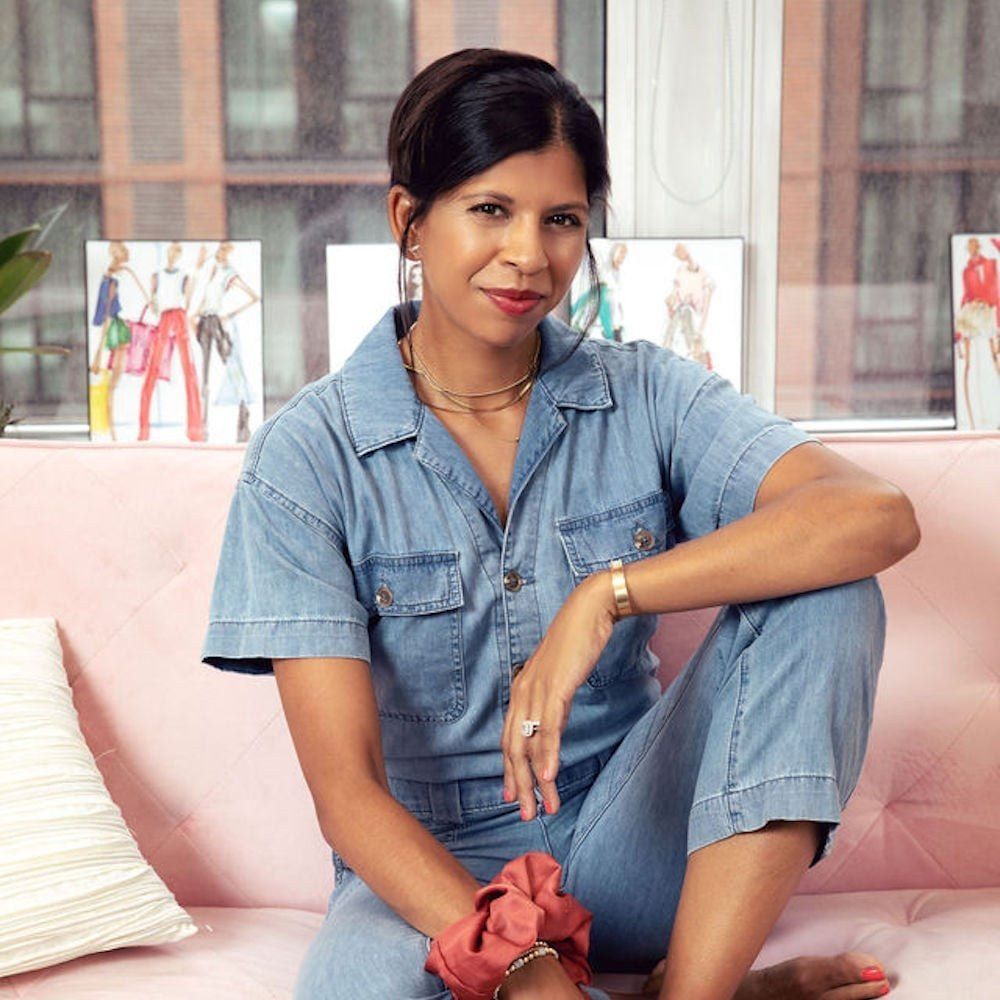
Image: Find Your North
Why We're Inspired
Michelle Cordeiro Grant is the daughter of Indian immigrants, which came with the standard expectation set: doctor or attorney. She chose retail.
After a finance degree from the University of Pittsburgh in 2002, she climbed the merchant ladder — Federated, the May Company, Nautica, then a director's chair at Victoria's Secret and a vice presidency at Thrillist — learning exactly how the intimate-apparel industry worked, and exactly what it got wrong.
In 2016 she launched Lively with a heretical method: no physical product at all. Just an idea and a mailing list. She asked women what they actually wanted from a bra, and the list exploded — from about 250 names to roughly 133,000 self-described brand evangelists practically overnight.
Lively's “leisuree” — comfortable, body-positive, fairly priced — was built with that community, and the community showed up as customers. Three years after launch, Grant sold Lively to the Japanese giant Wacoal for $105 million. The immigrants' daughter who was supposed to be a doctor had out-merchandised the entire lingerie establishment.
The Story
Grant stepped down as Lively's CEO in 2022 and promptly started again: GORGIE, a wellness-energy drink brand built with the same community-first playbook. Her podcast-and-keynote refrain to founders is pure Lively: build the audience before the product, and the product will never have to beg for attention.
Sources
The Business of Business — “Michelle Cordeiro Grant Started Bra Company Lively with a Mailing List but No Product. Three Years Later She Sold It for $105 Million”
Leading Authorities — “Michelle Cordeiro Grant” (speaker profile)
More from The Bourgeois Society: The full list · Shahid Khan · Ming Hsieh
Founder, Cogent Systems and Fulgent Genetics — Pasadena, CA
Official links: Website
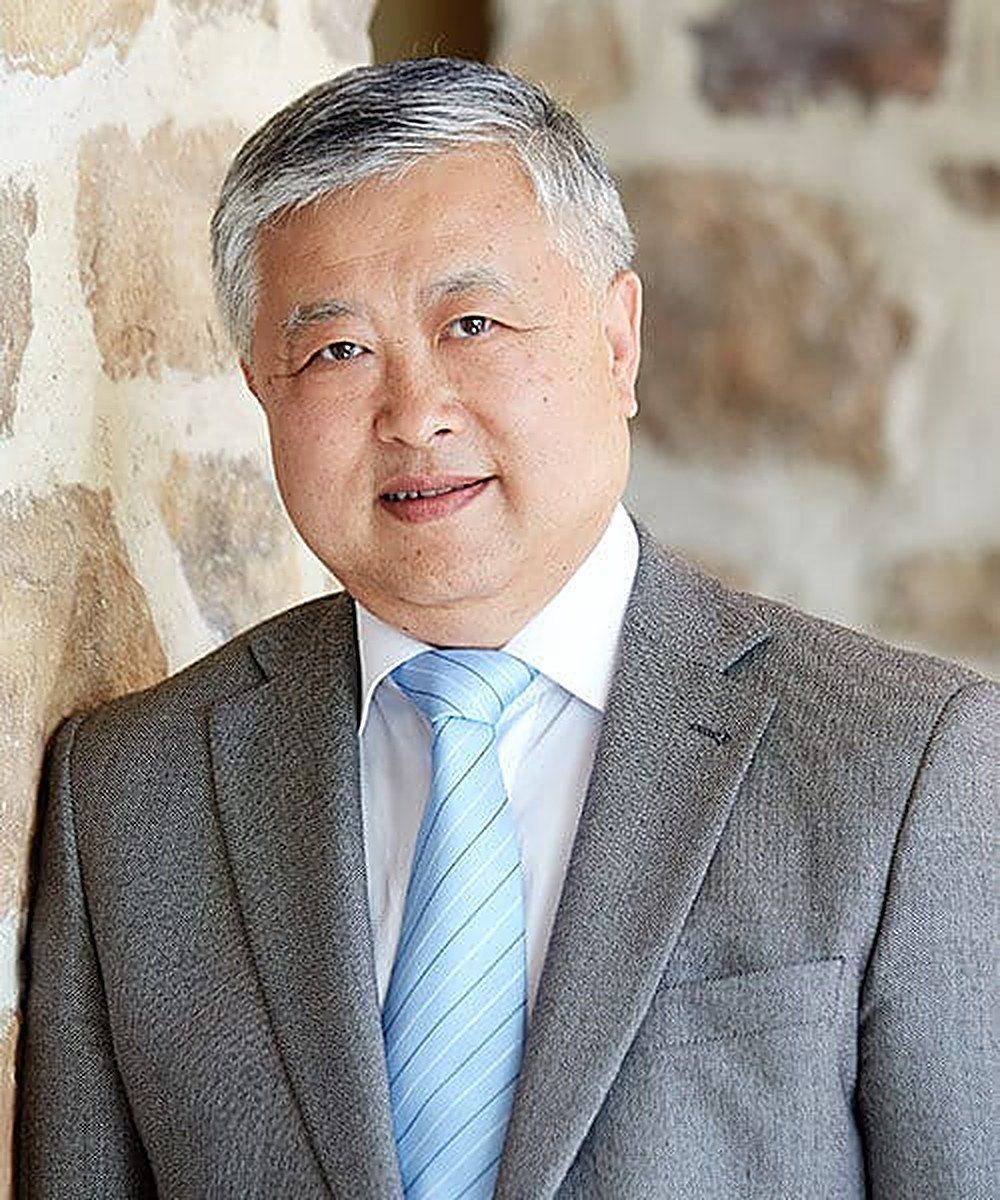
Image: Richard Nixon Foundation
Why We're Inspired
Ming Hsieh was born in Shenyang, China, and the Cultural Revolution stole his schooling: for ten years his education simply stopped, and his family was sent to the countryside. His parents — both college graduates — refused to let the darkness win. By candlelight, with textbooks they scavenged, they homeschooled Ming and his brother through a decade with no classrooms.
When China reopened its universities after 1976, the candlelight student walked into the entrance examinations and passed, earning a place at South China University of Technology. With an uncle's help he transferred to the University of Southern California, taking his bachelor's in 1983 and a master's in 1984 in electrical engineering.
In 1990 he co-founded Cogent Systems, whose fingerprint-identification technology became the standard for governments and law enforcement; its 2004 IPO made him a billionaire, and 3M acquired Cogent in 2010 for $943 million. He then founded Fulgent Genetics, a genetic-testing company he took public in 2016 and still leads as chairman and CEO.
Consider the symmetry: the boy taught by candlelight now funds the light for others.
"I want to help SC educate others, to let them build their dreams."
The Story
Hsieh has given USC more than $85 million — $35 million in 2006, which put his name on the electrical engineering department, and $50 million in 2010 to advance cancer research. The university that took a chance on a transfer student from Shenyang now teaches engineers in a department that carries his family's name.
Sources
USC Viterbi School of Engineering — “China Native Donates $35M to USC Engineering School” (Los Angeles Times)
EDN — “China Native Donates $35M to USC Engineering School”
More from The Bourgeois Society: The full list · Michelle Cordeiro Grant · Mowa Haile
Founder & CEO, Sky Blue Builders — Denver, CO
Official links: Website
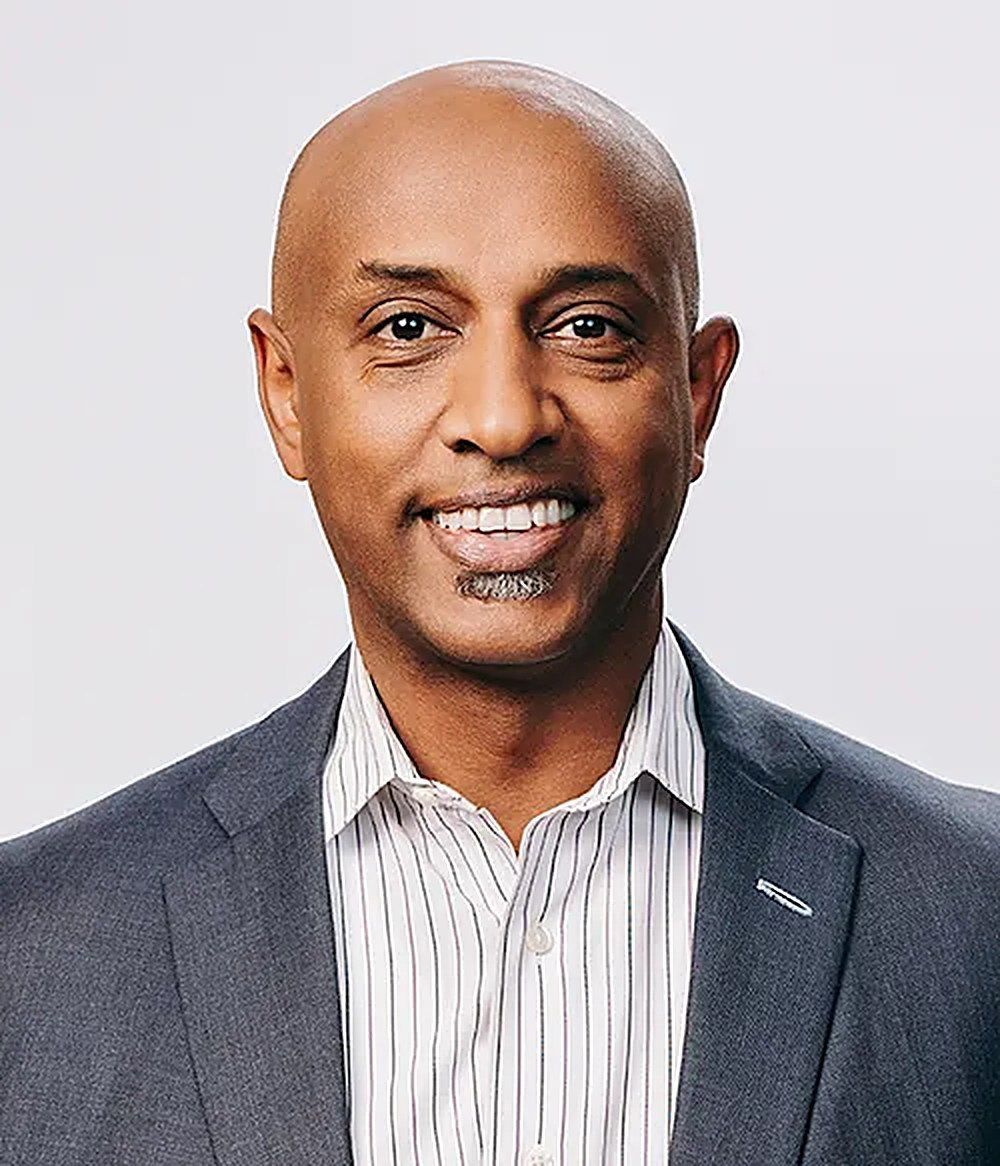
Image: Pinnacol
Why We're Inspired
Mowa Haile came to America from Eritrea with his parents in 1981, nine years old, and grew up in Fort Collins, Colorado, watching his parents start from scratch after losing everything.
He ran track well enough to earn a scholarship to Colorado State, then spent thirteen years in the technology industry — long enough to collect stock options, and to learn exactly how it feels when the people who build a company's value own a piece of it, and how it feels when they don't. That conviction became his company.
He launched Sky Blue Builders, a Denver general contractor, into the teeth of the Great Recession, and capitalized it by refinancing his own home. The firm grew job by job — commercial, government, and infrastructure work — and Haile kept returning to the same idea: the crew should own the company.
In January 2022 he sold ten percent of Sky Blue to key employees. In March 2024 he finished the job, converting the company to one hundred percent employee ownership through an ESOP. Colorado named it the state's ESOP of the Year.
The Story
Haile also became CEO of Apex Plumbing and took on some of the region's hardest construction assignments, including work on Denver International Airport's Great Hall renovation. But the ESOP is the legacy: an Eritrean immigrant who arrived with nothing built a company and then gave it — structurally, legally, entirely — to the people who work in it.
Sources
Aspen Institute — “Catalyzing Employee Ownership to Support Equity: A Conversation with Mowa Haile”
Sky Blue Builders — “About”
University of Colorado Leeds School of Business — “Building Generosity: Mowa Haile”
More from The Bourgeois Society: The full list · Ming Hsieh · Neerja Sethi
Co-founder, Syntel — Troy, MI

Image: Indian Entrepreneurs Magazine
Why We're Inspired
In 1980, in an apartment in Troy, Michigan, Neerja Sethi and her husband, Bharat Desai, started a company with $2,000. Sethi's preparation for that moment was formidable: degrees in mathematics and an MBA in operations research from the University of Delhi, a master's in computer science from Oakland University, and experience at Tata Consultancy Services. But titles understate her role.
For thirty-eight years she was an executive pillar of Syntel — director, treasurer, and later vice president of corporate affairs — one of the two people who turned a $2,000 apartment startup with $30,000 in first-year revenue into a global IT services company doing roughly $924 million a year.
When Syntel was sold to Atos in 2018 for $3.4 billion, her stake was estimated at around $510 million, and Forbes placed her on its list of America's richest self-made women. In a founder culture addicted to lone geniuses, Sethi's career is the corrective: Syntel had two founders, and it needed both.
The Story
In 2025 Sethi and Desai joined the Giving Pledge, committing the bulk of their fortune through the Desai Sethi Foundation, with a focus on education, economic mobility, and underserved young people in Michigan and Florida. The apartment in Troy is long behind them. What they are building now is other people's starts.
Sources
Lifestyles Magazine — “$1.3 Billion New Philanthropic Commitment to the Giving Pledge from Immigrant Entrepreneurs Bharat Desai and Neerja Sethi”
Billionaire Reporter — “Neerja Sethi”
More from The Bourgeois Society: The full list · Mowa Haile · Neha Narkhede
Co-founder, Confluent; Co-founder & CEO, Oscilar — Palo Alto, CA
Official links: Website · LinkedIn · X
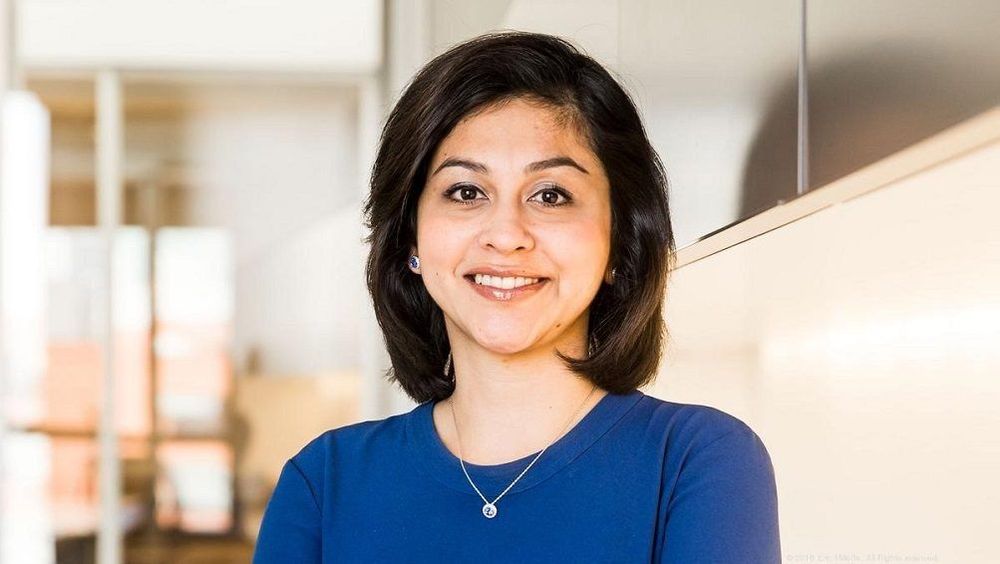
Image: Global Indian
Why We're Inspired
Neha Narkhede was born and raised in Pune, India, and moved to the United States in 2006 for a master's degree at Georgia Tech. Her career turned on a piece of invisible infrastructure.
At LinkedIn, which she joined in 2010 after a stint at Oracle, she co-created Apache Kafka — the open-source streaming platform that became the central nervous system of the data age, quietly moving information inside thousands of companies.
In 2014 she co-founded Confluent with Jay Kreps and Jun Rao to build a company around Kafka, serving as its chief technology officer and later chief product officer. Confluent's 2021 stock-market debut valued it at $9.1 billion, and the company has reported annual revenue approaching a billion dollars.
Forbes has repeatedly named Narkhede to its list of America's richest self-made women — at one point the youngest self-made woman on it.
Then she did the thing that separates builders from beneficiaries: in 2023 she co-founded Oscilar, where she serves as CEO, applying machine intelligence to the fraud and credit decisions that move through the very data streams she helped invent.
The Story
From Pune to the plumbing of the internet: Narkhede co-wrote the software the world's data flows through, built the company that commercialized it, and then started again at the frontier of AI-driven risk. Two founding acts, one decade, zero interest in resting.
Sources
First Round Review — “Winning with Open and Closed Source Products: Neha Narkhede, Co-founder at Confluent and Oscilar”
Dubai Tech News — “American Dreamers: Neha Narkhede, Co-founder of Confluent”
More from The Bourgeois Society: The full list · Neerja Sethi · Noubar Afeyan
Co-founder, Kingston Technology — Fountain Valley, CA
Official links: Website

Image: Biographs
Why We're Inspired
John Tu immigrated to the United States in 1971 and worked his way through the classic newcomer's rotation of jobs while he built toward something of his own. His first real technology venture, run with partner David Sun, made money — and then the 1987 stock market crash took nearly all of it.
Tu's response to being wiped out at mid-career was not caution; it was Kingston Technology, started with Sun out of a garage, selling memory modules on a strict cash-only basis. The discipline came straight from the crash: never owe, never be owed, take care of your people. Kingston became the world's largest independent maker of computer memory products.
In 1996 the partners sold 80 percent to SoftBank for $1.5 billion — and three years later bought the stake back for $450 million, one of the great trades in tech history.
Through it all Tu stayed famously unassuming, a billionaire who kept his own calendar and his employees' loyalty, in part because of what the partners did with the SoftBank windfall: they shared $100 million of it with the staff.
"David Sun and I were almost broke when we started this little company 30 years ago and there weren't that many people doing what we did outside of the big PC makers,"
The Story
Tu and his wife are also major philanthropists, and Kingston itself funds education and community causes — the crash survivor's way of spreading the safety net he never had. Partner David Sun is profiled in Part 1 of this list; together they wrote the immigrant garage-startup story before it had a name.
Sources
StorageNewsletter — “Kingston Technology Celebrates 30 Years in Business”
Money Inc. — “David Sun and John Tu”
Inside Philanthropy — “This Billionaire Couple Have More Than Ford, Mellon and Rockefeller Combined. Are They Ramping Up?”
More from The Bourgeois Society: The full list · John Jennings · Josie Natori
President, J.P. Mascaro & Sons — Audubon, PA
Official links: Website
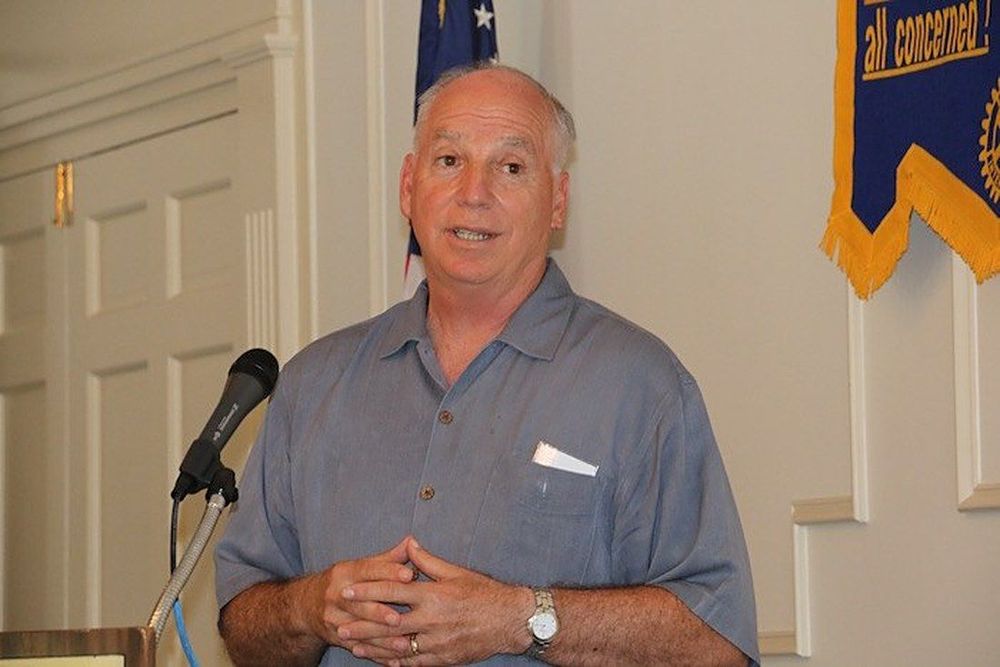
Image: Norristown Rotary Club
Why We're Inspired
J.P. Mascaro & Sons was founded more than sixty years ago by Joseph P. Mascaro and his wife, Ida — Italian immigrants' son building the classic way, a truck and a route at a time — and raised up by their five sons: Joe, Frank, Lou, Mike, and Pat.
Pat Mascaro, the company's president, grew up inside the business his grandparents' generation made possible, and he has spent his career turning a family hauler into what the company describes as the largest privately owned waste company in Northeastern Pennsylvania, with a workforce in excess of 930 people. The third generation of the family now works in the business.
What Pat talks about most, though, is education — a value he traces straight to his father, a man of limited formal education himself who, in Pat's words, was a strong proponent of education in others. The family puts money behind the talk, committing major funding to education projects across its region.
Few profiles in this list are as literal an embodiment of the immigrant thesis: one generation crosses, the next builds, the third gives back.
"Norristown was the home of our grandparents when they immigrated to America from Calabria, Italy. Our family has strong associations and pride within this community"
The Story
When Mascaro's company won the municipal waste contract in Norristown — valued at about $37 million — the announcement wasn't really about trucks. It was about roots: the town where the grandparents landed from Calabria, now served by the company their family built. That is the whole Mascaro story, and Pat tells it every chance he gets.
Sources
J.P. Mascaro & Sons — “Mascaro Wins Contract Valued at $37 Million” (company release)
Waste Today — “J.P. Mascaro & Sons: Built to Last”
Lehigh Valley Business — “Waste Hauler Commits Major Funding for Regional Education Projects”
More from The Bourgeois Society: The full list · Noubar Afeyan · Raj Sardana