The Finest Teas: Rare Leaf, Proper Service, and the Quiet Ceremony
The best luxury teas and rare single estate leaf reward the same virtues as fine wine — provenance, patience, and a proper pour. From first-flush Darjeeling to aged pu-erh and silver-needle whites, here is where the great teas come from, what the top tier honestly costs, and how they are brewed and served.
Every great drink eventually teaches its drinker the same lesson: the leaf, the grape, the bean is only the beginning.
What separates the best luxury teas and rare single estate offerings from the merely expensive is everything around them — the garden and its altitude, the week the leaf was picked, the hands that made it, the vessel it meets, the temperature of the water, the quiet of the room.
Tea, taken seriously, is the most civilised of the luxuries, because it cannot be rushed and it does not perform. It simply rewards attention.
This is the connoisseur's route through that world: the flushes of Darjeeling, the cakes of Yunnan that improve for decades, the white teas made of nothing but buds, the auction legends at the top of the market, and the two great houses — one Parisian and old, one Singaporean and gleaming — where this readership actually buys its leaf.
Pour something first. This page keeps.
Darjeeling: One Garden, Two Seasons, Two Teas
Start in the Himalayan foothills, where a single estate can produce what amounts to two different drinks a year. The harvest calendar is divided into flushes, and the first two are the famous ones.
First-flush Darjeeling, picked in spring, pours pale gold and tastes light, floral, and fresh; the second flush, picked in early summer from more mature leaves, pours amber and carries the rich, fruity character tasters call muscatel — an impression of Muscat grape and stone fruit that no other tea region reliably reproduces. Neither is better.
They are the same terroir in two seasonal moods, and serious drinkers keep both: the first flush for bright mornings, the second for the afternoon's slower hour.
Buying well here is a matter of reading the label like a wine buyer. Estate name first — the garden is the provenance — then the flush, then the grade. Buy the current season's first flush and drink it fresh; its delicacy is perishable in a way the fuller second flush is not.
And brew each as it asks to be brewed: the first flush in water well off the boil for a short steep, the second a touch hotter and longer to draw out the muscatel depth. Boiling water on a fine first flush is the tea equivalent of decanting a great white Burgundy into a saucepan.
Silver Needle: The Tea Made of Beginnings
If Darjeeling is the wine of teas, silver needle is its eau de vie — the palest, quietest, most exacting cup in the canon. It is a white tea made exclusively from the unopened buds of the plant, each one covered in fine silvery down, picked by hand in a narrow window before the leaf unfurls.
One Darjeeling estate, Glenburn, describes its own version with a maker's precision: the rare white tea is made over just a couple of days each year, when the silvery-green buds are about to unfold, and the liquor is very light, with delicate undertones and a crisp finish.
Glenburn lists its Darjeeling Silver Needle at $91 for a 50-gram pouch — a useful, honest anchor for what genuine top-tier white tea costs at retail, before the auction legends begin.
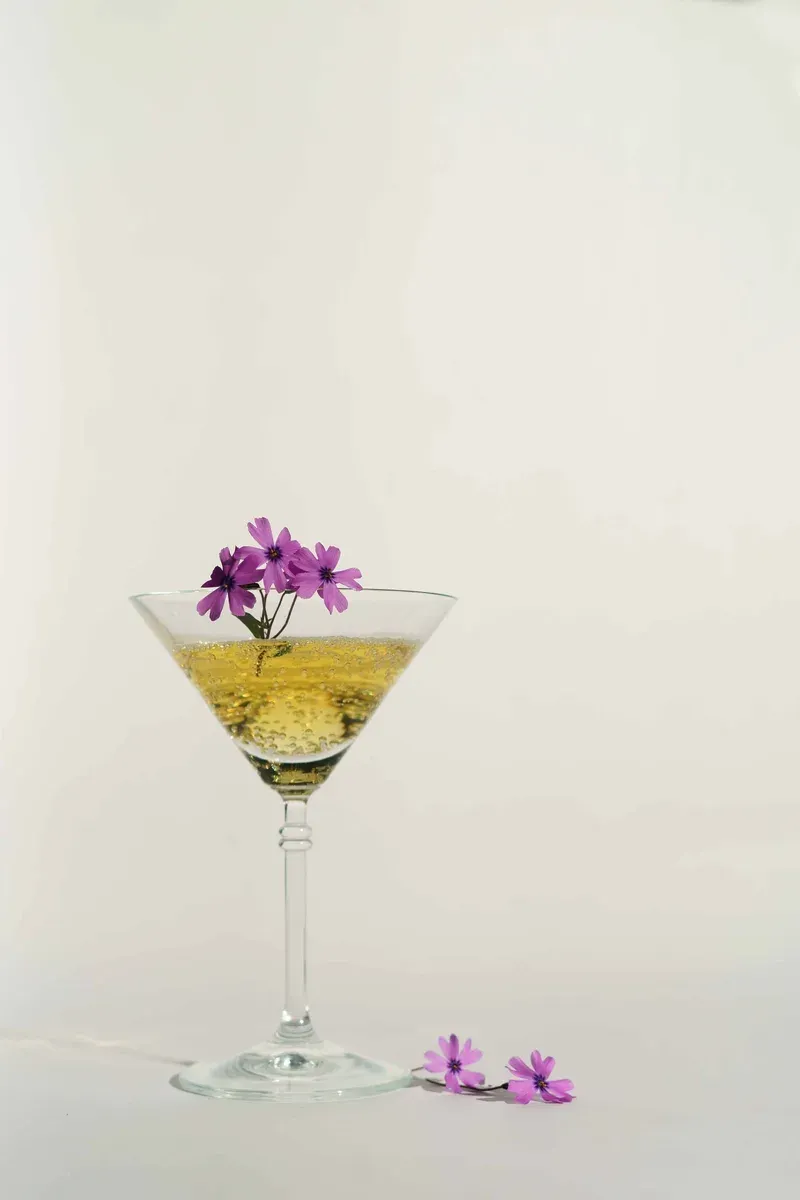
Serve silver needle the way the photograph at the top of this page suggests: in glass, so the buds can be seen standing and settling in the water; in porcelain, so nothing argues with the flavour; and at a temperature gentle enough to keep its sweetness intact.
It is the tea for the end of the day and the beginning of a conversation — naturally the lightest in caffeine of the true teas, and the one guests remember precisely because it refused to raise its voice.
Pu-erh: The Tea That Ages Like Wine
Every other tea in this piece is best young. Pu-erh, from Yunnan in southwestern China, breaks the rule entirely. It is a fermented tea, and its living fermentation develops complex, earthy flavours over time — raw pu-erh, called sheng, ageing naturally over years and decades, while ripe pu-erh, called shou, is accelerated to mimic the aged character.
A properly stored cake of twenty years can be worth more, and taste deeper, than the day it was pressed. Collectors store pu-erh the way they store wine: cool, steady, away from odours, in cakes wrapped and labelled with their year and mountain.
The ceremony matches the patience.
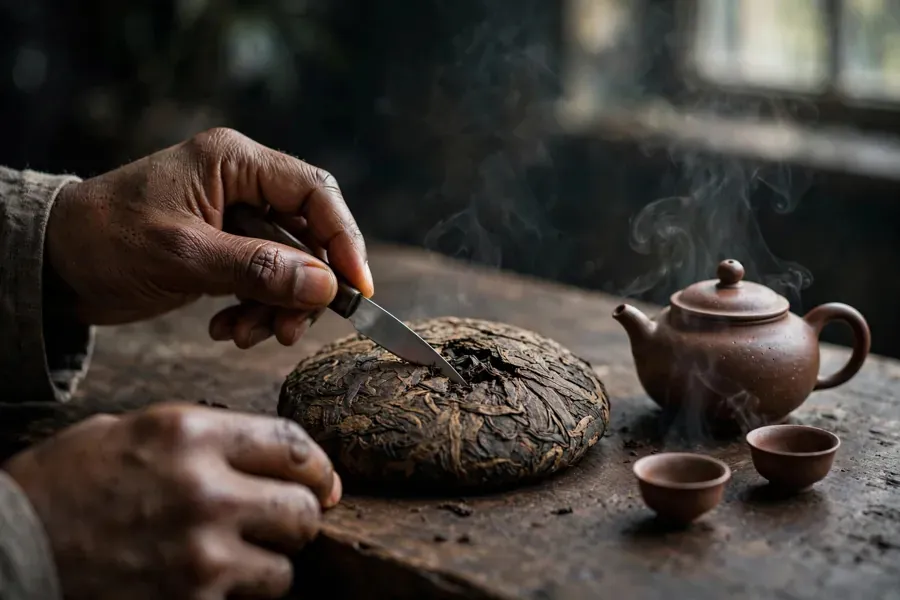
Pry the leaf from the cake with a tea knife — the inset photograph above is the whole ritual in one frame — rinse it once in hot water to wake it, then brew it in short, repeated infusions, each one a slightly different chapter of the same story: first bright and camphorous, then woody and sweet, then soft as old leather and dried fruit.
No other drink at the table asks so little equipment and gives back so much time.
The Top of the Market, Honestly Priced
What does the summit actually cost? At retail, as the Glenburn listing shows, an exceptional estate white tea sits in the low hundreds of dollars per hundred grams — real money, honestly earned by scarcity and handwork.
Survey coverage of the luxury tier makes the same point from the other end: the most expensive luxury teas include Da Hong Pao, silver needle, and rare pu-erh, at hundreds or even thousands of dollars per kilogram. And then there is the legend tier, where tea stops being a beverage and becomes a relic.
Da Hong Pao, the great oolong of the Wuyi Mountains, grows on a handful of ancient mother trees; auction records compiled by Chinese Tea Pedia record twenty grams of mother-tree Da Hong Pao fetching 208,000 RMB at auction — the equivalent of 10.4 million RMB per kilogram — with only six mother trees remaining and harvesting of them banned since 2006.
Nobody drinks that tea. It is owned the way manuscripts are owned. The drinkable Da Hong Pao in a connoisseur's caddy comes from cuttings and offspring of those trees — excellent, storied, and priced like a fine wine rather than a national treasure.
The practical top tier, then, is this: estate Darjeelings and silver needles in the tens of dollars per small pouch; fine oolongs and aged pu-erh cakes climbing into the hundreds as age and mountain accumulate; and a cellar — yes, a tea cellar — built gradually, cake by cake and tin by tin, exactly the way the wine cellar in our companion piece was built.
Which brings us naturally to Coffee, Tea, and the Morning Rituals of People Who Savour, where these same leaves take their place in the day's first ceremony.
The Great Houses: Paris Patience, Singapore Gleam
Two houses anchor the retail world of fine tea, and they could not be more different in temperament. In Paris, Mariage Frères has practised the French art of tea since 1854 — a family import house that supplied hotels and aristocracy for generations before it ever opened a salon to the public.
Its counters today hold more than a thousand references, each harvest rigorously selected and labelled Jardin Premier, sourced in direct collaboration with the finest gardens in Asia.
This is the house for the grand cru single estate and the historic blend alike, bought by weight from black canisters, with a specialist who will match the tea to your palate the way a sommelier matches a bottle to a menu.
The newer pole of the tea world stands in Singapore. TWG Tea, founded there in 2008, built the modern luxury tea salon at global scale — buying directly from source gardens in every tea-producing country, growing to more than seventy locations worldwide, and describing its collection as the largest in the world.
Where Mariage Frères is the old cellar, TWG is the grand hotel: gleaming tins, tea-infused patisserie, grand cru harvests presented for collectors, and salons designed for the ceremony as much as the cup.
The wise buyer uses both — Paris for depth and history, Singapore for range and theatre — and the rare-estate importers and estate-direct shops, Glenburn among them, for the single gardens neither giant can carry in season.
Proper Service: Water, Vessel, Time
Great leaf is ruined daily by careless water. The brewing discipline is simple to state and exacting to practise: fresh water, the right temperature for the leaf, a warmed vessel, and a timer you actually obey.
A current loose-leaf brewing guide sets the working ranges plainly — delicate Japanese greens at the coolest temperatures, whites and Chinese greens a step warmer, oolongs warmer still, black teas and pu-erh at or near the boil, with pu-erh rinsed before its first infusion.
Too hot or too long is the whole list of common errors: it is what turns a fine green tea bitter and a silver needle coarse.
Serve in porcelain or glass, pour for your guests before yourself, and offer the second infusion as a matter of course — with oolongs and pu-erh, the middle infusions are often the finest thing you will serve all day.
A note on tea and health, kept deliberately plain, because this magazine does not sell promises in a cup. The United States National Center for Complementary and Integrative Health summarises the evidence on tea with a scientist's honesty:
Green tea has not been shown to be effective for weight loss.— National Center for Complementary and Integrative Health (NCCIH), on the evidence for tea
The same NCCIH review notes that human studies of tea's much-discussed protective effects remain inconclusive, while the limited evidence available suggests green and black tea might have beneficial effects on some heart-disease risk factors, including blood pressure and cholesterol. That is the whole of the honest claim, and it is enough.
Drink the great teas because they are beautiful — because a garden, a season, and a maker's lifetime are in the cup. Any benefit beyond the ceremony is a bonus, and questions of health belong, as always, with your own physician.
The Quiet Ceremony
In the end, the finest teas ask for the rarest thing in a full life: twenty unhurried minutes. The kettle, the warmed pot, the leaves opening in glass, a cup poured for someone whose company you chose. Wine celebrates.
Coffee accelerates. Tea attends. Build the caddy the way you built everything else in the house — the best you can find, bought with knowledge, kept with care — and let the quiet ceremony do what it has done in every great house that ever kept it: slow the day down to the speed of a good conversation.
Keeping the Leaf: Storage Is the Second Purchase
Fine tea asks one more discipline of its buyer, and it is the cheapest of all: keep it properly. Leaf is a sponge for whatever the air carries, so the great enemies are light, moisture, heat, and the company of strong odours — a tin of first-flush Darjeeling stored beside the spice rack is being seasoned out of existence.
The connoisseur's habit is simple and strict: airtight tins or canisters, kept cool and dark, one tea to a vessel, never returned to a tin once measured out with a damp spoon.
Delicate greens and first flushes are bought in small quantities and drunk within their season, the way you would treat a vintage meant for drinking young; oolongs keep longer in their sealed tins; and pu-erh, alone among teas, is stored to improve — its cakes wrapped, labelled with garden and year, and rested in steady air away from the kitchen's steam and smoke, a cellar in miniature that asks only a shelf and patience.
Buy the storage when you buy the tea, and the second purchase protects the first: months later, the last cup from the tin should taste like the first one did, and in the case of the pu-erh, better.
Coffee, Tea, and the Morning Rituals of People Who Savour
Building the Cellar, Part I: The Drinking Cellar
Related Profiles: The Women of Black Excellence
Ashita Agrawal — "Darjeeling Tea Varieties: First Flush Vs Second Flush"
Glenburn Fine Tea — "Glenburn Darjeeling Silver Needle White Tea"
Farm to Jar — "What Is Pu-erh Tea and Why Is It Aged?"
Tea Brands — "15 Luxury Tea Brands for Connoisseurs"
Chinese Tea Pedia — "How pricey does Chinese tea get?"
Paris Select Book — "Why is Mariage Frères the best tea salon in Paris?"
FTN News — "TWG Tea opens largest global flagship and Tea Museum at Changi Airport"
TeaPro — "Loose Leaf Tea Brewing Guide: Temperature, Time & Tips"
National Center for Complementary and Integrative Health — "Tea"
Questions & Answers
Who starts the meal, and when do you put your napkin on your lap?
The best luxury teas and rare single estate leaf reward the same virtues as fine wine — provenance, patience, and a proper pour. From first-flush Darjeeling to aged pu-erh and silver-needle whites, here is where the great teas come from, what the top tier honestly costs, and how they are brewed and served. It links to 3 stories and articles — open any card to read the full piece.
Who pays when one person invites another to dinner?
The best luxury teas and rare single estate leaf reward the same virtues as fine wine — provenance, patience, and a proper pour. From first-flush Darjeeling to aged pu-erh and silver-needle whites, here is where the great teas come from, what the top tier honestly costs, and how they are brewed and served.
How do I read the full stories on The Finest Teas: Rare Leaf, Proper Service, and the Quiet Ceremony?
Choose any card on this page. Each one opens a full page of its own — the complete story or article, with its sources linked.