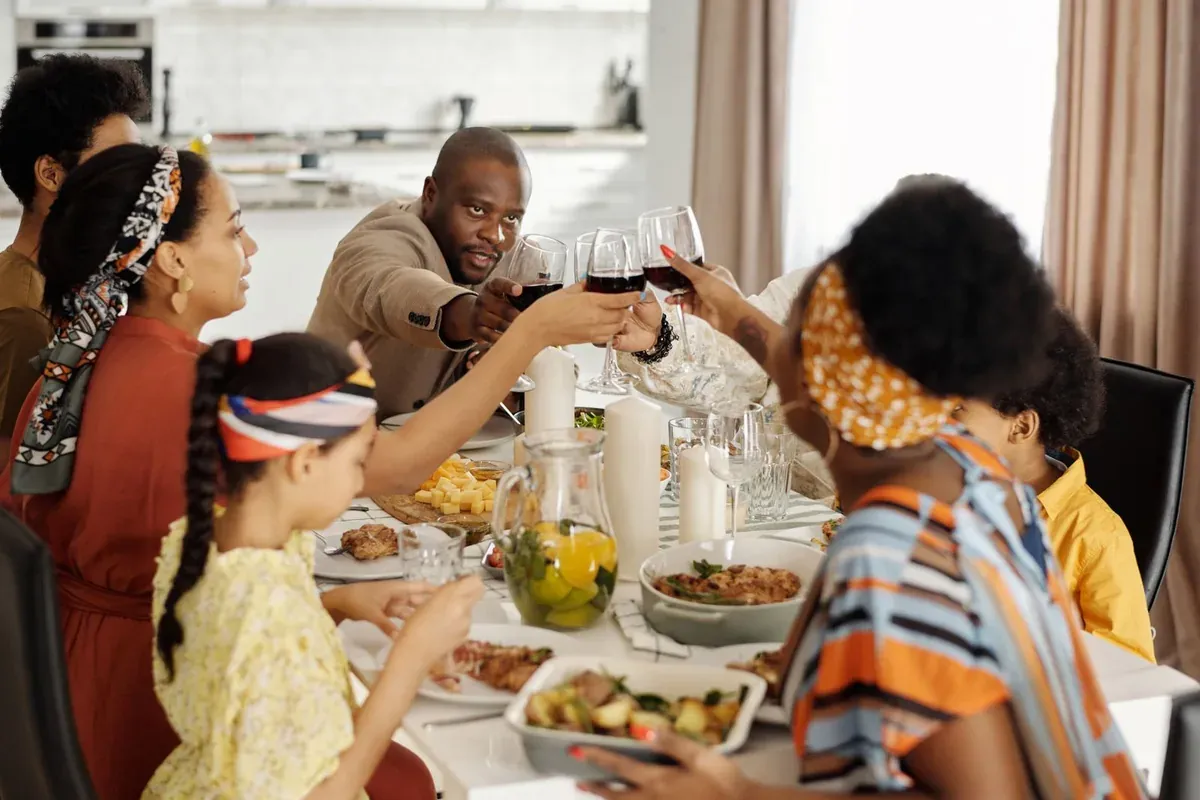
The Cookout, Elevated: Cookout Etiquette, Hosting and Backyard Party Rules That Keep the Standard
Good cookout etiquette and honest hosting rules were never the opposite of a good time. They are how backyard season keeps its soul — and its standard.
Let us settle the group-chat argument first: cookout etiquette, thoughtful hosting and clear backyard party rules do not make a cookout stiff. They make it last. The gatherings everybody remembers — the ones people are still talking about when the leaves turn — run on an invisible architecture.
Somebody thought about the ice. Somebody protected the card table. Somebody made sure the grill master ate a plate of his own food, sitting down, like a person and not a caterer.
Elevation, at our level, is not about making the cookout fancy. It is about refusing to let a sacred thing be careless.
Coverage of the Black cookout as an institution returns, again and again, to the same elements: dishes that carry generations of family recipes, music that connects the oldest and youngest people in the yard, and games — spades, dominoes, cards — that turn an afternoon into a reunion.
One widely shared account describes food at the centre of the experience, with barbecue ribs, grilled chicken, macaroni and cheese, baked beans, potato salad, collard greens, cornbread and homemade desserts each reflecting a recipe somebody's grandmother perfected and a region somebody's family came from. That is the inheritance. The host's job is simply to build a yard worthy of it.
The Grill Belongs to One Person
Every etiquette authority worth reading lands on the same first rule, and it is not negotiable: the grill is one person's domain.
Food Reference's barbecue etiquette guide, drawing on chef Ted Reader, puts it plainly for guests — you may watch, you may ask questions, but you do not touch, and you do not stand over the cook explaining what you would do differently. The guide carries Reader's own framing of why the rules matter at all:
When it comes to attending someone else's barbecue party or hosting your own backyard bash, there are a few rules of etiquette that you should use as guidelines.— Chef Ted Reader, via Food Reference
At an elevated cookout, that rule becomes a piece of hospitality rather than a warning. The grill master is named before the day, not discovered during it.
He — or she — gets the good apron, the sharp tongs, a chair within reach, a cold drink that somebody else keeps full, and a deputy whose only job is carrying platters so the cook never has to abandon the fire. If you are the host and also the grill master, say so early and staff around yourself honestly.
The saddest sentence in backyard season is “I never even sat down,” said by the person who paid for everything.
The same guide's hosting counsel is unglamorous and exactly right: a clean grill, a full tank with a backup, and enough charcoal before the first guest arrives. Elevation is logistics wearing a linen shirt. Check the fuel the day before.
Oil the grates. Have a thermometer, not a guess. Cook in an order that respects the fire — and keep a finished-food station far enough from the raw station that nobody has to think about it twice.
Real Plates Are a Decision, Not a Snub
Here is where our table parts company with the standard advice, respectfully. Etiquette writer Lydia Ramsey's barbecue guidance sensibly warns hosts to keep enough cups, plates and napkins on hand — and suggests grandma's china is a poor substitute if supplies run short.
We agree with the arithmetic and choose the other branch of it: at this level, you simply own enough real plates. Enamel, stoneware, heavy melamine that passes the hand test — the material is your business. What matters is that a guest holding ribs, corn and a glass feels held by the house, not managed by it.
Ramsey's wider point deserves keeping whole: casual does not mean anything goes, and outdoor manners are still manners. Her host's list — be prepared, have a rain plan, provide the food and drink unless the gathering is explicitly a shared table, and keep repellent where guests can find it — is the floor.
Our ceiling adds only polish: plates warmed by the sun are fine; a drinks station set before the first arrival is better.
A self-serve station, as one hosting guide notes, keeps guests out of the kitchen crush and lets everyone help themselves — water, soft drinks and the grown folks' selection in one shaded place, with a second cooler of reserves behind it.

Protect the Spades Table
Every cookout has a parliament, and it sits at the card table. The spades game is not a side activity to be tidied away when dinner is ready; in the accounts that describe this tradition best, card games, dominoes and spades are named among the recreations that knit relatives closer and give the day its stories.
So the elevated host treats the table like infrastructure. It gets level ground, real light after sundown, chairs that do not wobble, and a no-clearing rule: nobody stacks plates on the game, nobody moves a player's drink mid-hand, and nobody — nobody — comments on a partner's play from the rail unless the table's own law allows it.
Seat the table early and let it self-govern. The trash talk is part of the liturgy; your job is only to keep it fed.
Send plates to the players the way you would send them to elders — promptly, completely, with napkins — because a game that has to break for food loses its thread, and a thread lost at the spades table is mourned like a death in some families.
If children want in, the answer is a teaching game at a second table, run by a patient auntie, where the next generation learns to count books before they learn to talk about them. That is how the institution renews itself. For more on holding a room once the plates are down, see our companion on conversation at altitude.
The Playlist Is Law
Music at the cookout is not background; it is the second host. The tradition's own chroniclers describe a soundtrack built from classic soul, R&B, funk, gospel, jazz and hip-hop, with older relatives introducing the classics and younger ones contributing today's favourites — the music itself doing the work of connecting generations. Build yours the same way, on purpose.
Open with the records your elders cooked to. Let the middle of the afternoon belong to the family canon, the songs everybody over forty knows by the second bar.
Save the new music for when the yard is fully fed and fully comfortable, and even then, mix it like a good DJ at a family function: nobody's grandmother should have to ask what is happening, and nobody's teenager should have to pretend to be bored.
Practical law, briefly. One speaker system, one person in charge of it, volume set for conversation first. No guest's phone gets plugged in uninvited — the aux cord is a position of trust, like the grill.
And when the line-dance song comes on, the host's job is to clear space, not to film. Some moments are for the yard, not the internet.
The Uncle Who Inspects the Ribs
Every family has one: the elder who arrives, greets the house, and proceeds directly to the grill for a formal inspection. Outsiders misread this as criticism. Insiders know it is a blessing ceremony.
He is checking that the fire is being respected, that the ribs are not being rushed, that the young cook — whatever the young cook's age — is carrying the family's standard. The elevated host does not defend against the inspection; she schedules it.
The first rib off the grill goes to the inspector, on a real plate, with a chair. Approval, once given, settles the whole yard.
Recent hosting coverage notes how many cookout arguments actually begin before anyone cooks — over who is supplying what, and over the guest list itself, with one report observing that more than two-thirds of hosts name no uninvited guests as their top unwritten rule. Solve both in the invitation.
Say what the house is providing, say what a guest may bring and in what quantity, and make the headcount plain with love: “We have set the yard for twenty.” A guest who wants to add a cousin asks first — and a host who can stretch says yes before the question is finished. Clarity is not coldness.
Clarity is how twenty people eat well and twenty-five people eat like family.
The Set-Up Hour Nobody Photographs
Elevation is decided before the first car pulls up, in the unglamorous hour when the yard is still empty. Walk it like a guest. Where does the sun hit at four o'clock, and is the elders' seating in the shade it will have become by then, or the shade it has now?
Chairs for sitting are not chairs for eating, and neither is a chair for the card table — count all three separately.
Set the trash and recycling where people actually stand, not where the plan wishes they stood, and put a small table beside the grill that belongs to the cook alone: tongs, towel, thermometer, a resting tray, and room for the finished ribs to land without a negotiation.
Then think in flows. Guests arrive at one point, drink at a second, eat at a third, and gather where the music and the game pull them. If those four points cross at the kitchen door, you will spend the day apologising in a doorway.
Move the drinks twenty feet and the whole yard breathes.
Put the children's drinks and the grown folks' drinks in sight of each other but not in the same cooler, stock twice the ice you calculated — ice is the one shortage nobody forgives, because it announces itself in a warm glass in front of everybody — and set out the sunscreen and repellent the hosting guides recommend as a small, visible courtesy, next to the hand towels, where a guest finds them without having to ask the house for anything.
That is the whole secret of the elevated yard: a guest who never has to ask is a guest who gets to relax, and a yard full of relaxed people is the only review that matters.
What Guests Owe the Yard
Elevation runs both directions. The guest's code, gathered from the same etiquette sources, is short enough to memorise. Bring something — a bottle, a dessert, a side with enough to go around — even when told to bring nothing; arrive with gratitude and leave the grill master in peace.
Offer help once, specifically — “I can clear” beats “need anything?” — and accept the answer. Watch your own children near the fire; the yard is shared, supervision is not. And compliment the food like you mean it, because the cook gave the day to it.
The best hosting advice in the recent guides is also the simplest, and it belongs over the gate as guests leave. One local hosting expert puts the whole philosophy in a single line:
Spend time with your guests instead of trying to make everything perfect.— Hosting expert Hirsch, via Local Life
That is the elevated cookout in one sentence. The standard was never perfection. The standard is a yard where the grill is respected, the plates are real, the spades table is sovereign, the music carries three generations at once, and the host is in the photograph — smiling, plate in hand, exactly where she belongs.
When the season turns to the indoor table, the same family gathers again at the big table, and when the craving is for the masters' cooking rather than our own, we take the soul food circuit on the road.
And for the reunions that need a full production plan behind them, family reunions, done properly is the file to open first. The brigade that makes catered affairs run this smoothly is profiled in the dinner party brigade.
The Big Table: Thanksgiving and the Holidays Without the Meltdown
The Soul Food Circuit: The Best Plates Around the Country
Family Reunions
Profiles: The Women Collection
Food Reference — "Barbecue Season and Barbecue Etiquette"
HelloBeautiful — "The Black Cookout Is An American Institution: Why It's Important"
Lydia Ramsey — "Barbecue Etiquette – Time to Revisit the Rules"
Local Life — "How to Host a Backyard Barbecue"
Food Drink Life — "The Real Cookout Etiquette Fights Start Long Before Anyone Touches the Grill"
Questions & Answers
Who starts the meal, and when do you put your napkin on your lap?
Good cookout etiquette and honest hosting rules were never the opposite of a good time. They are how backyard season keeps its soul — and its standard. It links to 6 stories and articles — open any card to read the full piece.
Who pays when one person invites another to dinner?
Good cookout etiquette and honest hosting rules were never the opposite of a good time. They are how backyard season keeps its soul — and its standard.
How do I read the full stories on The Cookout, Elevated: Cookout Etiquette, Hosting and Backyard Party Rules That Keep the…?
Choose any card on this page. Each one opens a full page of its own — the complete story or article, with its sources linked.