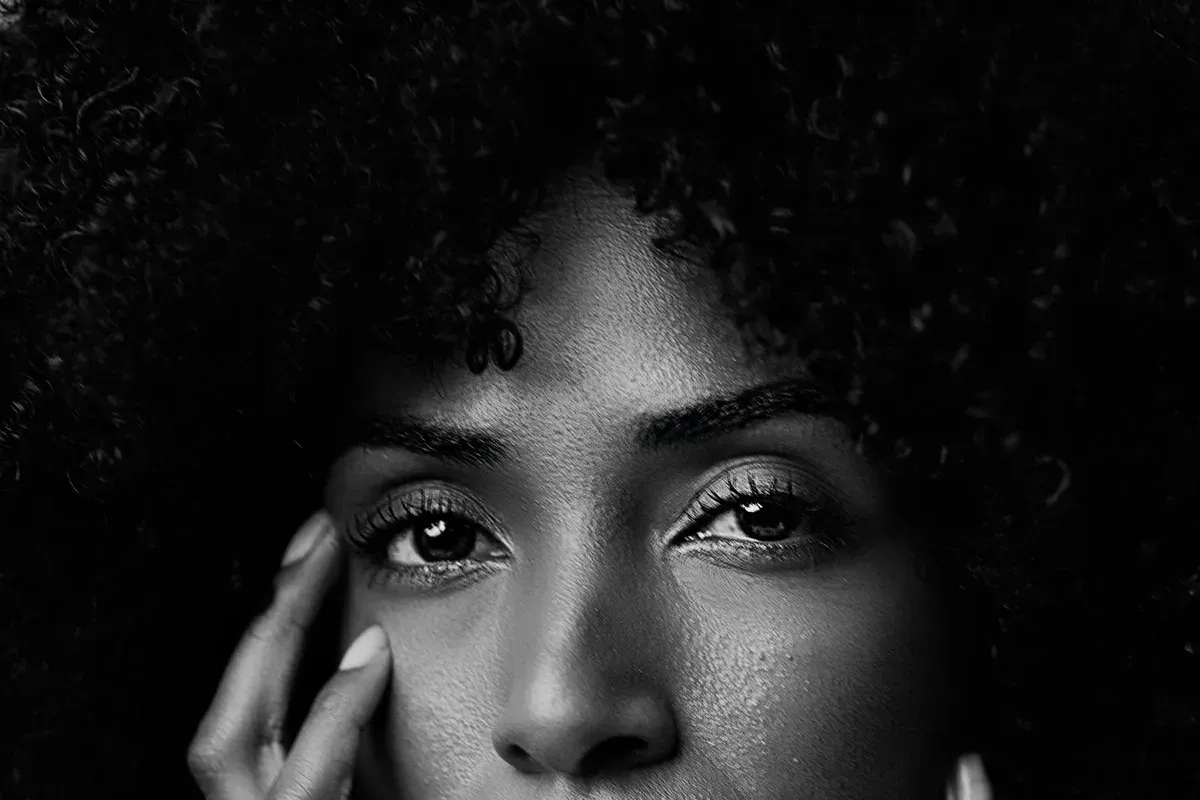
The Face, Perfected: Choosing a Plastic Surgeon at the Most Exclusive Level
How to choose among the best plastic surgeons — board certified, discreet, and fluent in Black skin — with honest pricing and no pressure, ever.
Everybody who has ever searched for the best plastic surgeons has run into the same fog: glowing feeds, filtered before-and-afters, and a dozen confident titles that all sound alike. Cut through it and the question becomes precise — how to choose a board certified plastic surgeon who is discreet, restrained, and fluent in your skin.
That is the quiet world this guide opens: the credential that actually matters, the surgeons famous for work nobody can point to, the melanin-aware technique Black patients should insist on, consultation etiquette, honest pricing, and why the finest practices tend to have waiting lists and no discount social media at all.
A word of comfort before we begin: the very fact that this takes research is a good sign about you. The patients who fare worst in aesthetic surgery are almost never the ones who asked too many questions. They are the ones who booked the way one books a haircut — quickly, on a picture, at a price.
Your face deserves a slower method, and the slower method is not complicated. It is simply verification, in the right order.
The Credential That Actually Matters
Begin with one board, and learn its full name: the American Board of Plastic Surgery — ABPS — part of the American Board of Medical Specialties. Chicago plastic surgeon Julius Few, MD, puts the priority as plainly as it can be put in his interview with Goop — “How to Choose the Best Plastic Surgeon, According to Julius Few, MD”:
“If the surgeon isn’t board certified, I don’t care how many followers they have on Instagram—they should seriously question whether that is the right person.”— Julius Few, MD, via Goop
Dr. Anthony Youn explains what stands behind that certification: surgeons certified by the American Board of Plastic Surgery complete at least three years of general surgery training and two years of plastic surgery training, and pass comprehensive written and oral examinations under a strict code of ethics.
Verify it yourself rather than taking a wall plaque’s word — the board’s own site and the American Society of Plastic Surgeons’ Find a Surgeon tool both confirm certification directly.
Then go one layer deeper, as any serious checklist advises: confirm the surgeon holds active hospital privileges for your specific operation, and that the facility is accredited — AAAASF, AAAHC or JCAHO — with an inspection date you can note.
Privileges matter because a hospital has already vetted the surgeon for exactly that procedure; accreditation matters because the room itself has been inspected for the emergency you hope never happens.
“Cosmetic Surgeon” Is Not the Same Title
Here is the surprise that catches even sophisticated patients. As Dr. Few notes in the same interview, a licensed physician in the United States can legally perform a wide range of surgery — which means the phrase “cosmetic surgeon” on a beautiful website guarantees nothing about plastic-surgery training.
Dr. Youn makes the identical warning from his own practice: board-certified cosmetic surgeons can come from entirely different specialties, and he has treated patients whose original surgeon turned out to have no formal training in the operation performed.
The fix is unglamorous and total: ask what the surgeon is certified in, by which board, and confirm the answer with the board — not with the surgeon’s marketing. A real plastic surgeon will be pleased you asked. Only the other kind will be offended.
Specialisation is the next filter. The best surgeon for your procedure is the one who performs it constantly — Dr. Few’s counsel is to choose by procedure: rhinoplasty from a surgeon who does rhinoplasty all the time, a facelift from a surgeon who does facelifts routinely, and to ask how many they perform each year.
Texas facial plastic surgeon Dr. Christian Stallworth gives the same advice in checklist form: look for procedure-specific experience, fellowship training in the relevant area, and before-and-after photographs of patients who share your physical characteristics — with a sharp eye on the photographs themselves, because inconsistent lighting and angles can conceal what consistent ones reveal.

Restraint: The Work Nobody Can Point To
At the most exclusive level, the aesthetic itself is the signature — and the signature is restraint. The celebrated result is not a new face; it is your face, rested. Friends say you look wonderful and cannot say why.
That outcome comes from surgeons who plan conservatively, stage work rather than stacking procedures, and talk patients out of requests that would trade their identity for a trend. In consultation, listen for that instinct.
A surgeon who explains what they would not do to your face — and why your bone structure, your skin and your age argue for less rather than more — is showing you the exact judgment you are paying for. A surgeon who agrees to everything is selling, not practising.
Photographs are where restraint becomes verifiable. Insist on standardised, comparable images — the serious checklists specify standardised photos with visible scars and 3, 6 and 12-month labels — because week-two photographs flatter everyone and month-twelve photographs tell the truth. Ask, too, to see results on faces like yours: similar age, similar structure, similar skin.
A practice that cannot show you patients who resemble you is asking you to be its experiment, at full price.
Melanin-Aware Technique: The Questions Black Patients Must Ask
Black skin is not a variation on a default; it has its own strengths and its own surgical considerations, and your surgeon should raise them before you do. UT Southwestern’s plastic surgery guidance is candid: dark skin tends to be thick and rich in collagen, which is why it often ages more slowly — but the same biology affects healing.
Patients with darker skin are more prone to keloids and hypertrophic scars — firm, raised growths that form when the body produces excess collagen as it heals — and research estimates people of African, Hispanic and Asian heritage may be up to 15 times more likely to develop keloids than people with lighter skin.
Keloids can grow beyond the boundary of the original wound; hypertrophic scars stay within it. Your personal and family history of scarring is therefore not small talk in consultation — it is surgical planning.
Pigment is the second conversation. Darker skin is more susceptible to hyperpigmentation — darkening — and hypopigmentation — light patches — after inflammation or injury, including surgery, chemical peels and laser treatment.
UT Southwestern’s reason is mechanical and important: light and laser therapies work based on how light passes through the skin, and Black and brown skin lets less light through, so device settings must be customised to your skin tone. Translate that into questions. Which lasers and peels do you consider safe for my Fitzpatrick type, and which do you refuse?
Where will you place incisions to keep scars discreet, and what is your scar-management plan from week one? How do you preserve my ethnic identity in the result — because the goal, as surgeons who do this well understand, is refinement that keeps a Black face unmistakably itself, never a borrowed template.
Enhance Medical Group’s guide adds the practical aftercare: new scars should be kept out of direct sunlight, since sun can make them appear darker and more noticeable, and covered or protected with high-SPF sunscreen while they heal.
If a surgeon waves these questions away — “scarring is scarring,” “our laser is safe for everyone” — you have learned what you needed to learn, at the price of a consultation fee.
Experience with skin of colour is not a marketing line; it shows up as specific answers: specific settings, specific incision choices, specific scar protocols, and photographs of Black patients at the twelve-month mark. Ask for all four.
The Consultation, Done Properly
Treat the consultation the way the best practices treat it: as a professional meeting with an agenda. Arrive with your medical history, your medications, your scar history and your questions written down. Expect the practice to take its own history just as carefully.
The complete checklist used by careful patients runs like this: certification verified; hospital privileges confirmed; facility accreditation noted; the anaesthesia provider identified and present start to finish; standardised photographs reviewed; a written recovery roadmap in hand; and a written revision policy and an itemised quote — surgeon, anaesthesia, facility, garments and medications, and likely extras — before any booking.
Add one line of your own: after-hours contact. When you are swollen at midnight and frightened, “call the office Monday” is not aftercare.
Etiquette cuts both ways, and at this level it is diagnostic. You should feel no pressure to book — every serious guide names pressure as a red flag and a second opinion as standard prudence, especially for major facial work.
Pay the consultation fee without resentment; it buys you an unhurried hour and a practice that does not need to sell you surgery to cover free advice. And trust the signal Dr. Few names most simply: do your homework, then trust your instincts. If something in the room feels rushed, opaque or dismissive, that feeling is data.
The surgeon you choose will hold your face in their hands; the relationship should feel like it can hold a disagreement, a complication, and a phone call at an inconvenient hour.
Honest Pricing — and Why the Range Is So Wide
Now the money, with the figures attributed the way careful money talk should be.
A current US cost guide built on the American Society of Plastic Surgeons’ procedural statistics lists an average surgeon’s fee of roughly $9,500 for a facelift, with total costs commonly ranging from about $7,000 to $20,000 once anaesthesia and facility charges are counted; rhinoplasty totals in a similar band, and upper eyelid surgery beginning from an average surgeon’s fee of about $3,359 before facility and anaesthesia.
Those are national averages, not top-tier quotes. At the most exclusive level — a celebrated surgeon, a private accredited facility, combined procedures such as facelift with neck and eyelid work — totals climb well past the average, and the itemised quote, not the headline number, is the only figure worth budgeting against.
What you are buying in that spread is identifiable: the surgeon’s training and volume in your exact procedure; accredited facilities with proper monitoring and emergency readiness; board-certified anaesthesia care; and follow-up that extends to the twelve-month photograph, not the twelve-day check.
Very low fees, the consumer guidance warns, can signal inadequate training, non-accredited facilities or absent follow-up — the three economies nobody should make with their face. Equally, a high fee alone proves nothing; that is why the quote must be itemised and the revision policy written.
If a correction is needed, who pays for the facility and anaesthesia the second time? Surgeons answer this question every week. Ask it before you need the answer.
Waiting Lists, Quiet Marketing, and Recovery Well Bought
Do not be put off by the wait. A practice in genuine demand schedules consultations weeks out and surgery further still, because its operating days are finite and its existing patients’ follow-up fills them.
Plan backwards from your life: surgery, then the honest recovery window the surgeon gives you — not the optimistic one from a testimonial — then the event, the photographs, the season you are preparing for. The twelve-month truth of a facelift argues for thinking a full year ahead at this level. Waiting is not the obstacle to the result.
Waiting is part of the result’s quality control.
Finally, buy your recovery as deliberately as your surgery. The first fortnight decides how quietly you heal: a private recovery house or a nurse at home, meals handled, children and dogs lovingly elsewhere, no stairs negotiated alone, no driving, no performing wellness for visitors.
Keep follow-up appointments as faithfully as you kept the consultation — the surgeon’s scar management, sun protection and activity guidance are calibrated to melanin-rich skin only if you are in the room to receive them. And keep your own counsel about the work for as long as you wish.
Discretion, which began with a surgeon who does not advertise, ends with a result that does not announce itself. Your face, perfected, should look like the simplest thing in the world: you, on your best and most rested day — with nobody able to point to why.
The Therapist to the Stars: Elite Mental-Health Care, Total Discretion
The Beauty Standard: Skin First
The Grooming Standard
Women of Excellence — Black Excellence Profiles
Goop — “How to Choose the Best Plastic Surgeon, According to Julius Few, MD”
Anthony Youn, MD — “How to Choose Your Plastic Surgeon”
AestheticMatch — “How to Find the Best Surgeon for Your Procedure”
UT Southwestern Medical Center — “What People of Color Should Know Before Getting Plastic Surgery or a Skin Procedure”
Enhance Medical Group — “How Skin Tone and Type Influence Cosmetic Surgery Scarring”
RoomGic — “Facial Cosmetic Surgery: Complete US Cost Guide”
Texas Plastic Surgery / Dr. Christian Stallworth — “How to Select the Right Plastic Surgeon”
Questions & Answers
Who will you meet on this page?
How to choose among the best plastic surgeons — board certified, discreet, and fluent in Black skin — with honest pricing and no pressure, ever. It links to 4 stories and articles — open any card to read the full piece.
What makes these stories worth reading?
How to choose among the best plastic surgeons — board certified, discreet, and fluent in Black skin — with honest pricing and no pressure, ever.
How do I read the full stories on The Face, Perfected: Choosing a Plastic Surgeon at the Most Exclusive Level?
Choose any card on this page. Each one opens a full page of its own — the complete story or article, with its sources linked.