
The Heritage Journey: A Ghana Heritage Tour for Black Americans, Done in Style
This is the roots trip taken properly — Ghana and the Lowcountry with private historians, unhurried days, and three generations walking the same ground together.
Book a Ghana heritage tour and Black Americans will find no shortage of buses, flags and matching T-shirts. What is harder to find is time — time inside the castle walls after the crowd moves on, time at the river with nobody checking a watch, time for your mother to sit down and take it in.
The heritage journey, done at this level, is not a sightseeing product at all. It is an inheritance errand. You are going to collect something your family has carried for centuries without ever holding, and to bring it home in a form your grandchildren can keep.
So plan it the way you would plan anything that matters to this family: privately where privacy counts, comfortably everywhere, and slowly at the moments that deserve slowness. Take your elders while they can still tell you what the trip means to them.
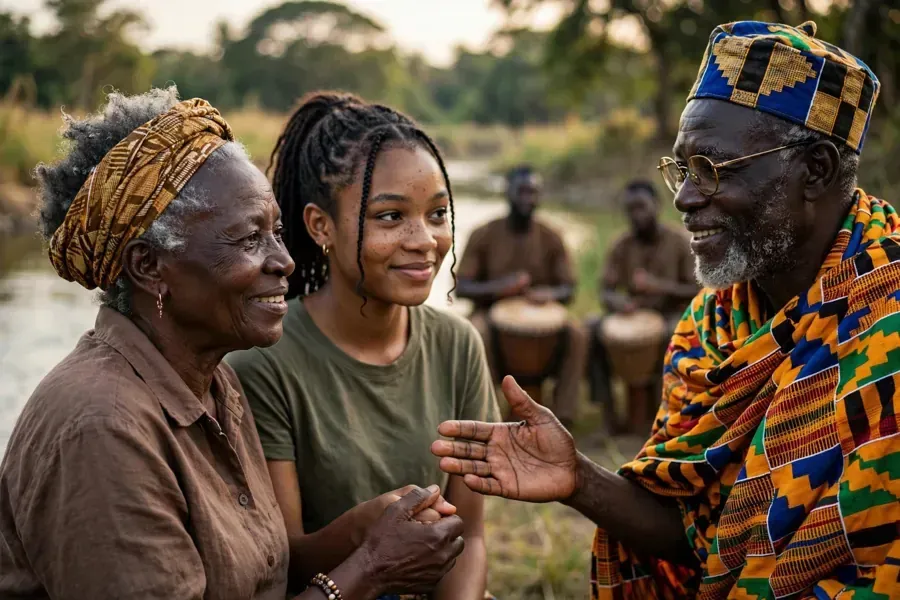
Take your teenagers while they are still willing to be quiet in a place that asks for quiet. And build the journey in two movements — Ghana first, for the origin; the Carolina Lowcountry second, for the arrival — because the story your family carries home is the whole arc, not half of it.
Why Ghana, and Why Now
Ghana did not wait to be discovered by the diaspora; it issued an invitation.
In September 2018, President Nana Akufo-Addo formally declared 2019 the Year of Return, marking four hundred years since the first enslaved Africans arrived in North America, and families answered in waves — musicians and writers, yes, but mostly ordinary households retracing a history that had been kept from them. The invitation has not expired.
What the Year of Return proved is that the welcome is structural, not seasonal: heritage sites staffed for exactly this visitor, ceremonies designed for exactly this homecoming, and a whole travel culture that understands the difference between a tourist and a pilgrim.
That distinction should govern every choice you make. A tourist collects photographs. A pilgrim collects understanding, and understanding cannot be rushed through a turnstile.
Choose the operator, the guide and the pace accordingly — and where the standard itinerary gives a great site forty-five minutes, give it the morning.
Accra First: Settle In, Then Go Deep
Resist the urge to sprint west to the castles on day one. Give Accra two unhurried days. Begin in Cantonments at the W.E.B. Du Bois Centre, the scholar's final home, where his personal library, museum and the mausoleum he shares with Shirley Graham Du Bois sit in calm, contemplative grounds.
Du Bois came to Ghana at Kwame Nkrumah's invitation and chose it as his last home; standing in his study is the gentlest possible first lesson for a teenager — that the story of our people includes scholars who were received as honored elders, not only captives who were taken.
Guided tours are the way to do the Centre properly, and weekday mornings are its quietest hours.
Pair it with the Kwame Nkrumah Memorial Park and Independence Square, then loosen the schedule and let Accra be pleasurable: the colour and commerce of Makola Market, and an appointment with a good tailor. The classic heritage itineraries build in time at Makola's textile stalls and a fitting for custom-sewn clothing — do not treat that as filler.
A garment made for you in Accra, worn at the family table for years afterward, is a souvenir with a pulse. Your grandmother will understand this instinctively; let her lead the bargaining.
Assin Manso: The River Before the Castles
On the road west, stop before the coast at Assin Manso, the Ancestral River Park where captives were given a last bath in the river the sources call Donko Nsuo before being marched to the coastal dungeons.
Today the site holds the Memorial Wall of Return and the reburial ground of ancestors brought home from the diaspora — in 1998, two previously enslaved Africans, one from New York and one from Kingston, were returned through the Door of No Return and laid to rest at Assin Manso in a ceremony that still anchors the site's meaning.
Visitors walk the path barefoot, put their hands in the water, and pray or simply stand still. Nobody performs grief here, and nobody should feel required to. Presence is enough.
The most momentous moment for me was when we went to the last bath and then we took our shoes off and we walked the trail where those of us who were lost went.— Nicole Koonce, professor travelling with a university group, via NYU Journalism Projects
Assin Manso is also where many heritage journeys hold a naming ceremony — drumming, libation poured for the ancestors, blessings from elders, and a traditional Ghanaian name bestowed, often drawn from the Akan practice of naming by the day of the week you were born.
For a teenager, receiving a name in that place does what no lecture can: it gives the history a handle with his name on it. For an elder, it can feel like a door closing gently behind a question she has carried her whole life.
If your operator offers the ceremony, take it seriously and dress for it accordingly — this is not a photo stop, it is a family rite, and it deserves the same wardrobe respect you would give a christening.
Cape Coast and Elmina: Walking Back Through the Door
Then the castles. Elmina, raised by the Portuguese in 1482 as São Jorge da Mina, is described across the heritage-tour literature as the oldest European structure in sub-Saharan Africa, and Cape Coast Castle — a UNESCO World Heritage Site — holds the dungeons and the Door of No Return, the final exit through which the enslaved were forced onto ships.
Go with a private guide, and go at the pace the place demands. The well-built itineraries make a point your family should adopt as doctrine: at Cape Coast you walk through the Door of No Return, and then, as descendants, you experience a return through the same doors. That single reversed step is the emotional summit of the entire journey.
Everything before it is preparation; everything after it is integration.
A few comforts, unapologetically. Stay on the coast that night rather than driving straight back — the established heritage routes overnight at beachfront resorts near Elmina, and your family will need an evening of sea air, a good dinner and sleep more than they will need another attraction.
Balance the weight of the castles the next day with Kakum National Park, where the canopy walkway — among the longest and highest of its kind in West Africa — puts the whole family up in the green roof of the rainforest, laughing again.
Heritage travel that is only solemn teaches half the lesson; the other half is that our people also built, planted, drummed and rejoiced on this soil.
If your route extends inland, Kumasi rewards the extra day: the Manhyia Palace, seat of the Ashanti Kingdom, is a living palace with a history museum inside its compound — monarchy, continuity and craft, presented by the people who never left.
The Second Movement: The Lowcountry
Come home, rest, and then — in another season, at another pace — do the American half. The Gullah Geechee corridor of the South Carolina Sea Islands is where the arrival story lives: a culture that kept language, foodways, song and craft recognizably African across centuries.
Around Beaufort, a three-hour heritage tour in a climate-controlled vehicle crosses Lady's Island, St. Helena and Hunting Island, taking in a landmark schoolhouse raised for freed families in the earliest days of emancipation, the ruins of island churches, and the stories and songs that hold the culture together.
In Charleston, specialist operators run Gullah tours of the Black history sites, with private versions available for families who want the historian to themselves — the city's Black-history tour listings are the place to compare formats, from an hour downtown to a half-day Sea Island run.
Add Daufuskie Island, reachable only by boat, where artisan studios keep island crafts alive, and the arc completes itself: river, castle, crossing, island, school, church, home.
Notice what the Lowcountry half gives your teenagers that Ghana cannot: proximity. This is heritage they can revisit on a long weekend, bring friends to, and eventually bring their own children to without a passport. The journey becomes a practice instead of an event — which is the whole point.
Travelling With Elders and Teenagers, Together
The party that makes this trip sing is the full span of the family, and the full span needs stage management. Book the private historian, not the forty-seat coach: a guide who can read your mother's face and slow down without being asked is worth every premium. Keep one anchor experience per day and let the rest breathe.
Put the castles mid-morning, when elders are strongest and the light inside is bearable, and never schedule the river and both castles as one emotional marathon.
Give teenagers a job — keeper of the family journal, photographer of record, the one who asks the guide the question of the day — because a tasked teenager is an engaged witness, and an untasked one is an audience.
And protect the evenings: the conversations this journey starts will happen at dinner, on the porch, in the car, long after the official program ends. Leave room for them.
Choosing the Historian, Not Just the Tour
The difference between a decent heritage journey and a definitive one is the person walking beside you.
Ghana has been building this welcome for decades, not seasons: heritage programming around the coastal forts grew through the PANAFEST theatre festival and Emancipation Day commemorations of the 1990s, long before the Year of Return made the invitation famous — a lineage of Pan-African heritage tourism that means the guiding bench there is deep.
Interview your operator the way you would hire any professional for the family. Who exactly guides the castle day — a historian, or a driver with a script? How long inside Cape Coast, precisely?
Will the guide take your party through the dungeons at your pace and answer a teenager's hard questions without hurrying him? Can the naming ceremony be arranged privately, at Assin Manso, rather than appended to a group departure?
The established itineraries show what a well-built route looks like when it is sequenced with care: a palace morning in Kumasi, the river before the castles, an evening of drumming and dance after Elmina, a live band at dinner in Accra — weight and joy alternating, never stacked. Hold every proposal up against that rhythm.
Do the homework before you fly, too — it doubles the yield of every site. Spend one family evening with the names: ask your eldest living relative to record what she knows of the family's earliest remembered people, and bring the recording with you.
At Assin Manso, where a video room screens documentaries on the trade and the Memorial Wall honours those who fought for emancipation, a family that arrives carrying its own names experiences the wall differently from one that arrives empty-handed.
Give the teenagers the camera and the questions; give the elders the right of first reflection at every stop; and let the guide know, in advance, that your party travels with both.
A good historian will build the day around that fact — pausing where your mother needs to pause, and finding, at Kakum, the exact moment the family is ready to laugh again, a thousand feet of canopy walkway strung through the treetops more than a hundred feet above the forest floor, on seven bridges the whole family can cross together.
What a Family Carries Home
You will bring back cloth, carvings and photographs, and all of that is fine. But the real cargo is different: a name spoken over your child at a river in Ghana; your mother's account of the Door, told in her own words at your own table; a teenager who now knows the Lowcountry is an hour's flight, not an abstraction.
Record it all while it is fresh — sit the family down within the month, elders first, and put the stories beside the photographs in one album the house keeps. That album is the deliverable of the heritage journey. Trips fade; inheritances compound.
Go and collect yours properly.
Three Generations, One Itinerary: Travelling With Parents and Grandchildren
The Summer Circuit: Oak Bluffs, Sag Harbor, and the Houses That Hold Us
The Grand Tour, Our Way
Profiles: The Immigrants Collection — Homecomings
Blastours — "Ghana Heritage Tour"
NYU Journalism Projects, Africa Dispatch — "The Year of The Return Brings the Diaspora Back to Ghana"
Ghana Remembers — "Assin Manso: Unveiling the Untold Story of the Slave Trade"
GhanaTRVL — "W.E.B. Du Bois Centre"
Black & Abroad — "Accra Itinerary"
Olympic Air Tours — "Beaufort: Gullah Heritage Tour"
Go South Charleston — "African-American History Tours of Charleston, SC"
GhHeadlines — "Year of Return 2019: Traveler, Tourist or Pilgrim?"
WeTravel — "Roots & Nature Ghana Journey"
A heritage journey means a long stay inside someone else’s everyday: local networks, home banking that would rather you were at home, and the news and programmes of home for the evenings. A VPN keeps all of it within reach and under lock — NordVPN is made for the long trip.
A journey like this one is assembled long before the plane — the flights, the first nights, the ground in between. Most readers price the whole route on Expedia first, where flights and hotels sit in one search.
Affiliate Disclosure: Bourgeois Society Magazine may earn a commission when readers buy through links on this page, at no additional cost to the reader.
Questions & Answers
How do seasoned travelers plan a trip that feels effortless?
This is the roots trip taken properly — Ghana and the Lowcountry with private historians, unhurried days, and three generations walking the same ground together. It links to 4 stories and articles — open any card to read the full piece.
What separates a good trip from a great one?
This is the roots trip taken properly — Ghana and the Lowcountry with private historians, unhurried days, and three generations walking the same ground together.
How do I read the full stories on The Heritage Journey: A Ghana Heritage Tour for Black Americans, Done in Style?
Choose any card on this page. Each one opens a full page of its own — the complete story or article, with its sources linked.