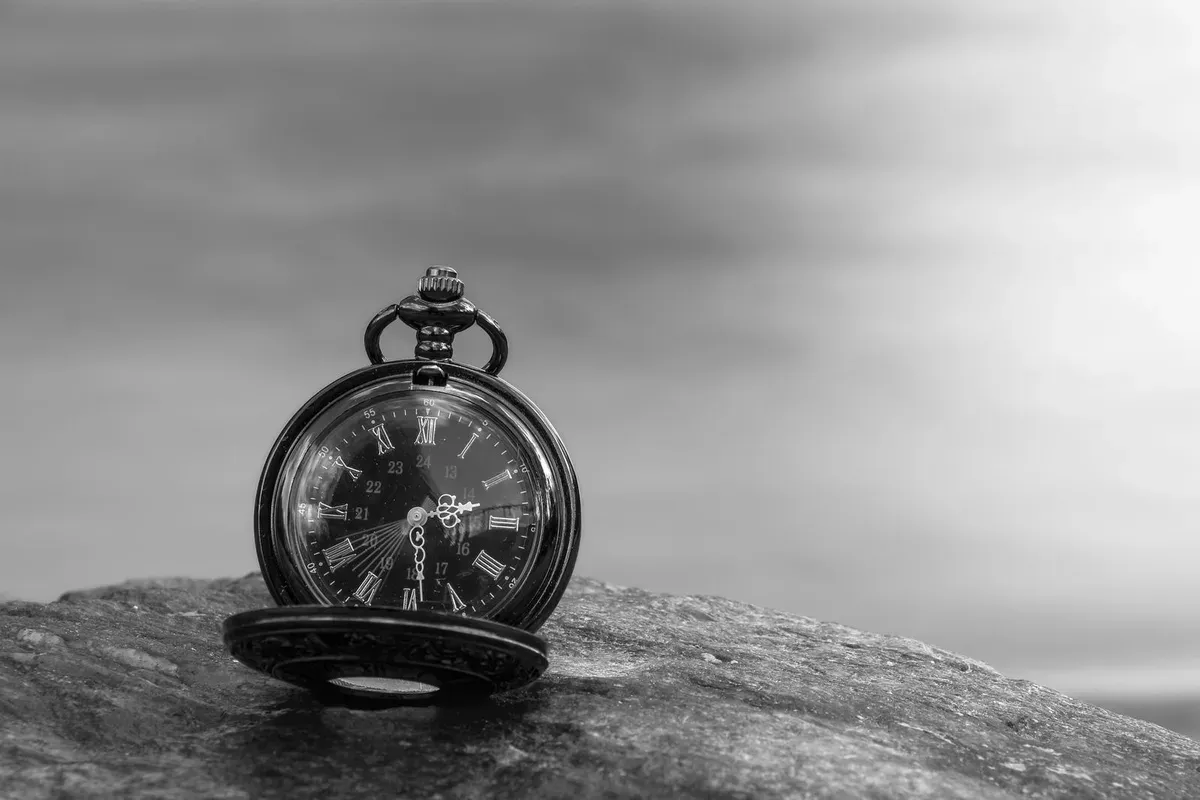
Dressing Well, Part V: Black Tie, Built Properly
The black tie dress code for men leaves nothing to interpretation: what to wear is a tuxedo — dinner suit, dress shirt, bow tie, patent or polished shoes — assembled from first principles, so you never rent your presence again.
There is a moment every man of standing knows: the invitation arrives, two words sit at the bottom — black tie — and the room he is about to enter quietly divides into the men who own their evenings and the men who hire them by the weekend. This guide exists to move you, permanently, into the first group.
The black tie dress code for men is not a mystery and it is not a matter of taste; what to wear is a tuxedo, and a tuxedo is a small, closed system of correct decisions — the jacket's silk, the shirt's front, the covered waist, the shined shoe — each one settled a century ago and each one still legible at twenty paces to anyone who knows the code.
Learn the system once, from first principles, and you will never again stand in a rental shop on a Thursday, hoping the man behind the counter knows more than you do. You will open your own closet, dress in twenty unhurried minutes, and arrive looking like what you are: a principal, not a guest at your own life.
First Principles — What Black Tie Actually Is
Black tie is evening dress. The comprehensive guides state its place in the order of things exactly: black tie is evening dress, traditionally for events starting after 6 pm, and is one step less formal than white tie, which survives now mainly at state and royal occasions.
The dinner jacket itself began in the late nineteenth century as a less formal alternative to the evening tailcoat, and took its American name from Tuxedo Park in New York, where the style became popular in the 1880s.
The core outfit has not changed since: a black or midnight blue dinner jacket with silk-faced lapels, matching trousers with a single stripe, a white dress shirt and a black bow tie, finished with a waist covering and black formal shoes. That is the whole architecture.
Everything that follows is detail — but at this level, detail is the architecture's only visible part, which is why we take it piece by piece. And one principle governs all of it, stated plainly by the same guide tradition: a well-fitting dinner suit is entirely acceptable at any price; fit matters more than cost.
A modest tuxedo that fits you will out-dress an expensive one that doesn't, every single night.
Hold, too, the distinction that causes the most confusion at the door: black tie is not "a dark suit, dressed up." A tuxedo is defined against the suit by its silk — the faced lapels, the covered buttons, the stripe down the trouser — and by its closed list of companions.
Our earlier decoding of every invitation code, Dress Codes, Decoded, covers the wider map; here we build the one outfit itself.
If the invitation says black tie optional, the tuxedo remains the correct instinct — default to the tuxedo unless you know the event leans more relaxed — the dark suit is the concession, not the ambition — and if it says creative black tie, the system below is still your foundation; you are permitted one flourish, not a new foundation.
The Jacket — Silk, Shape, and the Grosgrain Question
The dinner jacket is black or midnight blue — and know that midnight blue is no rebellion: under artificial light it reads richer and, in photographs, blacker than black itself, which is why so many experienced dressers choose it. The cloth is fine wool, the cut single-breasted with one button, or double-breasted worn fastened.
The lapel is where the jacket declares itself, and it must be a peak lapel or a shawl collar, faced in silk.
A formalwear authority is blunt about the configuration: for a single breasted tuxedo jacket, the lapel must be a peak lapel; a notch lapel reads as less formal and is not appropriate for black tie — the notch belongs to the business suit, and its presence on a dinner jacket is the first tell of a garment that was never truly built for the evening.
Buttons are covered in the same facing silk, pockets are jetted rather than flapped, and the whole jacket is worn fastened standing and unfastened sitting, like the suit it descends from.
Now the question men actually argue about: grosgrain or satin? Both are correct, both are equally formal, and both have dressed the highest rooms for well over a century — the choice is aesthetic, not hierarchical. Satin is smooth and lustrous; it catches light, photographs with contrast, and gives the classic American gala reading.
Grosgrain is a ribbed silk with a softer, more matte finish — the more traditional British choice, and the one many tailors call the more refined, precisely because it whispers. What is not permitted is mixing them. The rule from the bespoke side of the trade is absolute:
“The lapel facing, button covering, and trouser stripe should all use the same silk type. Mixing grosgrain and satin creates a visual inconsistency that looks like a mistake to anyone familiar with formalwear.”— Bespoke By CB, “Grosgrain vs Satin Lapels: Guide”
Choose your silk once — lapels, covered buttons, trouser stripe, and ideally the bow tie itself in the same finish — and the jacket coheres. Lapel width follows your frame, not the season's fashion: broadly three and a half to four inches for a peak lapel on a standard frame, narrower on a smaller one.
Get the silk consistent and the lapel honest, and the jacket is built.
The Trousers and the Covered Waist
Dinner trousers match the jacket, carry a single silk stripe — the galon — down the outer seam in the same silk as the lapels, and are built without belt loops and without turn-ups. They are held by side adjusters or braces, never a belt, and they are cut with a rise high enough that the waistband is never seen.
That last point is not vanity; it is the reason the system's next piece exists. A formalwear guide summarises the trouser standard in one breath: tuxedo trousers must be flat front with no belt loops, no turn-ups, and a satin galon stripe along the side seam.
The hem carries little or no break, so the stripe runs in one unbroken line from waist to shoe — a small vertical of light that lengthens the whole figure.
The waist itself is always covered.
Your choices are two, and both are correct: a cummerbund, worn with its pleats facing upward — the old explanation is that the pleats once held theatre tickets, and the direction has simply never changed — or a low-cut formal waistcoat in black, which many experienced dressers prefer for its structure and its kindness across a long dinner.
The covering hides the trouser waistband and the shirt's lower front where they meet below the jacket button, the one untidy junction in the whole outfit. The exception proves the rule: with a double-breasted jacket, which stays fastened, no waist covering is required at all.
What is never correct is the exposed waistband, the belt, or — the rental shop's favourite crime — the coloured cummerbund matched to a date's dress. Black tie's colours are black, midnight, and white. That restraint is its elegance.
The Shirt, the Studs, and the Tie You Tie Yourself
The dress shirt is white — only white — with a formal front: a pleated bib or, the choice of most purists, a piqué marcella front whose texture echoes the bow tie's. The collar is a turndown in modern practice; the wing collar survives but belongs increasingly to white tie and to men who carry it with total confidence.
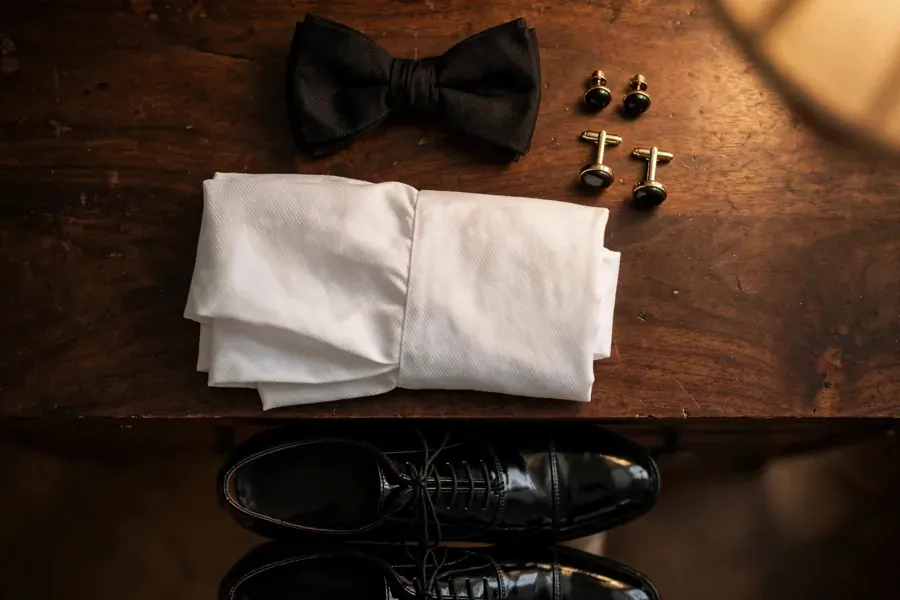
The cuffs are French cuffs, closed with cufflinks, because the evening shirt takes jewellery where the day shirt takes buttons. The front closes with studs rather than ordinary buttons, or hides its buttons under a fly placket — and here sits the question every new owner asks: which studs?
The definitive guide to shirt studs gives the pairing that has settled the matter for generations: for a more subtle choice of inlay, go with pearl or mother of pearl for White Tie or onyx for Black Tie, as these will harmonize well with their respective dress codes.
Black onyx in gold or silver settings is the black-tie standard; mother of pearl is its accepted alternative and the white-tie classic. Tradition adds one refinement: studs and cufflinks should match — same stone, same metal — because the evening's jewellery is a set, not a collection of souvenirs.
Novelty studs, coloured stones, and anything that winks are for other nights. A modern etiquette summary lists the finished shirt exactly: a piqué or pleated bib front, a turndown collar, French cuffs that close with cufflinks, and studs in place of front buttons, or a placket that hides the buttons entirely.
The bow tie is black silk, in the same finish as your lapels where you can manage it, and it is tied by your own hands.
This is the one skill in the entire system that must be learned rather than bought, and it takes an evening of practice at a mirror — our hero image above is not a pose, it is a rite of passage.
The self-tied bow has a slight, living imperfection that no pre-tied copy can fake, and every man in the room who ties his own can spot the clip-on across a ballroom. Size it to your face: the bow's width should sit roughly within the lines of your eyes and the spread of your collar.
Learn it once and it is yours for life — like riding a bicycle, only with better photographs. The pocket square, if worn, is white linen or silk, folded flat.
The watch, if worn at all, is the slim dress piece of our previous instalment, The Watch on the Wrist — small, simple, on a leather strap — and many of the best-dressed men in any ballroom wear none, leaving the evening to the host's clock.
The Shoes — Patent, Polished, and Nothing Else to Decide
Black tie footwear is the shortest negotiation in menswear. The standard is the black patent leather Oxford: plain-toe, closed lacing, mirror finish that answers the silk lapels across the length of the outfit.
A complete guide to tuxedo shoes states the hierarchy without hedging: patent leather is the gold standard for black-tie events — its mirror-finish complements tuxedo satin and ensures maximum formality — while polished calfskin is a refined alternative for those who prefer a subtler sheen, exceptional when meticulously polished.
That is the honest answer to the patent-versus-polished question: patent is the classic and the safest; a whole-cut or plain Oxford in calf, polished to a true shine, is fully correct and the choice of men who find patent's gloss too theatrical.
The third traditional option is the opera pump — a low slipper-like shoe, often with a grosgrain bow — correct, historic, and best left to men whose confidence needs no support from their footwear. Velvet slippers belong to creative black tie and the host's own house, not to the strict code.
What is excluded matters as much: no broguing, no derby shoes, no monk straps, no brown, no suede, no thick soles — the formalwear guides list derbies and monks among the inappropriate, and every perforation or casual seam lowers the shoe a full register.
Socks are black, over the calf, in silk or fine wool, so that no inch of skin shows when you sit and the trouser rises. Buy the patent Oxfords once, keep them in trees in their own bag, wear them only for evenings, and they will serve a decade of galas without a decision ever being required of you again.
That is the pattern of this entire system, and it is why the man who builds it properly stops thinking about black tie altogether. He thinks, instead, about the evening — the cause, the company, the milestone being marked, in rooms like those of the black gala circuit and on nights such as the ones honoured in Marking Milestones, Properly.
Owning It — The Arithmetic of Never Renting Again
The rental tuxedo fails on every axis the system cares about: the fit is a compromise averaged across other men's bodies, the silk is tired, the shirt is a stranger's, and the shoes have danced a hundred weddings without you.
Worse, it rents you a new identity each time, so you never accumulate the one asset black tie actually rewards — familiarity.
Your own dinner suit, altered to you, improves with wear the way a good suit does; your hands learn the bow; your studs live in their box in your drawer; the whole outfit assembles itself in minutes because every piece has a place and a history.
Two or three formal evenings a year is all the arithmetic ownership needs, and most men of standing pass that count before they finish counting — weddings, galas, benefit nights, New Year's Eve.
Buy the jacket and trousers as one cloth, the shirt in marcella, the studs in onyx, the shoes in patent, and a cummerbund and a waistcoat both if the budget allows, so the outfit can vary its mood without varying its correctness. Then have it all fitted, pressed, and hung ready. The next invitation will not find you shopping.
It will find you dressing — which is, in the end, the entire difference this series exists to teach.
Dress Codes, Decoded Once and for All
The Black Gala Circuit
Marking Milestones, Properly
Dressing Well, Part IV: The Watch on the Wrist
The Vou — “Black Tie for Men, Every Garment From Dinner Jacket to Shoes”
Westwood Hart — “Men's Formal Wear Guide: Tuxedo Dress Codes, Lapels, Accessories”
Gentleman's Gazette — “Shirt Studs: Definitive Guide (Tuxedo Jewelry & Accessories)”
The New Pelican — “Black Tie 101: A Modern Guide to Formalwear Etiquette”
Be Chic Canada — “What Are Men's Tuxedo Shoes? The Complete Guide”
Bespoke By CB — “Grosgrain vs Satin Lapels: Guide”
ATL Tailor — “Dress Code Guide for Men: Black Tie, Formal, Semi-Formal”
Questions & Answers
What makes a gentleman in the modern world?
The black tie dress code for men leaves nothing to interpretation: what to wear is a tuxedo — dinner suit, dress shirt, bow tie, patent or polished shoes — assembled from first principles, so you never rent your presence again. It links to 5 stories and articles — open any card to read the full piece.
How should a gentleman dress and carry himself?
The black tie dress code for men leaves nothing to interpretation: what to wear is a tuxedo — dinner suit, dress shirt, bow tie, patent or polished shoes — assembled from first principles, so you never rent your presence again.
How do I read the full stories on Dressing Well, Part V: Black Tie, Built Properly?
Choose any card on this page. Each one opens a full page of its own — the complete story or article, with its sources linked.