
Derby Day and the Racing Season: Louisville First, Then the Calendar of the Track
The Kentucky Derby experience at its proper level — luxury boxes and etiquette on Millionaire's Row, sculptural hats, the mint julep ritual, Derby week's galas and barn mornings — and then the racing calendar that carries the season onward.
Every spring, the social season turns its face to Louisville, and the Kentucky Derby experience — luxury boxes, hats, etiquette and all — reminds the whole calendar what a sporting occasion can be when a city, a track and a hundred and fifty years of ritual pull in the same direction.
The Derby is not really a race meeting with a party attached. It is a standing ritual of the season: two weeks of festival narrowing to one Saturday, one blanket of roses, and two minutes that a full grandstand experiences as a single held breath.
Done at the level it deserves, Derby week is a complete education in how our world entertains itself — the boxes and the barns, the galas and the grandstand, the hat bought months ahead and the julep raised at exactly the right moment. Begin in Louisville, as the season does.
Then follow the calendar, because the racing year has many more pages.
Louisville, at Full Dress
Churchill Downs announces itself by silhouette: the twin spires above the grandstand, the most recognisable skyline in American sport. Inside, the day runs on ceremonies so settled they feel like liturgy.
As the horses parade before the grandstands, the band plays Stephen Foster's "My Old Kentucky Home" — a tradition that began in 1924, and the moment when a hundred thousand people, most of them holding a julep and a betting slip, go unexpectedly quiet together.
The race itself is the "Run for the Roses," because a lush blanket of 554 red roses is awarded to the winner — a custom traced to 1883, when roses were presented to the ladies at a post-Derby party attended by the track's founder, Colonel M. Lewis Clark, who took the flower up as the race's emblem.
The distance is a mile and a quarter, where it has stood since 1896, when the race was shortened from its original mile and a half.
Around the feature race, the card builds all afternoon, and around the card, the crowd builds its own architecture of terraces, boxes and lawns — each tier with its own weather, its own dress, and its own view of the same two minutes.
Understand the geography and you understand the day. The infield, inside the track, is the people's festival — general admission, enormous energy, and, as every account concedes, little chance of seeing much of the race.
The grandstand and clubhouse rise in tiers of increasing ceremony until you reach the boxes, and above them the suites and the row that has become shorthand for the whole occasion. Neither end of that spectrum is the "real" Derby; the Derby is the chord they strike together.
But the reader of this magazine is planning for the upper registers of the building, so let us go there properly.
Millionaire's Row and the Boxes
"Millionaire's Row" is the name tradition gives to the expensive box seats that attract the rich, the famous and the well-connected — the tier where the outfits are finest, the hats most elaborate, and the race watched from reserved tables with service at your elbow.
A current guide to actually getting in makes the mechanics plain, and they reward planning: Millionaire's Row is reserved seating only, with no walk-up access on Derby day — every seat is a ticket bought in advance, and a first visit is best understood as an investment in future access.
Official hospitality packages at this level generally bundle the reserved table with catering and beverage service — mint juleps included — a fast-access pass for entry, and, at the higher tiers, hotel and transport arrangements; the exact inclusions vary by tier and operator, and the seasoned Derby family books early, through the official provider or a trusted adviser, and treats the confirmation as the anchor around which the whole week is built.
The dress code on the Row is named Track Casual, and the guide's summary is the one to pack by: jackets and blazers are optional, but vests, collared shirts, sweaters, dresses, pantsuits and dress jeans are the baseline — with elaborate hats a tradition at this tier, and arriving underdressed both noticed and remembered.
In practice, the Row dresses well above its stated floor: this is the level of the seersucker suit worn like a uniform, the pastel dress chosen in winter, the hat commissioned from a milliner while the rest of the country is still thinking about spring.
A box here is also a social instrument — six seats, your name on the door, guests received properly — and the families who hold them year after year treat Derby Saturday the way other families treat a standing holiday: same box, same people, same arguments about the same horses, renewed annually like a lease on joy.
The Hat and the Julep
Two objects carry the Derby's whole aesthetic, and both deserve to be done properly. The hat first. On Millionaire's Row and throughout the grandstand, women appear, in the traditions account's phrase, in fine outfits lavishly accessorised with large, elaborate hats — and "elaborate" undersells it.
The Derby hat is architecture: commissioned, fitted, and worn with the confidence of a signature. The working rules are simple. Choose the hat before the dress, because the hat is the outfit's thesis.
Commission early — the good milliners' Derby books close while the year is young. Mind the sightlines of the people behind you in the box. And wear it all day, through the last race, because a Derby hat carried in the hand at four o'clock is a white flag.
Then the julep, the race's traditional beverage — bourbon, mint and sugar syrup over ice, served at its most ceremonial in an ice-frosted silver julep cup, and across the wider grounds in the souvenir glasses that have been issued in revised form each year since 1939, printed with the names of all the previous winners.
There is a right way to hold Derby week in a glass: pace yourself across a long afternoon, let the first julep arrive with the early races rather than before them, and know that the silver cup is not a affectation but the drink's native vessel — cold enough to frost, heavy enough to mean it.
Beside the julep, burgoo — the thick Kentucky stew of beef, chicken, pork and vegetables — is the day's traditional plate. Eat both, cheerfully and in the open, because ritual you can taste is ritual you remember.
The Week Around the Race
The mistake of the Derby novice is arriving for Saturday. The week is the event. It opens into a festival fortnight and builds through the Kentucky Oaks — the great race for three-year-old fillies that anchors the Friday — toward Derby Eve, when Louisville's gala calendar reaches its famous peak.
The Barnstable Brown Gala, held at Patricia Barnstable Brown's Louisville home on the night before the race, is Derby week's signature party: a black-tie evening of music and celebrity that the University of Kentucky's own account describes as benefiting UK HealthCare's Barnstable Brown Diabetes Center, and having raised and donated over $22 million for the centre — philanthropy at full glamour, which is this magazine's favourite kind.
The centre's director states what the money does in one sentence:
“The Barnstable Brown family's extraordinary commitment continues to transform what we can do for patients across Kentucky.”— Dr. Simon Fisher, Director, Barnstable Brown Diabetes Center, via UKNow
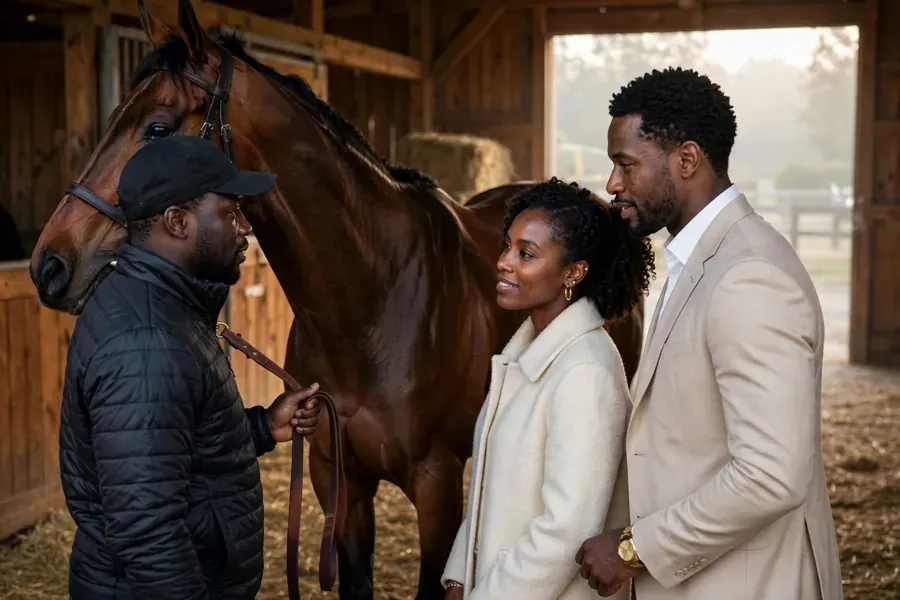
And then there are the mornings — the connoisseur's Derby, hidden in plain sight. Derby week belongs, before the crowds, to the backside: the stable area where the contenders live.
Arranged access there is the week's rarest privilege — tour operators who work the Derby describe backside stable access that puts guests up close with the Oaks and Derby horses, meeting jockeys and trainers and watching the morning workouts, alongside full-day tours into the Bluegrass horse country beyond Louisville, where the great farms roll away behind white fences.
Go at dawn if you can arrange it. A thoroughbred at work in the early light, steam rising off its back, your box and your hat still hours away, teaches you more about what Saturday means than any amount of grandstand polish.
The week, taken whole — barns at dawn, Oaks on Friday, gala at night, boxes on Saturday — is the complete Derby. Anything less is a day trip.
The First Winner
One piece of the Derby's own history belongs in every telling, and this magazine tells it with pride rather than footnotes.
The first Kentucky Derby, run on May 17, 1875 at the Louisville Jockey Club track that became Churchill Downs, was won by the colt Aristides — ridden by Oliver Lewis, a nineteen-year-old African American jockey from Fayette County, in an American-record time of two minutes and thirty-seven and three-quarter seconds, before a crowd estimated at ten thousand.
Aristides was trained by Ansel Williamson, a Black horseman later inducted into the National Museum of Racing's Hall of Fame. Lewis was no anomaly: thirteen of the fifteen jockeys in that first field were Black, and, as the Kentucky Commission on Human Rights' record puts it, African Americans dominated the sport's early decades, winning fifteen of the first twenty-eight Derbies.
HISTORY's account of the race confirms the shape of it: between 1875 and 1902, eleven Black jockeys rode fifteen of the winning horses, among them Isaac Burns Murphy, winner of three Derbies and in his prime among the best-paid athletes in America.
The sport later pushed its Black masters to the margins — a fact to note plainly and briefly, as the record does — but the founding fact stands at the front of the Derby's story and cannot be moved: the most American of races was first won by Black hands.
When you raise the julep on Derby day, you are drinking inside a house they helped build.
Then the Calendar Turns: Ascot, Saratoga, Keeneland, Del Mar
Louisville opens the racing season's social account; it does not close it. The summer's grandest week is Royal Ascot, where the dress code is not a custom but a constitution.
A connoisseur's guide to the British racing season sets out the Royal Enclosure standard: gentlemen wear traditional morning dress in black, grey or navy, complete with waistcoat and tie — cravats strictly forbidden — and a black or grey top hat worn at all times in the public areas, while ladies wear formal daywear of modest length with straps of at least an inch, hats or substantial headpieces mandatory.
Read it as the Derby's dress code carried to its logical, magnificent extreme — and note that Ascot, like Louisville, understands the hat not as an accessory but as the price of admission to the occasion itself.
America's summer belongs to Saratoga, the upstate New York course that opened in 1863 and remains, as WAMC's account of its season puts it, a venue returning in its normal rhythm to the traditional forty-day summer meet — the meet around which a whole town, and half of sporting society, arranges its August.
Saratoga's register is hushed and historic: morning workouts as social ritual, the sales pavilion, the lake houses.
Kentucky answers twice more across the year at Keeneland in Lexington — a nine-decade-old track of limestone grandstands whose race days concentrate in meets in April and October, about fifteen race days in each month, so woven into its city that locals say it does not feel like spring or fall until they have been.
And on the Pacific, Del Mar runs the season's most glamorous summer party, its opening day a hats-and-seersucker festival by the sea. Four tracks, four temperaments, one continuous season: the family that races plans its year the way it plans Derby week — early, completely, and with the hats commissioned in advance.
Standing in the Winner's Circle
There remains one promotion left in racing life: from the box to the winner's circle, as an owner. The modern door is the syndicate — a group that shares ownership of a racehorse, spreading the costs and risks while every part-owner keeps the full experience of being an owner. The mechanics are friendlier than the word suggests.
Each member holds a percentage share; the purchase, training, veterinary care and race preparation are handled by the trainer and the syndicate manager; prize money and any sale proceeds divide by share.
What the member receives in return is the part no dividend matches: stable visits to meet the horse and talk with the trainer, owners' badges on race day, entry to the parade ring — and, when the horse wins, entry to the winners enclosure and a place in the trophy presentation.
Syndicate managers are candid, and you should be too, that a racehorse is a pleasure purchased, not an investment promised: buy the share the way you buy the box, for the life it gives you, and let any winnings arrive as applause.
But stand once in that circle, with your horse blowing beside you and the photographer's flash going, your family in their Derby best at the rail — and you will understand why the calendar in this magazine ends, every year, exactly where it began: at the track, in the spring, with roses in the air.
Our overview of polo, racing, and the sporting season maps the whole circuit, and our guide to polo, watched properly is its companion on grass.
Polo, Racing, and the Sporting Season in Good Company
Polo, Watched Properly: The Game, the Grounds, and the Afternoon Around It
The Black Gala Circuit: A Field Guide to the Season
Sports Collections — Bourgeois Society Profiles
LiquiSearch — "Kentucky Derby: Traditions"
Pearl — "Can You Get Into Millionaires Row at the Kentucky Derby?"
HISTORY — "The Kentucky Derby"
Kentucky Commission on Human Rights — "Oliver Lewis"
UKNow, University of Kentucky — "Celebrity Guests Set for Derby Eve Gala, Supporting UK's Barnstable Brown Diabetes Center"
Roadtrips — "Kentucky Derby Add-Ons: Barnstable Brown Gala and Backside Stable Access"
Upscale Living Magazine — "The Connoisseur's Guide to the British Racing Season"
WAMC Northeast Public Radio — "Saratoga Race Course Opens During a Record-Breaking Meet"
Wildsam — "Kentucky Horse Racing's True Home: Keeneland"
Blueblood Thoroughbreds — "How Racehorse Syndicates Work: Costs and Benefits"
Amazing Racing — "How It Works: Racehorse Syndicates"
Questions & Answers
Who will you meet on this page?
The Kentucky Derby experience at its proper level — luxury boxes and etiquette on Millionaire's Row, sculptural hats, the mint julep ritual, Derby week's galas and barn mornings — and then the racing calendar that carries the season onward. It links to 4 stories and articles — open any card to read the full piece.
What makes these stories worth reading?
The Kentucky Derby experience at its proper level — luxury boxes and etiquette on Millionaire's Row, sculptural hats, the mint julep ritual, Derby week's galas and barn mornings — and then the racing calendar that carries the season onward.
How do I read the full stories on Derby Day and the Racing Season: Louisville First, Then the Calendar of the Track?
Choose any card on this page. Each one opens a full page of its own — the complete story or article, with its sources linked.